
The best way to organise snacks in your pantry is to sort them into access zones – things anyone can grab freely, things that need a quick check-in, and treats that live out of easy reach. It sounds simple because it is, but getting the zones right for your actual household is what makes it stick.
I spent years doing the thing where snacks just lived wherever there was space. A bag of rice cakes propped against the pasta. Cereal bars in a pile behind the Weetabix. Some sort of Soreen situation that nobody could confidently date. And every single afternoon, the same three conversations: can I have a snack, where are the cheesy ones, and we literally have nothing to eat.
We have three kids – fourteen, thirteen, and eight – and a pantry that is not enormous. When I finally sorted it properly, it was not because I watched an organising reel and felt inspired. It was because I was tired. Tired of the rummaging, tired of things going stale before we found them, and tired of making the same snack judgement calls ten times a day.
So here is what actually works, what I wish I had done sooner, and a few things most snack organisation posts do not bother mentioning.
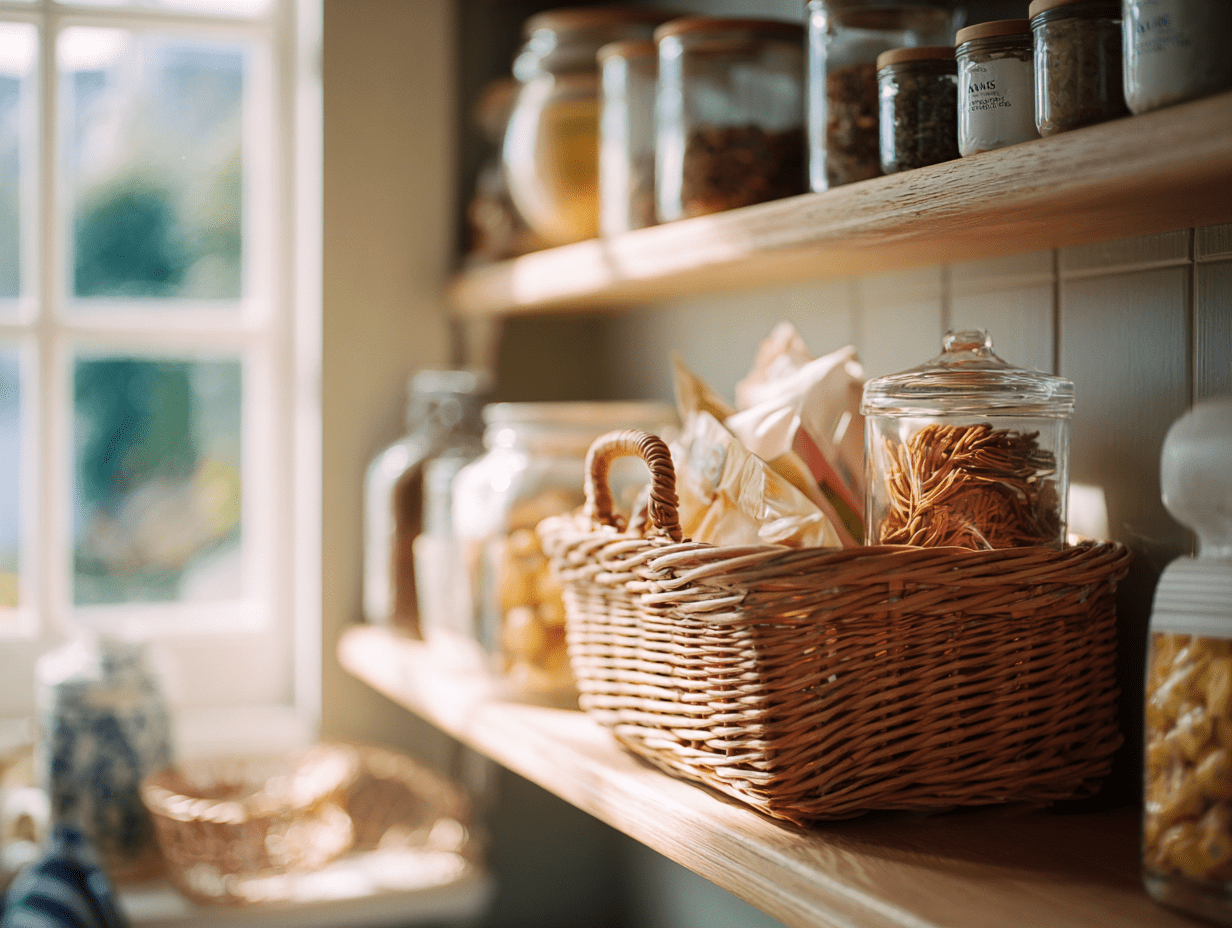
Before you buy a single basket, do the audit
Every organising project I have ever started properly has begun with pulling everything out. And I know that sounds obvious and slightly annoying, but there is a real reason for it – you genuinely cannot make good decisions about where things should live until you can see all of them at once.
Pull out everything that counts as a snack. Crisps, crackers, cereal bars, biscuits, nuts, dried fruit, rice cakes, fruit pouches, popcorn, the random protein bars from the back that definitely came home in someone’s PE kit. All of it, onto the kitchen table.
Now just look at it for a minute. What do you actually have? What has four half-open bags because nobody seals the clip? What is past its best before date – and I do not mean slightly past, I mean could have been there since Christmas? What has been bought optimistically but nobody actually eats?
That last one is worth paying attention to. If the rice cakes have survived three rounds of decluttering untouched, you are not a rice cake family. Stop buying them. The goal is a pantry full of things people actually want, not a storage system for good intentions.
The audit usually takes about twenty minutes and is the most satisfying part of the whole process because you immediately have less stuff to deal with.
Also – and this is the thing nobody really says – do not buy anything until after the audit. I have four clear plastic bins from a previous organisation attempt that are entirely the wrong size for my current shelves. Measure, audit, then shop. In that order.

The zone system – and why three tiers is the magic number
This is the thing that actually changed how our pantry works, and I am annoyed I did not figure it out sooner. Most snack organisation advice tells you to group similar things together – crisps with crisps, cereal bars with cereal bars. That is fine as far as it goes, but it does not solve the actual problem, which is that different snacks need different rules.
So instead of organising by type, I organise by access level. Three tiers, each with its own physical spot in the pantry.
The free-for-all shelf
These are the snacks anyone can grab at any time without checking first. In our house that means fruit, plain oatcakes, unsalted nuts, raisins, plain rice cakes, and the plain popcorn that everyone eats slightly reluctantly but does eat. The test is simple: would I genuinely not mind if my eight-year-old had three in a row? If yes, it goes here.
This section lives at the most accessible point in the pantry. Not hidden, not up high. Right there where you can see it and reach it without thinking.
The check-in section
These are normal, reasonable snacks that just need a bit of managing. Cereal bars, crackers, crisps, flavoured rice cakes, Soreen, biscuits. Good stuff, but the kind of thing that disappears entirely in one sitting if left to chance.
In our house the rule is: you mention it before you take one. Not ask permission – just a quick heads up so I know what we have and can restock before it becomes a Thursday evening crisis. My teenagers find this completely reasonable. My eight-year-old sometimes forgets, but mostly it works.
These live in a separate basket or bin, clearly distinct from the free-for-all section even if they are on the same shelf.
The treat section
Chocolate, sweets, the nice biscuits, Pringles, whatever counts as a proper treat in your house. These live at the top or tucked at the back, somewhere that requires a bit of effort to access. This is not about being restrictive – it is just about making the choice intentional rather than automatic.
The slight friction of having to reach up or pull something out from behind other things is actually doing a lot of work. It changes a mindless grab into a moment of decision. That sounds quite grand but it is genuinely true.
What I like about this system is that it removes me from the equation. I am not making a judgement call every afternoon. The snack’s location tells everyone what the rule is.
The one section worth setting up even if you do nothing else
If the tier system sounds like too much to take on right now, just do this one thing: set up a dedicated school lunch basket.
Everything that goes in packed lunches lives in one spot. One basket, one section of a shelf – whatever fits your pantry. In ours it has mini rice cakes, the Aldi cereal bars, small boxes of raisins, the little biscuit packets, and whatever else I have picked up that week for lunches.
When I am making lunch boxes in the morning, I go straight to that basket. No hunting, no thinking. It takes about three minutes instead of the eight-minute rummage it used to be. My older two can make their own lunches without asking me anything because everything they need is in one obvious place.
This is also the section I restock specifically when I do the weekly shop. I do not just buy snacks and put them vaguely in the pantry – I actively top up the lunch basket so it is never empty on a Sunday evening when I am mentally preparing for the week.
It genuinely transformed our mornings and I wish I had done it years earlier.
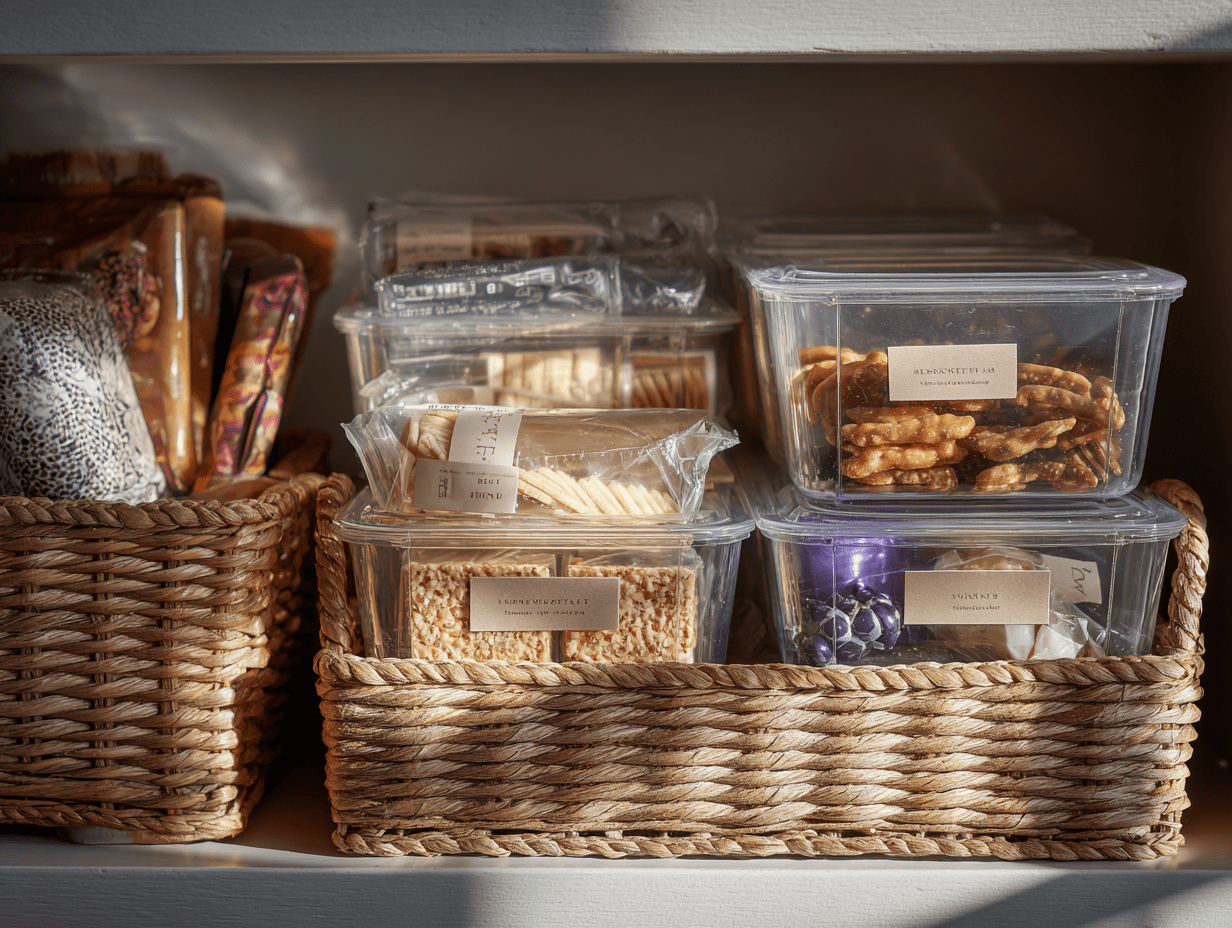
What to actually store snacks in (without spending a fortune)
You do not need matching acrylic containers. I know they look incredible on Instagram and I know the temptation is real, but they are expensive, they often do not fit real shelves, and they make restocking annoying because you have to decant everything.
What actually works in a normal family kitchen:
| What | Where to get it | Why it works |
| Wide wicker or fabric baskets | Dunelm, B&M, IKEA | Tidy-looking even when slightly chaotic inside, easy to pull out whole basket |
| Clear plastic bins with handles | IKEA KUGGIS, Amazon UK | Can see contents at a glance, easy to grab and return |
| Lazy Susan / turntable | IKEA, Amazon UK | Good for corner shelves or bags of crisps that fall over |
| Over-door pockets | Amazon UK, Dunelm | Useful if shelf space is genuinely tight |
| Clip-seal bags or Tupperware | Tesco, Sainsbury’s | For keeping opened bags fresh – already in most kitchens |

Honestly, a couple of wicker baskets from Dunelm and a clear IKEA bin for the lunch section is enough. The system does the organising. The containers just hold it in place.
One thing that does make a noticeable difference: labels. Even if it is just masking tape and a marker pen, having each section labelled means everyone else in the house can maintain it without asking you. A label does the explaining so you do not have to.
A few things most snack organisation posts do not mention
Most of the advice out there covers the basics well enough. Sort by category, use clear containers, label things. Fine. But here are some bits that took me longer to figure out.
Open bags are the enemy of a tidy pantry. A half-empty bag of crisps shoved back onto a shelf creates chaos within about four days. Either clip it shut and stand it upright, or decant into a clip-seal container. For crackers and oatcakes especially, this makes a real difference to freshness too.
Teenagers will work around any system eventually, but that does not mean the system is not worth having. My fourteen-year-old has absolutely raided the treat section before. But having the system means I can refer to it rather than having the same negotiation from scratch every time. We both know the rules. Sometimes they are ignored. That is family life.
The tier system needs to reflect your actual values, not aspirational ones. If I put plain crackers in the free-for-all section but my kids consistently grab the Hobnobs instead, the Hobnobs are the real snack and the crackers are wishful thinking. Be honest about what people actually eat.
Height matters more than you think. My eight-year-old is small. If his accessible snacks are on a shelf she needs to climb to reach, it is not actually accessible to him. I moved things down one shelf and the independence he now has around choosing his own snack – within the right tier – has been brilliant for everyone.
And finally: do not organise more snacks than you have room for. If your pantry is small, that means being deliberate about what you buy. A well-organised pantry that is overstocked just becomes organised chaos. Less in, more space to actually use the system.
How to keep it going without it becoming a project
The mistake I made the first few times I organised our pantry was not building in a reset. You sort everything beautifully on a Saturday and by the following Friday it has drifted back to chaos because nobody knows where things go and things have been restocked without thought.
A monthly five-minute check is all it takes. Pull the baskets forward, bin anything past its best or stale, move anything that has ended up in the wrong tier, note what needs restocking. That is genuinely it. I do it roughly when I do the big monthly shop and it takes less time than I am making it sound.
If something keeps ending up in the wrong place, it needs either a clearer label or a different home. The system should adapt to how your family actually behaves, not the other way around.
And if the whole thing collapses for a couple of weeks because life happened, that is fine. Pulling everything out and starting again takes an hour and it is always worth it.
Frequently asked questions
What is the best way to organise snacks in a small pantry?
Work with zones rather than categories, even in a small space. Use vertical height with stackable bins, and consider over-door pockets if shelf space is really limited. The most important thing in a small pantry is being strict about what earns a spot – if nobody eats it, it should not be taking up room. A smaller, well-chosen snack selection in a clear system always works better than lots of snacks in a complicated one.
How do I stop my kids eating all the snacks immediately?
The tier system helps with this because it removes the moment-to-moment negotiation. When the treat section is tucked away and the free-for-all snacks are right there, most kids will reach for what is accessible. It is not about restriction – it is about making the easier choice the better one. Being clear about the rules once and then pointing to the system rather than re-explaining every afternoon is considerably less exhausting than ad hoc decisions.
Do I need matching containers to organise my pantry properly?
No. Matching containers look lovely but they are not what makes a system work. A couple of wicker baskets from Dunelm and a clear bin for the lunch section will do the same job as an expensive acrylic set. Buy what fits your actual shelf depth and your budget. Audit first so you know what sizes you need, because wrong-sized containers are worse than no containers.
How often do I need to reorganise my snack pantry?
Once it is set up properly, a five-minute monthly check is enough – bin what is stale, return things to the right zones, note what needs restocking. A full reset is only needed if the system has genuinely broken down or your household’s snack habits have changed. Twice a year at most for that.
Should snacks be stored separately from other food in the pantry?
Yes, and especially separately from breakfast items. Cereal, porridge, and Weetabix have their own habits and their own rhythm in a family kitchen. When they bleed into the snack section everything gets confusing and the system stops working. Give breakfast items their own shelf or zone and keep snacks clearly separate.
So, is it actually worth doing?
Yes. Genuinely. I say that as someone who is not naturally inclined towards spending a Saturday afternoon sorting a pantry, and who has started and abandoned this project more than once.
Organising snacks in your pantry properly – with actual zones, a clear lunch section, and labels – reduces a surprising amount of low-level daily friction. The after-school chaos is calmer. Morning packed lunch prep is faster. And I am having considerably fewer conversations about whether someone can have a biscuit.
It does not need to be perfect. It does not need matching containers or a beautiful shelfie. It just needs to be clear enough that everyone in your house knows where things live and what the rules are without having to ask you.
Set up the lunch basket first if nothing else. Give everything a zone. Label it. Reset it once a month. That is the whole system.
See more home organisation posts here
You might also like:
How to Organise Fruits and Vegetables in the Fridge
Lazy Susan Cabinet Storage Ideas That Actually Work
Upright Freezer Storage Ideas
How to Organise Tea Bags
How to Organise Baking Pans
Protein Powder Storage Ideas
How to Organise Deep Kitchen Drawers

Becky is the voice behind Life in Velvet, an organised, intentional living blog focused on practical food, calm homes, thoughtful projects, and everyday systems that make real life feel easier. A mum of 3 living in the UK, Becky writes from lived experience, sharing what works, what doesn’t, and the decisions that make family life run more smoothly.
With a background in marketing and content writing, and over a decade of blogging experience, she brings a thoughtful, structured approach to everything from baking and home projects to routines and decision-making. Life in Velvet is where planning meets creativity, with ideas designed for real homes and real life.