
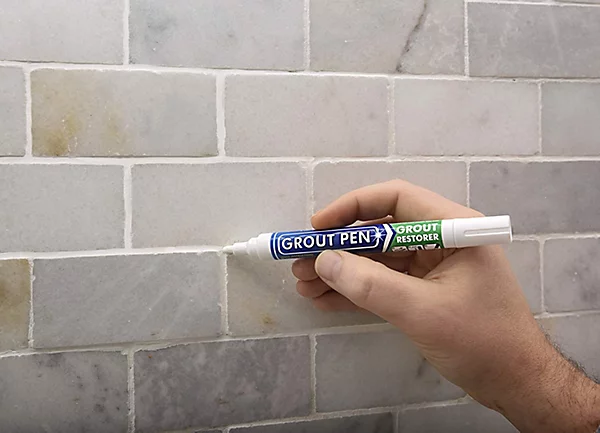
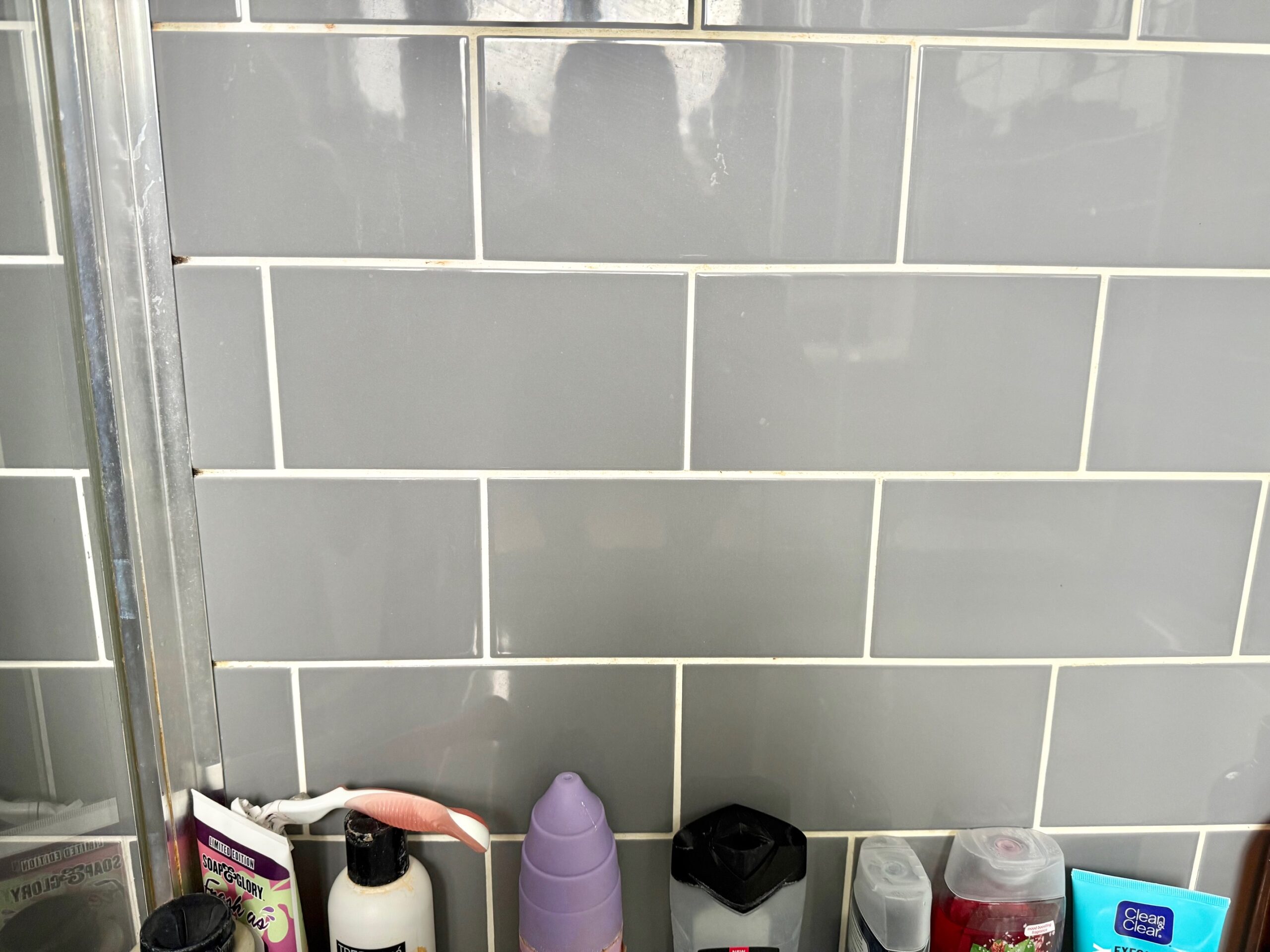
There’s nothing quite like sparkling clean tiles to make your bathroom or kitchen feel fresh and inviting. But even if your tiles are spotless, tired, discoloured grout can drag the whole look down (see pics of our bathroom tiles, below, that were starting to look a little discoloured and tired!). Whether it’s turned a charming shade of grey, picked up some mildew, or just seen better days, white grout has a knack for looking grubby over time.
But don’t worry – there’s a quick, cost-effective DIY trick that doesn’t involve regrouting your entire bathroom or calling in the professionals! Enter the grout pen. This unassuming little tool can transform your space in under an hour. Think of it as a paint pen for your grout – covering up stains and restoring that crisp, just-installed look.
In my blog I show you exactly how to revive white grout using a grout pen, offer some tips and tricks, and answer your most common questions.
Why Grout Turns Dingy in the First Place
Grout is porous, meaning it soaks up moisture, dirt, soap scum, and whatever else life throws at it. Over time, this leads to staining, discolouration, and even mould or mildew – especially in warm, damp spaces like the bathroom.
White grout, while classic and clean-looking, shows every little mark. No matter how often you scrub, it never quite looks the same as when it was first applied.
If your grout is discoloured but still structurally sound, using a grout pen is a brilliant way to restore its appearance without getting your hands dirty with full-on grout removal.
What Is a Grout Pen?
A grout pen is a marker-style tool filled with a specially formulated grout paint or sealer. It’s designed to go right over the top of existing grout lines, giving them a fresh, clean look in minutes. It’s easy to use, affordable, and available from most DIY shops or online.
Popular UK options include:
Prices typically range from £5 to £10 – not bad for what feels like a mini renovation! Any of the above will transform grubby grout as shown below – eek!

What You’ll Need
Before you dive in, here’s what you’ll need to revive your white grout:
-
A grout pen (make sure it’s suitable for white grout)
-
A microfibre cloth
-
An old toothbrush or grout brush
-
A sponge and warm soapy water
-
Optional: masking tape for extra neat lines
Step-by-Step: How to Revive White Grout Using a Grout Pen
Here’s how to get those grout lines looking fresh again – no tiler required!
1. Clean the Tiles and Grout
Before you do anything, give your tiles and grout a really good clean. This helps the grout pen adhere properly and ensures you’re not painting over grime or mildew.
-
Mix a bit of washing-up liquid with warm water and scrub the tiles and grout using a toothbrush or a dedicated grout brush.
-
Rinse with clean water and dry thoroughly using a soft cloth or towel.
Top tip: If you’ve got any mildew or mould, use a mould remover spray before cleaning. Leave it to do its thing, then scrub well.
2. Shake Your Grout Pen
Once everything is dry, give your grout pen a good shake. You want the paint to be well-mixed before you start applying it.
3. Test a Small Area
Pick a less noticeable spot (perhaps behind the bathroom door or under a cupboard) and try a small section first. Make sure you’re happy with the colour and coverage.
4. Apply the Grout Pen
Now for the fun bit! Press the nib of the pen onto the grout line and slowly drag it along. Take your time – there’s no rush.
-
Work in small sections.
-
Wipe away any excess from the tiles with a damp cloth as you go.
-
For really discoloured grout, you might need a second coat once the first one has dried.
Bonus tip: If your tiles are textured, a bit of masking tape along the edges of the grout lines will help keep things neat.
5. Let It Dry
Drying time varies by brand, but most grout pens dry to the touch in 30–60 minutes. Give it a full 24 hours before exposing the area to water, just to be safe.
The Results? Genuinely Satisfying
There’s something incredibly satisfying about watching your grout go from grimy grey to bright white in one swipe. It’s the DIY equivalent of watching one of those “cleaning TikToks” – but in your own home.
And the best bit? The whole job takes less than an hour for most bathrooms or splashbacks. It’s a tiny tweak that has a surprisingly big impact.
Helpful Extras: What to Know Before You Start
-
Different nib sizes are available – thinner tips are great for wall tiles, while larger nibs work better for floor tiles.
-
Coloured grout pens are available too – if you fancy a trendier look, consider light grey or even black for a modern contrast.
-
Sealing grout after pen application can help it last longer, especially in wet areas.
Long-Term Maintenance
A grout pen isn’t permanent, but it can last a good 6 months to a year or more depending on use and moisture levels. If it starts fading or chipping, simply reapply.
To keep it looking its best:
-
Wipe down tiles regularly with a non-abrasive cloth.
-
Avoid harsh chemicals and bleach, which can wear down the grout paint faster.
Alternatives to Grout Pens
Grout pens are brilliant for cosmetic touch-ups, but they’re not a fix for damaged or crumbling grout. If your grout is missing or flaking away, you’ll need to remove it and regrout instead. That’s a slightly bigger job – but still doable as a weekend DIY project.
FAQs: How to Revive White Grout Using a Grout Pen
Are grout pens safe to use in the shower?
Yes – most grout pens are waterproof once dry. Just make sure the area is completely dry before you apply, and allow 24 hours before showering again.
Can I use a grout pen on floor tiles?
Yes, but opt for a heavy-duty pen designed for floors. Foot traffic can wear away the paint more quickly, so floors may need more frequent touch-ups.
Do I need to seal the grout after using the pen?
Not always, but sealing can help extend the life of the finish – especially in high-moisture areas like showers or around the kitchen sink.
Will a grout pen cover mould?
A grout pen can hide minor staining, but it won’t kill active mould. Always clean and treat any mould with a mould remover first before using the pen.
Can I use a white grout pen on coloured grout?
You can, but the colour beneath might show through slightly. If the original grout is very dark, consider a grout paint designed for full coverage or a colour change.
Where to Buy a Grout Pen in the UK
You can pick one up from your local DIY store or order online. Here are a few good options:
-
B&Q – Search for “Unibond Grout Reviver Pen”
-
Wickes – Look for the Ronseal One Coat Grout Pen
-
Amazon UK – Great for comparing brands and nib sizes
-
Robert Dyas – Often stocks HG grout restorer products
Prices usually range from £5–£10 depending on size and brand.
If your bathroom or kitchen is looking a little tired but you’re not ready for a full refurb, a grout pen could be just the pick-me-up it needs. It’s one of those rare DIY jobs that ticks all the boxes – cheap, quick, easy, and incredibly satisfying.
Whether you’re prepping your flat for viewings, sprucing up your rental, or just fancy a refresh, give it a go. You might even start eyeing up other areas to tackle. The downstairs loo? The kitchen splashback? Once you’ve got the bug, there’s no stopping you.
So pop to your nearest B&Q or Wickes, grab yourself a grout pen, and say goodbye to grubby grout – the easy way.
Have you tried using a grout pen? Share your before-and-after pics or let us know your go-to grout cleaning hacks in the comments!
See more of my DIY posts here and my home organisation posts here

Becky is the voice behind Life in Velvet, an organised, intentional living blog focused on practical food, calm homes, thoughtful projects, and everyday systems that make real life feel easier. A mum of 3 living in the UK, Becky writes from lived experience, sharing what works, what doesn’t, and the decisions that make family life run more smoothly.
With a background in marketing and content writing, and over a decade of blogging experience, she brings a thoughtful, structured approach to everything from baking and home projects to routines and decision-making. Life in Velvet is where planning meets creativity, with ideas designed for real homes and real life.