
At a Glance: Key Takeaways
- The three things that destroy protein powder are moisture, heat, and air, in that order. Get those under control and everything else is detail.
- If your protein comes in pouches (MyProtein, Bulk, and similar brands), decanting into a proper airtight container is not optional. It is genuinely necessary for keeping it fresh.
- No competitor article mentions this, but the loose scoop is one of the most annoying daily friction points in supplement storage. There is an easy fix and this post covers it.
- UK kitchens need vertical storage solutions and turntables, not the giant walk-in pantry setups you will find in every American blog post on this topic.
- A dedicated supplement zone, one cupboard with everything in it and clearly labelled, is more useful than any individual container purchase.
Introduction
Can we talk about the protein powder situation? Because in our house, it crept up slowly and then became A Thing very quickly. It started with one tub of whey. Fine. Then my 14-year-old started training seriously. Then I started using collagen powder. Then my husband found a plant-based protein he actually likes. And somehow, before anyone made a deliberate decision about it, we had four different containers in various states of nearly-finished, scattered across two cupboards, one shelf, and at one point a corner of the worktop that I could not explain even to myself.
I cannot live like that. I am, fundamentally, a person who labels her freezer bags and has strong opinions about lazy Susans. So I got it sorted. And I am sharing what actually worked, because every article I found while researching this was either American (one-gallon glass jars, Dollar Tree containers, a pantry the size of our entire ground floor), written by a supplement brand with something to sell, or focused entirely on freshness science with zero interest in the actual organisation problem.
This post is for people who use protein powder regularly, whether just for themselves or across a whole active household, and want it stored properly, kept genuinely fresh, and not quietly taking over the kitchen. It is written specifically for UK homes, with UK products and UK-sized kitchens in mind.
If you are after deep nutritional science about protein degradation rates, this is not quite the post for you, though I will cover what you actually need to know. What this is really about is the practical, real-life system.
Why Storage Actually Matters (The Bit You Do Need to Know)
Before we get into containers and cupboard zones, it is worth understanding what you are actually protecting against. Once you know, all the storage decisions make far more sense.
Protein powder has three main enemies: moisture, heat, and air. Moisture is the most destructive by a significant margin. Even small amounts of condensation getting into a container can cause clumping, and over time it creates conditions where bacteria can begin to develop. This is why the advice about never putting protein powder in the fridge is genuinely important rather than just fussy. The temperature change every time you move the tub in and out of the fridge causes condensation to form inside the packaging, and that moisture is what does the damage.
Heat accelerates oxidation, which affects taste and texture first, and nutritional quality over a longer period. A shelf above the hob or right next to the kettle is a bad location even if it feels convenient.
Air exposure is the biggest issue with pouches specifically. If the zip-lock on your MyProtein bag is not sealing fully every single time, and honestly it often is not after the first few uses, the powder is slowly absorbing moisture from the surrounding air.
The practical conclusion from all of this: a cool, dry kitchen cupboard well away from the hob and kettle is genuinely ideal. A proper airtight container, if you are buying in pouches or in bulk, is worth the small investment. Everything else builds from those two things.
The Real Problem with Just Keeping It in the Original Packaging
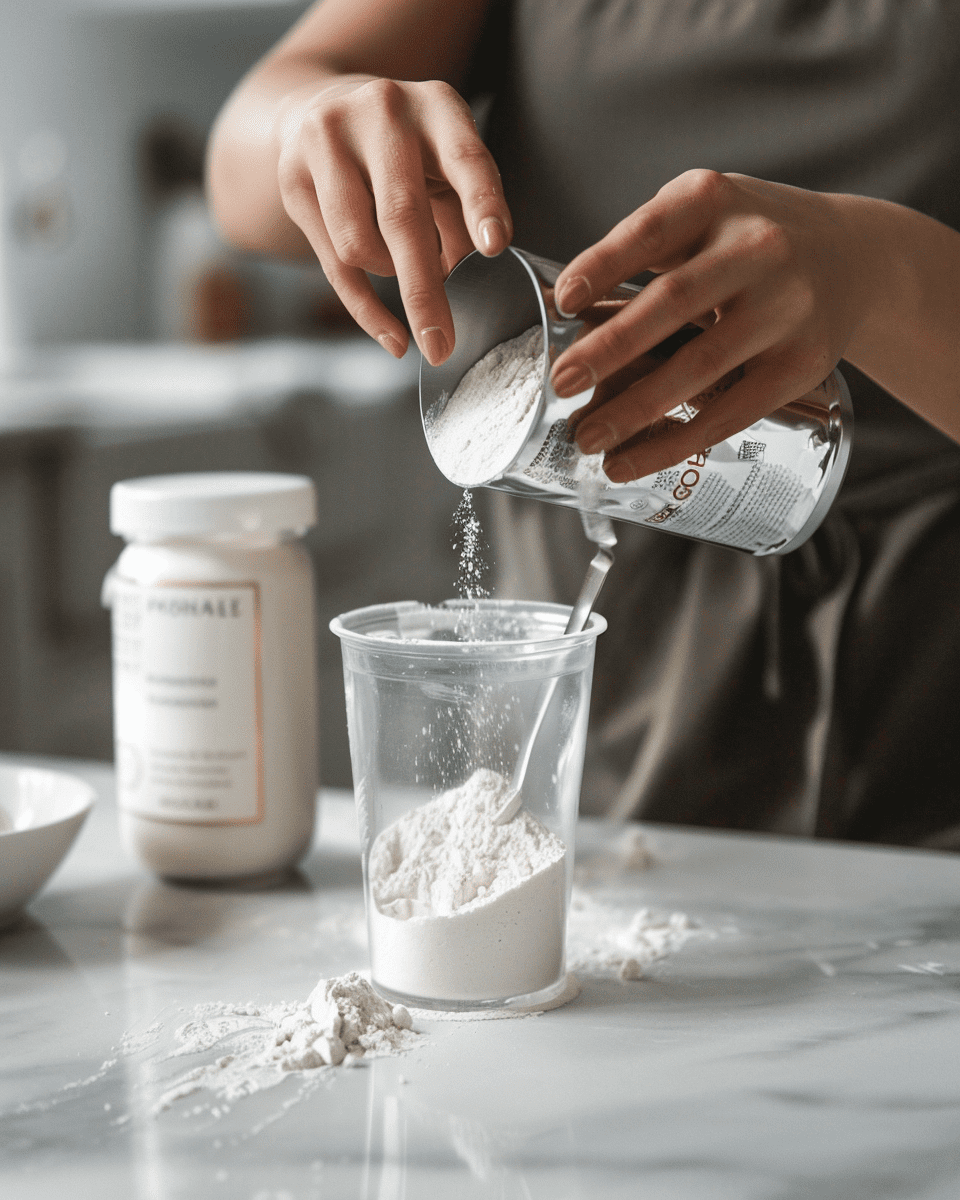
Most people shove the tub or bag wherever it fits and consider the job done. And if you have got one tub you are working through quickly, that is actually fine. But there are several situations where the original packaging creates real ongoing problems.
Pouches from brands like MyProtein, Bulk, or Protein Works.
In theory, zip-lock pouches are a perfectly decent storage solution. In practice, protein powder gets into the zip track almost immediately, the seal stops lining up properly after a few uses, and within a week or two you have effectively got a container that is not reliably airtight. If you are buying in pouches, transferring to a proper container immediately after opening is genuinely better for keeping the powder fresh, not just tidier.
Large format tubs.
The 2.5kg or 5kg tubs that regular users buy are cumbersome. They do not stack, they are awkward to scoop from when the level gets low, and they take up a disproportionate amount of shelf space. The better system is to decant into a smaller daily-use container and keep the rest sealed in the original tub as backup stock. You get easy daily access and properly sealed long-term storage at the same time.
Multiple products in one household.
Once you have got more than two or three supplements on the go, which in a family with active kids happens faster than you would expect, the mixed original packaging becomes genuinely chaotic. Nobody can tell at a glance what is what, things get put back in the wrong place, and you are forever lifting lids to check what is inside. Uniform containers with clear labels solve this entirely.
The aesthetic reality.
This is not superficial. It matters for whether you actually maintain the system long term. Brightly branded tubs with enormous logos and clashing colours are not restful to look at every morning. A coherent set of containers makes the cupboard somewhere you want to open rather than something you quietly dread.
What to Actually Look For in a Protein Powder Container
Not all food storage containers work well for protein powder, even if they are technically described as airtight. Here is what genuinely matters.
A proper silicone gasket seal.
This is non-negotiable. Containers that clip shut but do not have a silicone seal around the lid are often not genuinely airtight in practice. You want to see a soft rubber or silicone ring creating a compression seal when the lid closes. This is what keeps moisture out consistently over time, not just a snap-fit lid.
A wide enough opening for your scoop.
Genuinely obvious, and I still got this wrong once. The standard scoop that comes with most UK protein powders is wider than you would expect. Measure it before you buy containers. Narrow-neck containers look elegant and are completely unusable for this purpose.
Transparent or semi-transparent sides.
Being able to see at a glance how much is left matters more than it sounds. With opaque containers you do not notice you are running low until you reach for it on a busy morning and find it is almost empty.
Stackability.
In a UK kitchen, shelf space is almost always the limiting factor. Containers that stack cleanly let you use vertical space inside a cupboard rather than spreading across an entire shelf. This is the single biggest practical advantage of the OXO or IKEA ranges over, say, Kilner clip-top jars, which look beautiful but do not stack.
For sizing: a 1-litre container holds roughly 400 to 500g of most protein powders depending on the formulation. A 1.5-litre container manages most 1kg pouches comfortably. If you are decanting from a large 2.5kg tub, use two containers rather than hunting for one enormous vessel. One for daily use, one as your refill stock.
The Best Containers You Can Actually Buy in the UK
OXO Good Grips Pop Containers
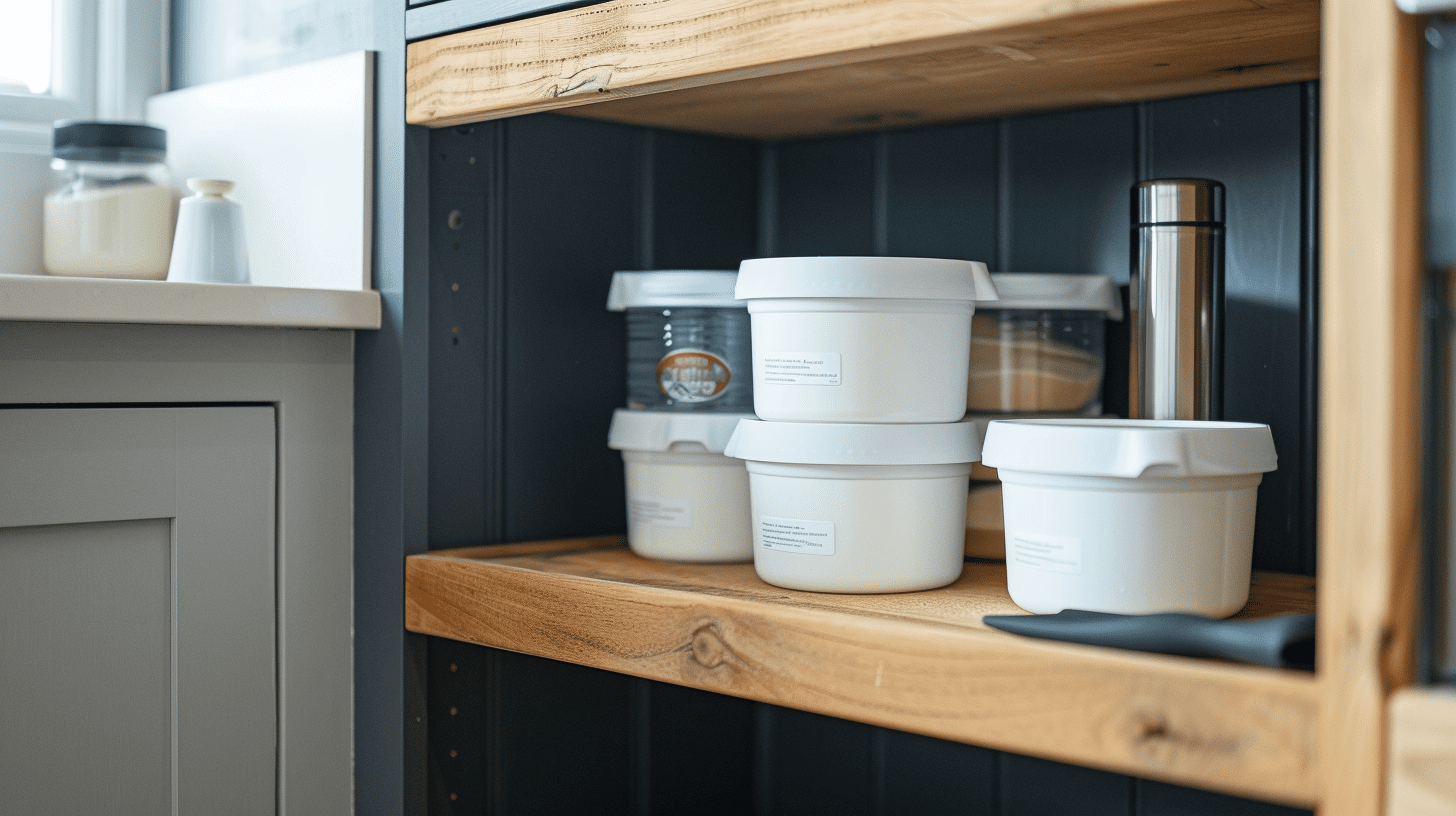
These are consistently the best mid-range option, and they are what I personally use. The push-button top creates a genuinely airtight seal. You can feel the compression when it clicks down, which is oddly satisfying. The opening is wide, they stack neatly, and they are available on Amazon UK, at Lakeland, and occasionally in John Lewis. The 1.1-litre and 1.6-litre sizes are the most practical for protein powder.
IKEA 365+ range
This is the budget answer that actually holds up. The round containers with rubber-sealed lids are solid, cheap enough to buy several without feeling it, and they stack well. You can pick them up in any IKEA or order online. Not quite as satisfying to use as the OXO, but the seal is reliable and the value is hard to argue with.
Kilner clip-top jars
These work well and look genuinely lovely. The cylindrical shape is not the most space-efficient option for smaller shelves, and the glass is heavier, which matters on a high shelf. But if aesthetics are your priority and you have got the room, they are a solid choice, widely available from Dunelm, John Lewis, Lakeland, and Amazon UK.
Sistema and Myprotein own-brand containers
Worth considering if you are buying from Myprotein already. They are designed with sensible dimensions and seal properly.
Avoid:
Generic supermarket storage containers without silicone gaskets. The lock-lid boxes from discount stores often claim to be airtight but are not meaningfully so in practice. Perfectly fine for pasta. Not reliable enough for powder you want to stay fresh over weeks or months.
How to Actually Decant Protein Powder Without Making a Mess
I am including this section because every article I read skips over it entirely, and the first time I tried to pour 1kg of chocolate whey from a flat-bottom pouch into a container at 7am on a Tuesday, I deeply regretted my life choices for about ten minutes.
The key principles are simple: slow, low, and use a funnel.
A standard kitchen funnel works perfectly. If you do not have one, a wide-mouth measuring jug used as an intermediary helps enormously. You can also carefully cut one corner off the pouch to create a more controlled pour point rather than trying to manage the full-width opening.
Do this over the sink, or at least on an easy-clean surface. Not a wooden worktop. Not anywhere near a fabric tablecloth. The powder gets airborne almost immediately when poured from height, and chocolate whey protein on a pale worktop is not a quick clean-up job.
Let the powder settle inside the bag for a minute before you open it, particularly if it has just arrived by post and had a lively journey. Warm coffee first, decant second.
Before you seal the new container, write the best-before date on the lid or on a small adhesive label. Once the original packaging is gone, that date goes with it. When you have got several containers on the go, you will lose track of which is which faster than you would expect.
Setting Up a Supplement Zone That Actually Works
This is where I part ways with every other article on this topic, because they all focus on individual storage decisions rather than the system. For a family household, the system is what makes the difference between this actually working and sliding back into chaos within a month.
One zone, one cupboard.
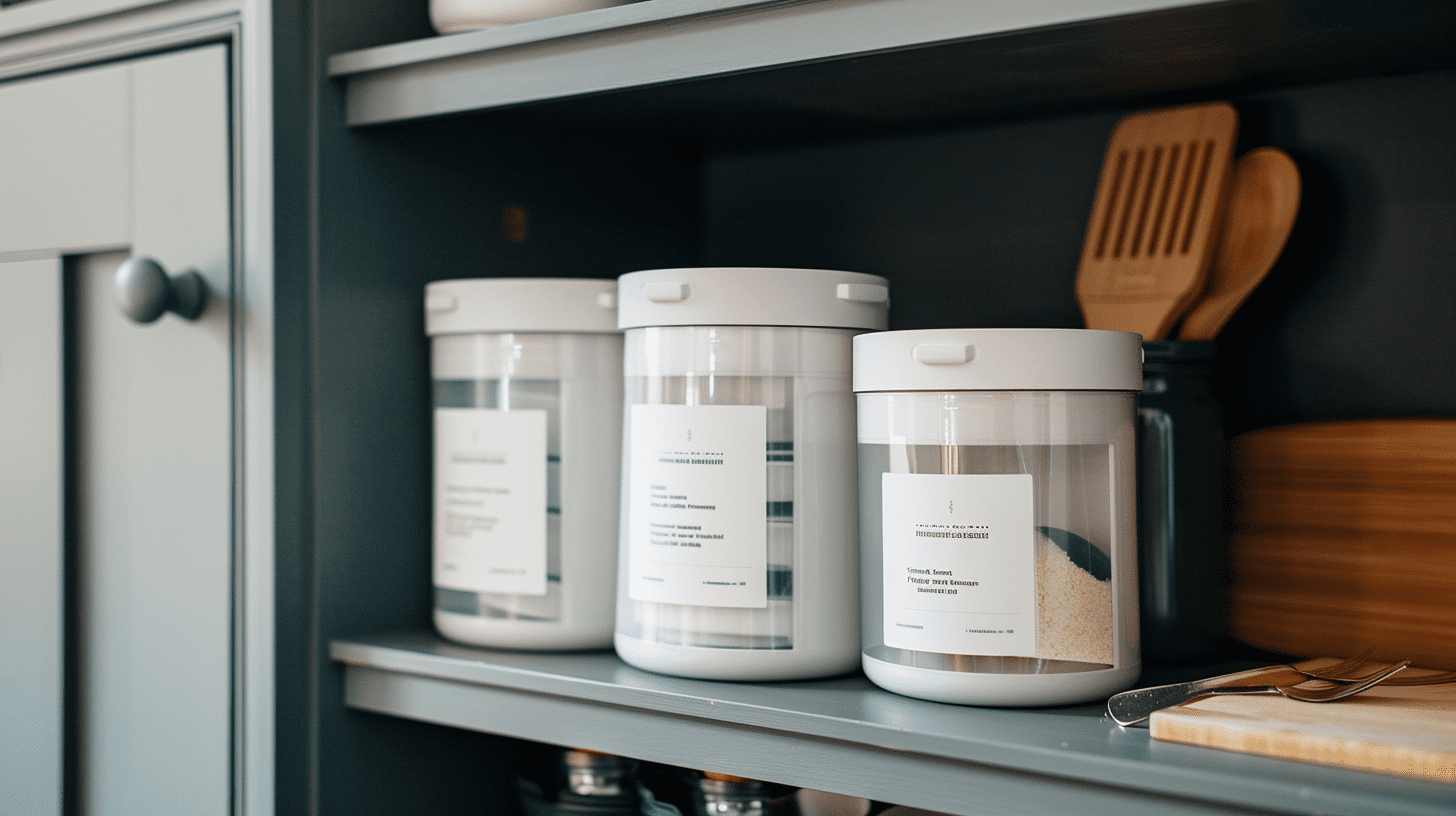
Everything supplement-related lives in one designated spot. The protein powder, the collagen, the creatine, the shaker bottles, the scoops, all of it. Not split between two cupboards. Not some in the pantry and some on the worktop. One place, full stop. When something does not have a defined home it migrates, and when it migrates it eventually disappears and then gets repurchased, and suddenly you have two of something you do not need. The ideal cupboard location is close to where you actually make your shake, near the blender if you use one, or near the sink. The slightly awkward cupboard that nobody else is really using is often perfect for this.
Label everything.
Even if it feels unnecessary because you personally know which container is which, label it. Clear labels on uniform containers mean everyone in the household can find what they need and, critically, put things back in the right place. I use a basic Dymo LabelWriter for this. It takes about 30 seconds per label and is one of those small purchases that makes a disproportionate difference to how tidy a system stays over time.
Sort the scoop situation.
The loose scoop that comes with most protein powder is a low-level annoyance that becomes a genuinely irritating daily friction point if you do not address it. Your options are: keep it inside the container (simplest), clip it to the inside of the lid with a small binder clip (slightly tidier), or replace it entirely with a silicone baking spatula. The spatula is flat, easy to dig into the powder even when the level gets low, and is properly dishwasher safe in a way the original scoop rarely is.
Add a turntable.
A lazy Susan inside a deeper cupboard is one of the most underrated kitchen organisation tools going, and it works brilliantly for supplements. You can see and reach everything without moving other things out of the way first, and nothing disappears into the back of the shelf where it gets forgotten. You can find them in IKEA, Dunelm, or on Amazon UK for a very small amount of money.
Where to Store It: Location Options for UK Homes
Kitchen cupboard away from the hob.
Ideal for most people. Cool, dark, and accessible. Just make sure it is not directly above or beside the cooker. That area gets considerably more residual heat and steam than you would expect, especially in a smaller kitchen.
Pantry or larder.
Perfect if you have one. Stable temperature, away from light, and usually good depth for larger containers.
Utility room shelf.
Genuinely excellent if yours is reasonably cool and dry. Keeps the kitchen cupboards clear and there is often more shelving available. Worth considering if kitchen storage is at a premium.
Under-stairs cupboard.
Works well in some homes, but worth checking for damp first. In older UK properties, under-stairs spaces can be more humid than the rest of the house, which is exactly the wrong environment for protein powder. A quick feel with your hand on a warm day will tell you whether it is dry enough.
Avoid:
Anywhere near the kettle or toaster, anywhere that gets direct afternoon sun, the car (temperature swings in a parked UK car are more extreme than people realise), and anywhere near strong-smelling cleaning products. Protein powder absorbs ambient odours, particularly plant-based formulations. You do not want your vanilla pea protein smelling of Flash.
Quick Reference: Storage Solutions by Situation
| Situation | Best Approach |
| Single tub, using it regularly | Keep in original tub, sealed properly, cool cupboard |
| Pouches from MyProtein or Bulk | Decant into 1 to 1.5L airtight container straight away |
| Large format tubs (2.5kg or more) | Smaller container for daily use, original tub sealed as stock |
| Multiple supplements, one person | Dedicated cupboard zone, labelled containers, turntable |
| Family or shared household | Individual labelled sections within one shared zone |
| Small kitchen, limited shelf space | OXO or IKEA stackable containers, use vertical space |
The common principle across all of these situations is the same: a genuine airtight seal, a cool and dry location, and a defined home in the cupboard. A system that is annoying to use will not be maintained. Make it easy to do correctly and it will stay sorted.

Frequently Asked Questions
Should I put protein powder in the fridge to keep it fresh?
No, and this is one of the most common mistakes people make. Refrigerating protein powder causes condensation inside the container every time you take it in and out as the temperature changes. That moisture is what causes clumping and, over time, potential spoilage. A cool room-temperature cupboard with a proper airtight container is significantly better than the fridge.
Can I keep protein powder in its original tub once it has been opened?
Yes, as long as the lid seals tightly after every use. Screw-top tubs with a well-fitting lid are designed for this and work perfectly well. The issue is usually with pouches rather than tubs. Pouches rarely seal reliably after the first few uses, which is when transferring to a container becomes worth it.
How long does protein powder last once opened?
Most protein powders carry a best-before date of 18 months to 2 years from manufacture. Once opened and stored correctly, cool, dry, and genuinely airtight, it should remain good until that date. The practical signs to watch for are a changed smell, significant discolouration, or hard clumps that do not break apart when you prod them.
Is it safe to decant protein powder into a different container?
Completely fine, and often better than keeping it in a pouch. Just make sure the container is clean and, this matters more than people realise, completely dry before you add any powder. Even a slightly damp container will cause clumping from day one. Transfer the best-before date to a label on the new container so you do not lose track of it.
My protein powder keeps clumping even in a new container. What is happening?
Almost always moisture. Either the container is not as airtight as it claims to be, the scoop is going in damp (a very common culprit; check whether you are drying the scoop after washing it), or there is background humidity in the storage location. Switching to an OXO Pop container with a proper silicone seal and committing to a consistently dry scoop usually resolves persistent clumping.
Can I pre-measure single servings in advance?
Yes. Small screw-top containers or supplement travel pods work well for this, and they are particularly useful for gym bags, early starts, or days when you need to make a shake somewhere other than home. Keep them sealed and make sure they are completely dry before filling.
The Honest Summary
Protein powder storage is not complicated, but it rewards being intentional about it. Which, honestly, is true of most things involved in keeping a household running smoothly.
A good airtight container (the OXO Pop range is my firm recommendation for most people), a cool dry spot well away from the hob, and a dedicated zone in one cupboard with clear labels: that is the whole system. The daily friction points are all solvable with about twenty minutes of setup and a small amount of money. The lost scoop, the pouch that will not seal properly, the three tubs in different places that nobody is sure which is current: none of it is a big problem once you have got a proper system in place.
If you have got teenagers who have recently started training, designate their section of the supplement cupboard immediately. The alternative is a slow drift towards chaos that nobody caused deliberately but everyone has to live with!
See more of my home organisation posts here

Becky is the voice behind Life in Velvet, an organised, intentional living blog focused on practical food, calm homes, thoughtful projects, and everyday systems that make real life feel easier. A mum of 3 living in the UK, Becky writes from lived experience, sharing what works, what doesn’t, and the decisions that make family life run more smoothly.
With a background in marketing and content writing, and over a decade of blogging experience, she brings a thoughtful, structured approach to everything from baking and home projects to routines and decision-making. Life in Velvet is where planning meets creativity, with ideas designed for real homes and real life.