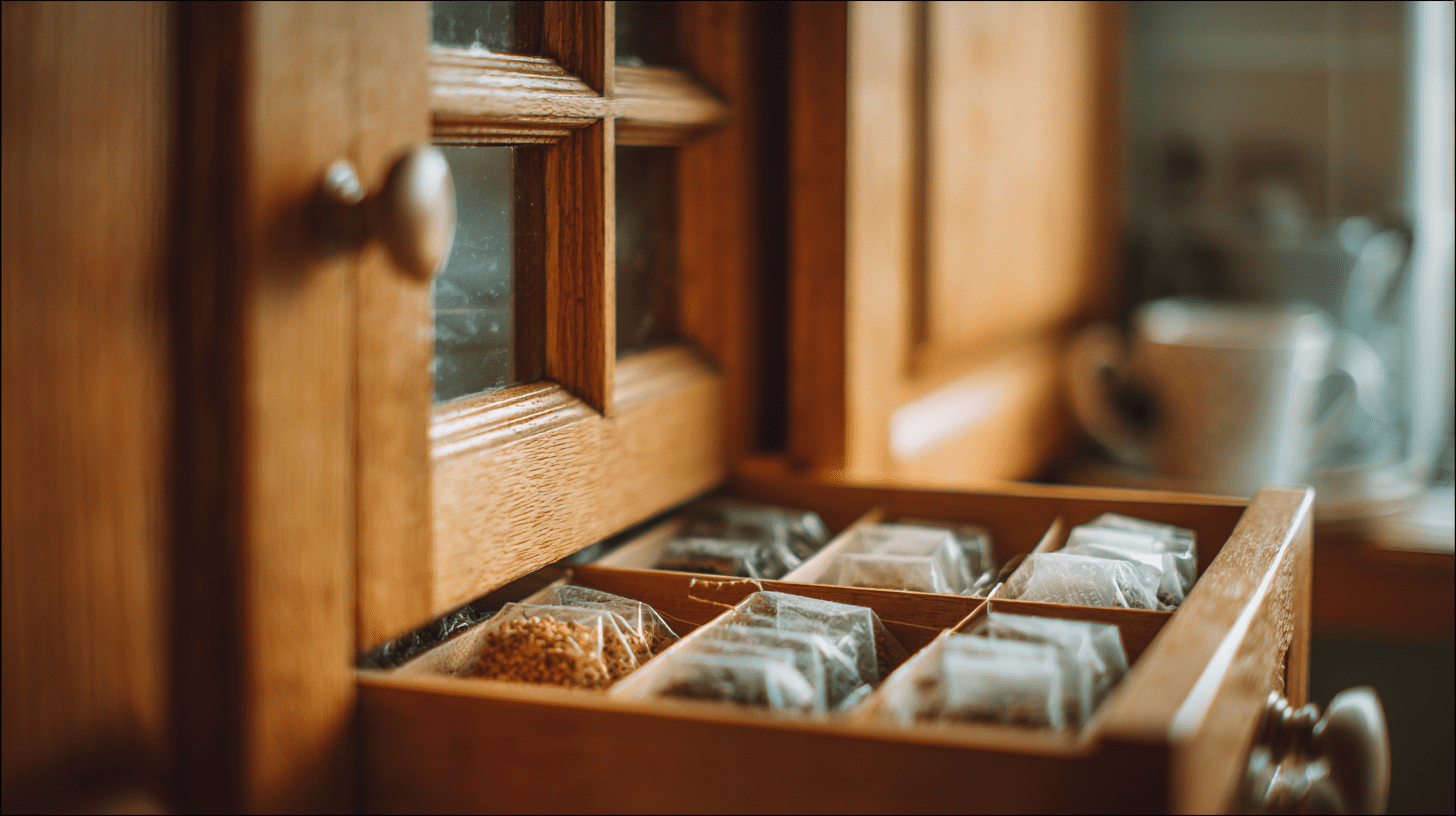
If you’ve ever opened a kitchen cupboard and had three boxes of tea fall on your head, you’re in the right place. The best way to organise tea bags is to get them out of their boxes and into a dedicated container or section of a drawer, grouped by type and stored somewhere cool, dark, and away from your hob. That’s really the core of it. Everything else is just figuring out which version works for your kitchen.
But let me give you a bit more than that, because the tea situation in a British household is genuinely different to what you’ll find in most organisation blogs. I say that as someone who moved to the UK from the States and had to completely recalibrate my understanding of how seriously people take their tea here. In America, tea is a lifestyle choice. In Britain, it’s just… life.
Which means you’ve probably got a very different problem to manage. You’re not dealing with a neat little collection of herbal sachets. You’ve got a 240-bag box of PG Tips, a half-empty Yorkshire Tea, something floral your mum bought you at Christmas, three different green teas you bought with good intentions, and whatever those lemon and ginger bags are doing at the back. That’s the real tea organisation challenge, and it deserves a proper answer.
Why the boxes have to go
I’ll say it plainly: the boxes are the problem. They’re big, they don’t stack properly, they fall over the second you’re not watching them, and by the time you get to the last few bags, the box is battered and taking up the same amount of space it did when it was full.
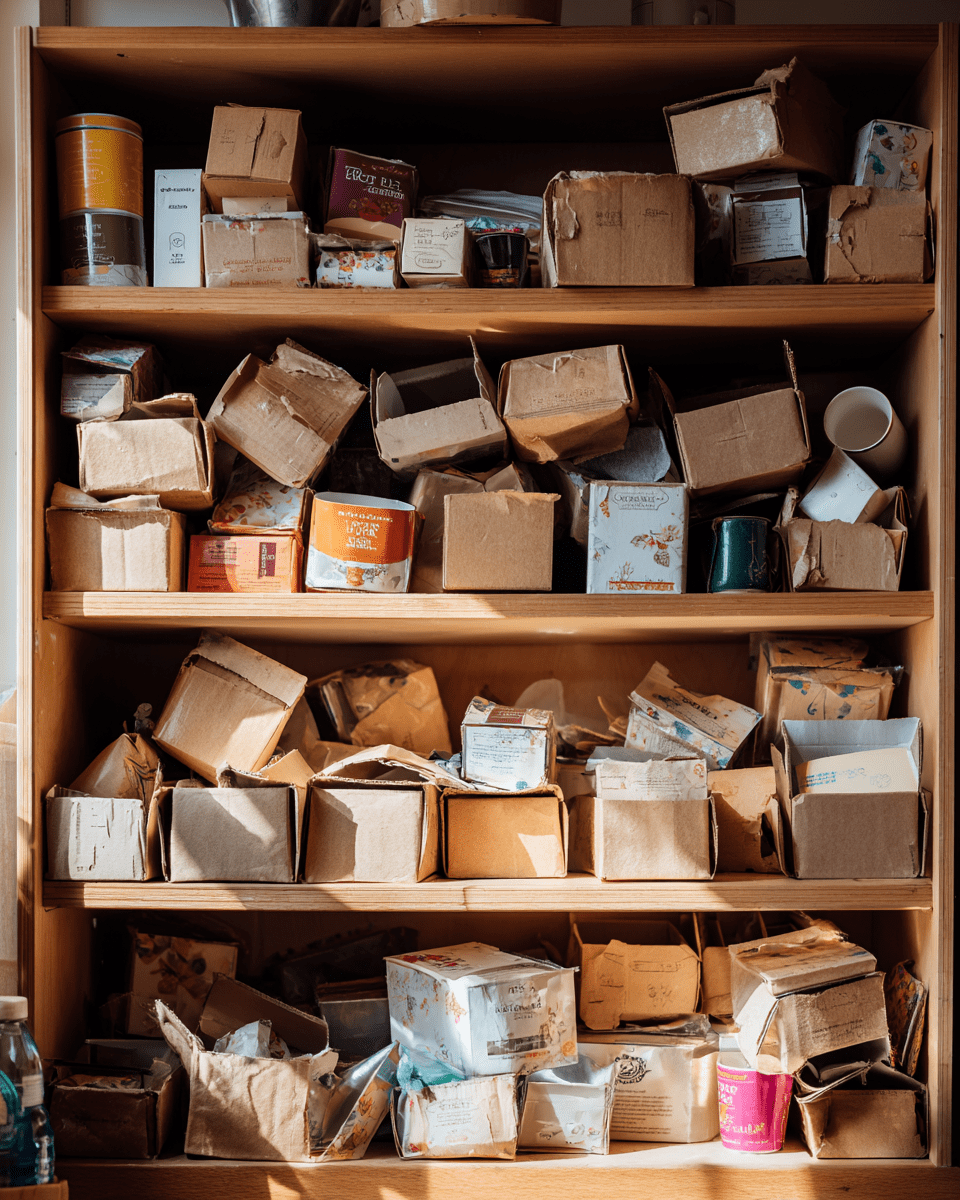
The moment I stopped keeping tea in its original box was the moment my tea cupboard made sense.
The trick is simple: take the bags out, pop them into a tin, a tray, a drawer insert, or a container (something with sections if you can), and just use the box front as a label if you need to. Some people cut the label off and tuck it in with the bags so they can see what’s what. Totally fine. Do whatever helps.
The exception is if you’ve got a very small collection, maybe two or three types, and a proper tea chest or wooden box with a lid. In that case, keeping things in the original boxes inside the chest works fine. But if you’ve got more than three or four types on the go (and let’s be honest, most of us have), the boxes need to go.
The main methods, honestly ranked
Here’s where most blog posts give you a big list of seventeen storage ideas with Amazon affiliate links and not much else. I’m going to be more honest than that and tell you which methods actually work depending on your kitchen.
The drawer insert (best if you have the drawer)
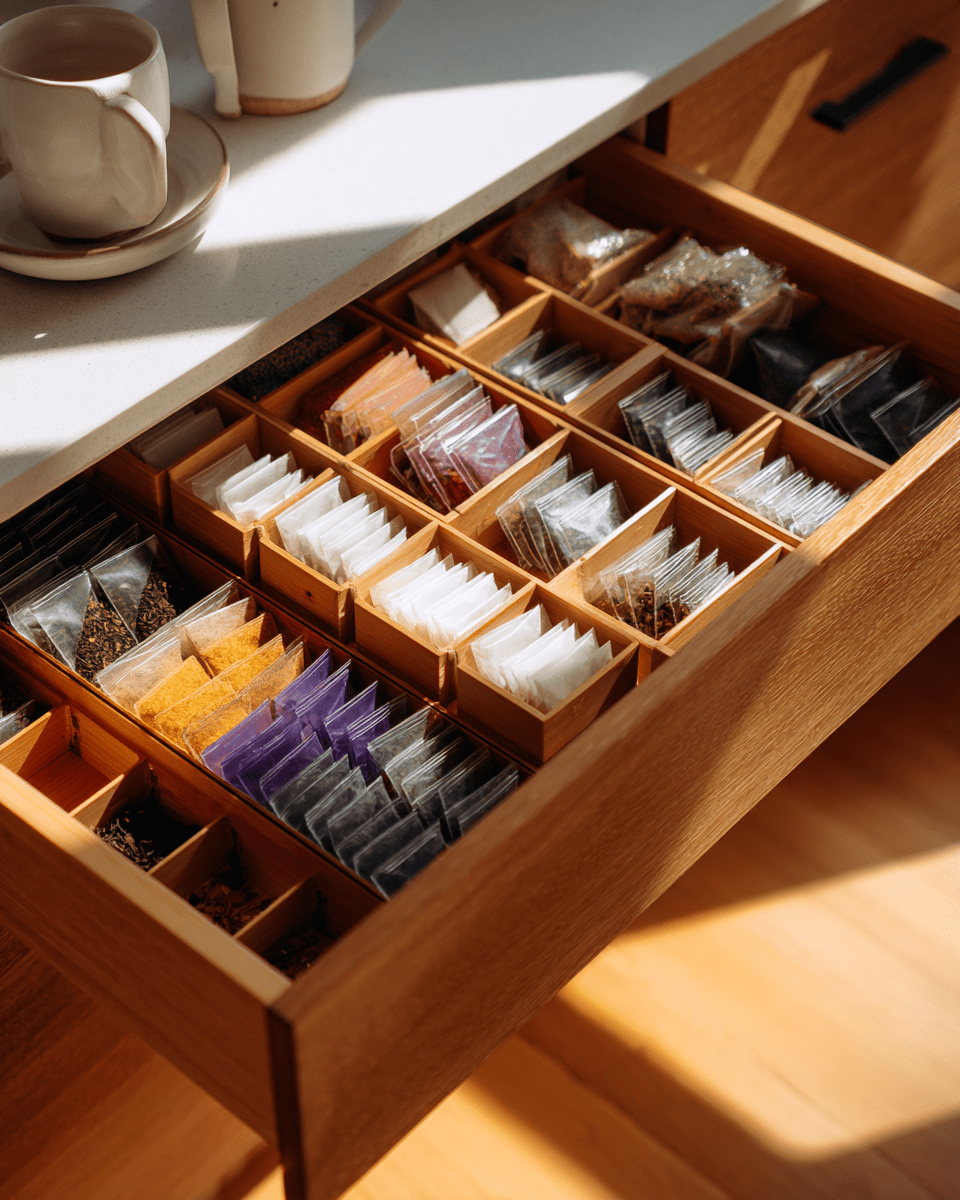
If you have a kitchen drawer you can dedicate, or even half-dedicate, to tea, this is genuinely the nicest setup. You can get bamboo drawer inserts with compartments specifically sized for tea bags, and they are satisfying in a way that’s hard to explain. Everything visible, everything accessible, nothing falling on anyone.
The downside is that you need a spare drawer, which in a British kitchen is not always a given. My kitchen in South East London has approximately four drawers, all of them already doing their best.
If you do have the drawer space, a bamboo tea drawer organiser from Amazon UK is ideal. Search for “bamboo tea bag drawer organiser” and you’ll find plenty of options around the £10-£20 mark. Lakeland also occasionally stocks good drawer insert options if you’d rather buy on the high street.
The tin or caddy on the worktop (best for daily drinkers)
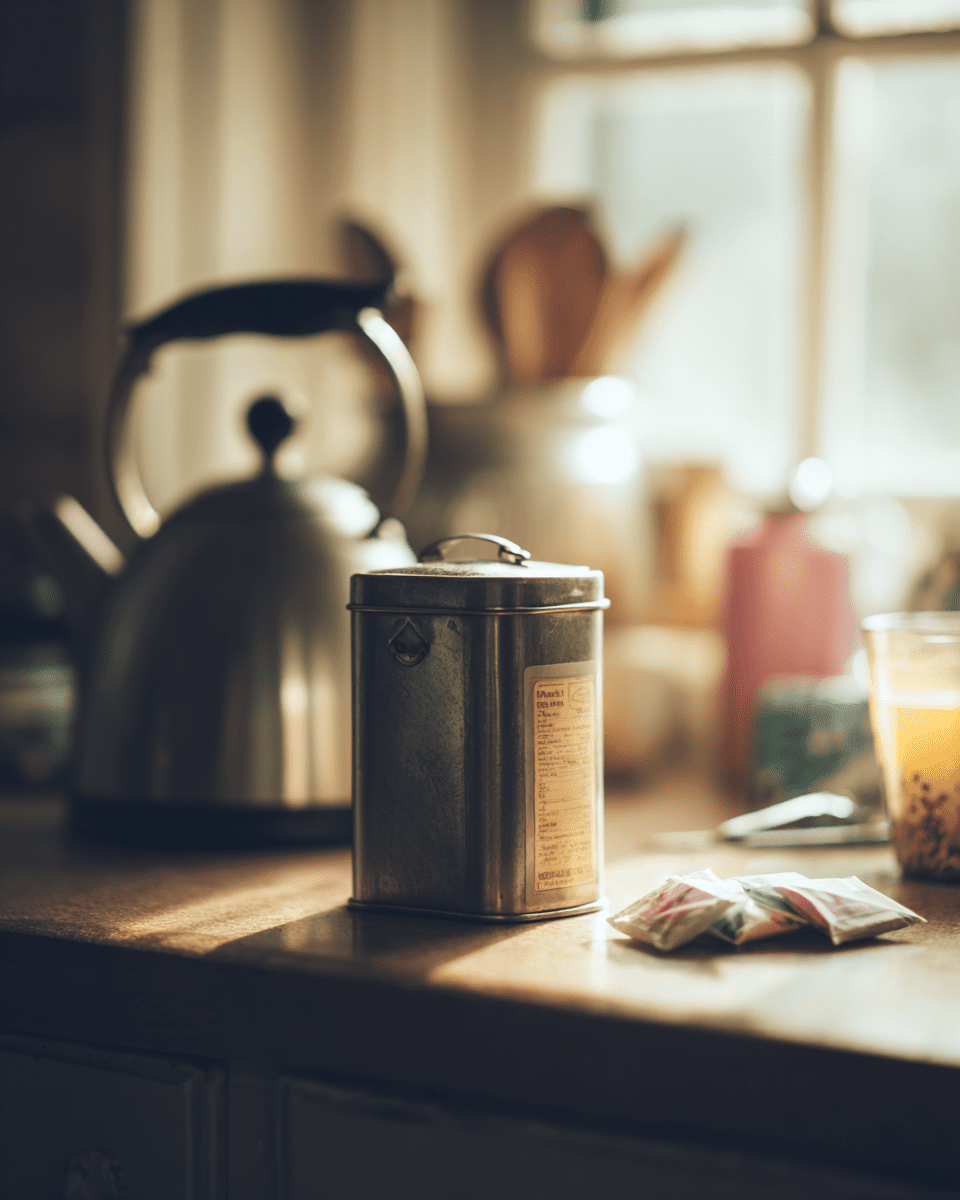
If you drink tea constantly (and we’re in the UK, so the answer might well be yes), having your main everyday tea right there on the worktop in a proper tin or caddy makes a lot of sense. This works especially well if you’re a one-type household or a two-type household, so builder’s tea and one herbal, for example.
A good airtight tin keeps tea fresh, looks nice, and takes up minimal space. Just don’t put it right next to the hob, because heat and steam will mess with the flavour over time. A couple of feet away on the same worktop is fine.
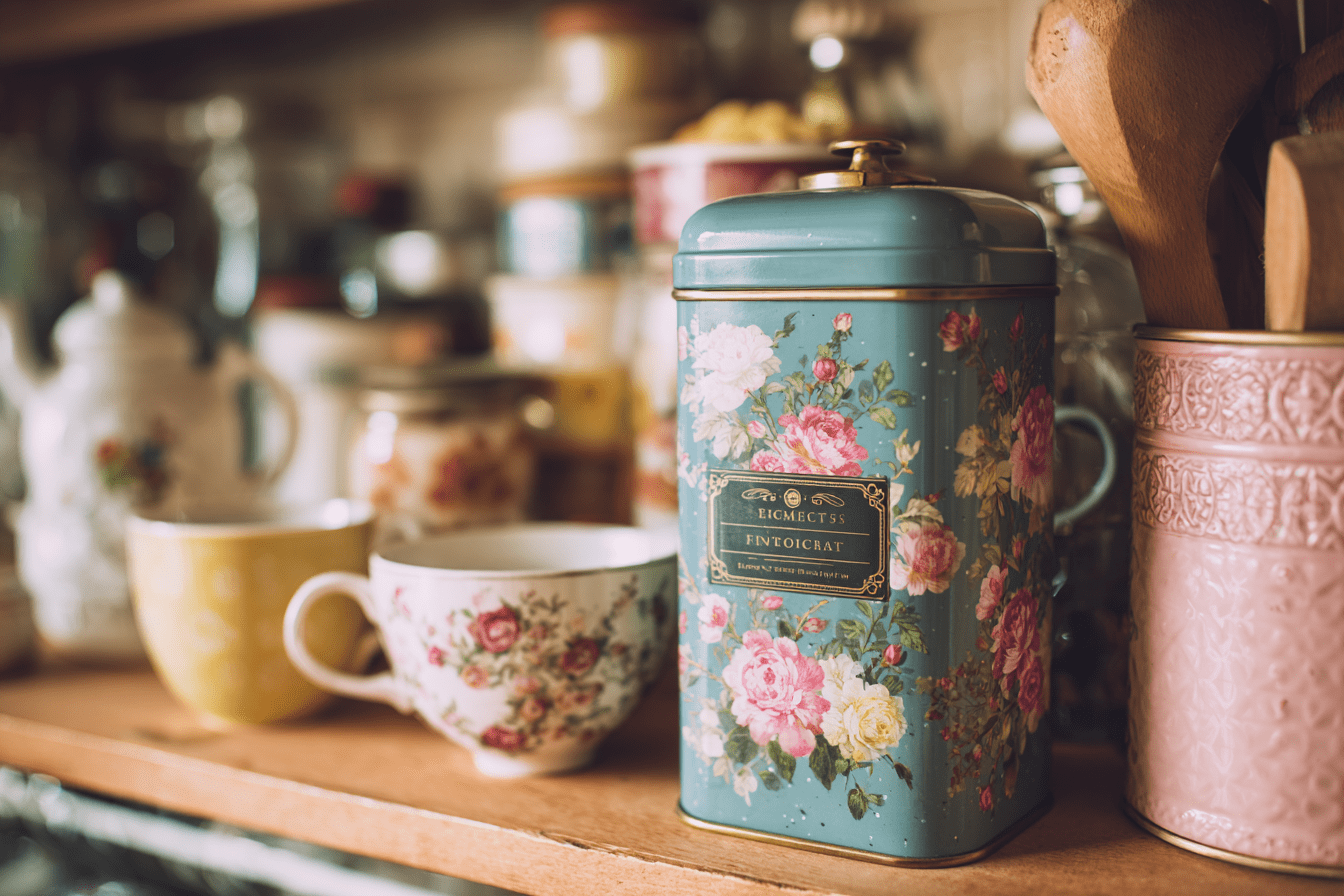
For the everyday tea, an old Fortnum & Mason tin works perfectly. Or any airtight tin, really. The fancy presentation isn’t the point. The seal is.
The container in a cupboard (best for variety collectors)
This is what I do, and it’s what I’d recommend to most people. Get one or two clear containers with compartments. I use a couple of those divided plastic boxes from IKEA (the KUGGIS boxes are good for this, or the SAMLA range with dividers) and keep everything inside. One box for caffeinated teas, one for herbal and fruit teas.
The whole thing lives on a shelf in the kitchen cupboard, takes up much less space than the original boxes would, and means I can actually see what I’ve got. When I open it to offer someone a tea, they can see their options without me having to narrate them.
You can do the same with baskets. A couple of wicker baskets side by side, bags sorted loosely by type, is honestly fine. It doesn’t have to be perfect. It just has to be functional.
The basket-on-the-shelf method (best for chaos managers)
Look, some people are not going to do the full container system. If that’s you, a basket is your friend. Just get all the tea out of the cupboard, put it in one basket (or two, one for “everyday” and one for “everything else”), and put the basket somewhere accessible.
This isn’t the most organised method but it’s approximately ten thousand times better than loose boxes everywhere, and it takes about four minutes to set up. Done is better than perfect.
How to actually sort your tea bags
Once you’ve picked your storage method, you need to decide how to group things. There are a few ways to do this:
By caffeine: caffeinated (black teas, green teas, chai) in one section, caffeine-free (fruit teas, herbal, rooibos, chamomile) in another. This is the most practically useful split, especially if you’re making tea for kids or someone who can’t have caffeine in the evenings.
By type: black teas together, green teas together, herbal together. A bit more granular but great if you have a proper collection.
By frequency: your most-drunk tea front and centre, the occasional ones at the back or in a separate spot. Simple and honest.
Honestly, the caffeine split is the one I keep coming back to. It answers the most questions fastest when someone’s standing in your kitchen asking for a tea at 9pm.
The gift tea problem (nobody talks about this)
Every year, without fail, someone gives you a beautiful tin of tea for Christmas or a birthday. Fortnum & Mason, Whittard, Pukka gift sets, whatever it is. It’s lovely, but it doesn’t fit anywhere, it’s already in a tin so it feels wrong to decant it, and suddenly you’ve got this large decorative object that doesn’t belong in your normal tea system.
Here’s what I do: gift teas get their own small shelf or section, separate from the everyday stuff. I think of them as “special occasion tea” and treat them accordingly. They come out when someone nice comes to visit, or on a Sunday afternoon when I actually have a moment. They don’t get lumped in with the PG Tips. They get to be special.
This also stops them from getting lost and forgotten at the back of a cupboard until they go stale, which is a waste of a lovely gift.
What nobody mentions about storing tea properly
You’ll see everywhere that tea should be kept in an airtight container away from light and heat. True. But there are two things that most posts don’t mention:
Tea absorbs smells. Keep it away from your spices, especially anything strong like cumin or smoked paprika. A cupboard that smells strongly of spices is not a great environment for delicate teas. I learned this the hard way with a box of green tea that tasted inexplicably of curry for about a fortnight.
Tea does go off. Not in a dangerous way, but the flavour deteriorates. Most tea bags have a best before date of two years, but beyond that they just taste flat and a bit stale. Have a clear-out every six months or so. If you’ve had something at the back of a drawer for two years and you’ve never felt motivated to drink it, it’s probably not going to get drunk.
What about a tea station?
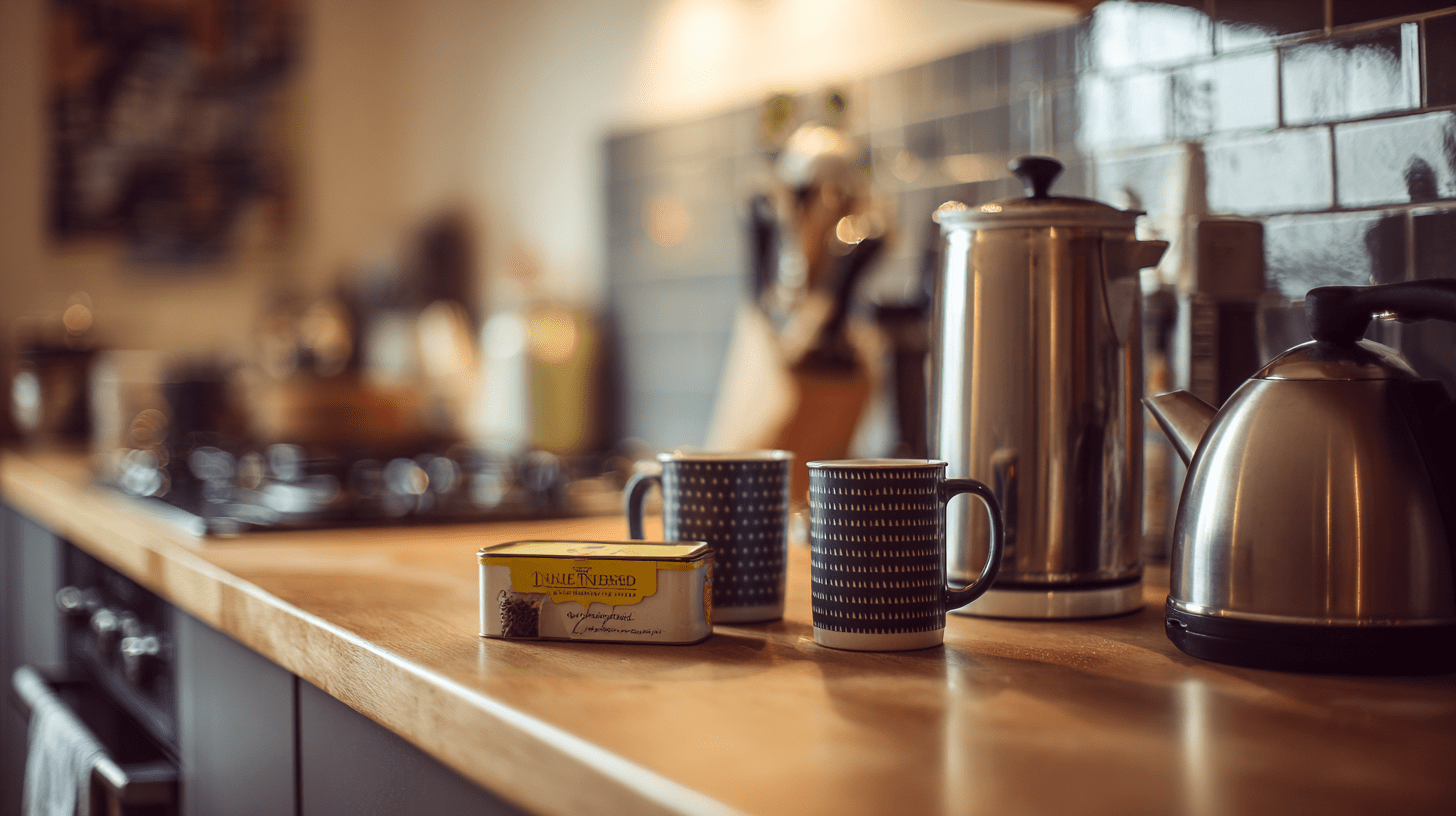
A proper tea station, with all your tea, mugs, kettle, and anything else you need in one spot, is genuinely lovely if your kitchen layout allows for it. It makes the whole ritual of making tea feel more intentional, and it means you’re not opening four different cupboards every time you want a brew.
If you’ve got a bit of worktop space near the kettle, this can work really well. A small tray corrals everything together. Your everyday tea in a tin, a few mugs, maybe a little pot for teaspoons. It doesn’t need to look like an Instagram flat lay to function well.
If your kitchen is small, a tea station might just mean having one designated shelf in one cupboard right next to the kettle, which is essentially the same thing in less space. Still counts. Still satisfying.
FAQs
What’s the best container for storing tea bags in a cupboard?
Any airtight container with compartments works well. Clear plastic divided boxes (like the IKEA KUGGIS range) are good because you can see everything at a glance. Wooden tea chests look beautiful but check that they actually seal properly before you rely on them for long-term storage. Bamboo drawer inserts are brilliant if you have the drawer space. For everyday builder’s tea, a simple airtight tin on the worktop does the job perfectly.
Should you keep tea bags in their original boxes?
Only if you have a very small collection and enough cupboard space. Most of us have more than two or three types of tea, and the boxes are bulky, don’t stack neatly, and waste space. Getting the bags out of the boxes and into a proper container frees up a surprising amount of room and makes everything much easier to see and access.
How do you stop tea bags going stale?
Keep them in an airtight container, away from heat, light, and strong smells (particularly spices). Don’t store them next to the hob or on a worktop in direct sunlight. Tea bags in individual foil wrappers have more built-in protection than unwrapped bags, which need a properly sealed container more urgently.
How should you organise tea bags if you have children?
Splitting tea into caffeine and caffeine-free sections is really useful in a family household. It means you can offer a child or teenager a herbal or fruit tea without having to read every label at 7pm. Keep the herbal teas accessible, as fruit teas and chamomile are usually a hit with kids, and store the caffeinated teas separately.
Can you store different types of tea together in the same container?
Yes, as long as the bags are individually wrapped (which most tea bags are). Unwrapped tea bags, the kind that come loose in a box without individual foil sachets, can absorb each other’s flavours if stored together, so those are better kept in separate sealed sections or small zip-lock bags. For standard individually wrapped bags, sharing a container or drawer is completely fine.
Tea organisation is one of those small domestic things that makes a surprisingly big difference to daily life, or at least to the daily ritual of making a cup. Once your tea is sorted and you can find what you want in about three seconds flat, it becomes one of those little systems that just works quietly in the background. And honestly, those are my favourite kind.
See more of my home organisation posts here!

Becky is the voice behind Life in Velvet, an organised, intentional living blog focused on practical food, calm homes, thoughtful projects, and everyday systems that make real life feel easier. A mum of 3 living in the UK, Becky writes from lived experience, sharing what works, what doesn’t, and the decisions that make family life run more smoothly.
With a background in marketing and content writing, and over a decade of blogging experience, she brings a thoughtful, structured approach to everything from baking and home projects to routines and decision-making. Life in Velvet is where planning meets creativity, with ideas designed for real homes and real life.