Key Takeaways
- No added sugar doesn’t mean sugar-free – fruit-based lollies still contain natural sugars, which is fine for most families
- Shop-bought options like Rowntree’s Fruit Pastilles lollies and Del Monte fruit tubes work well and cost around £2-3 for a multipack
- Homemade ice lollies take about 10 minutes of active time but need 4-6 hours freezing – batch-making on Sunday works better than making them on demand
- Ice lolly moulds (£8-15) pay for themselves after 2-3 batches compared to shop-bought
- The best no added sugar lollies use whole fruit, not fruit juice concentrate, which keeps the fibre intact
Introduction
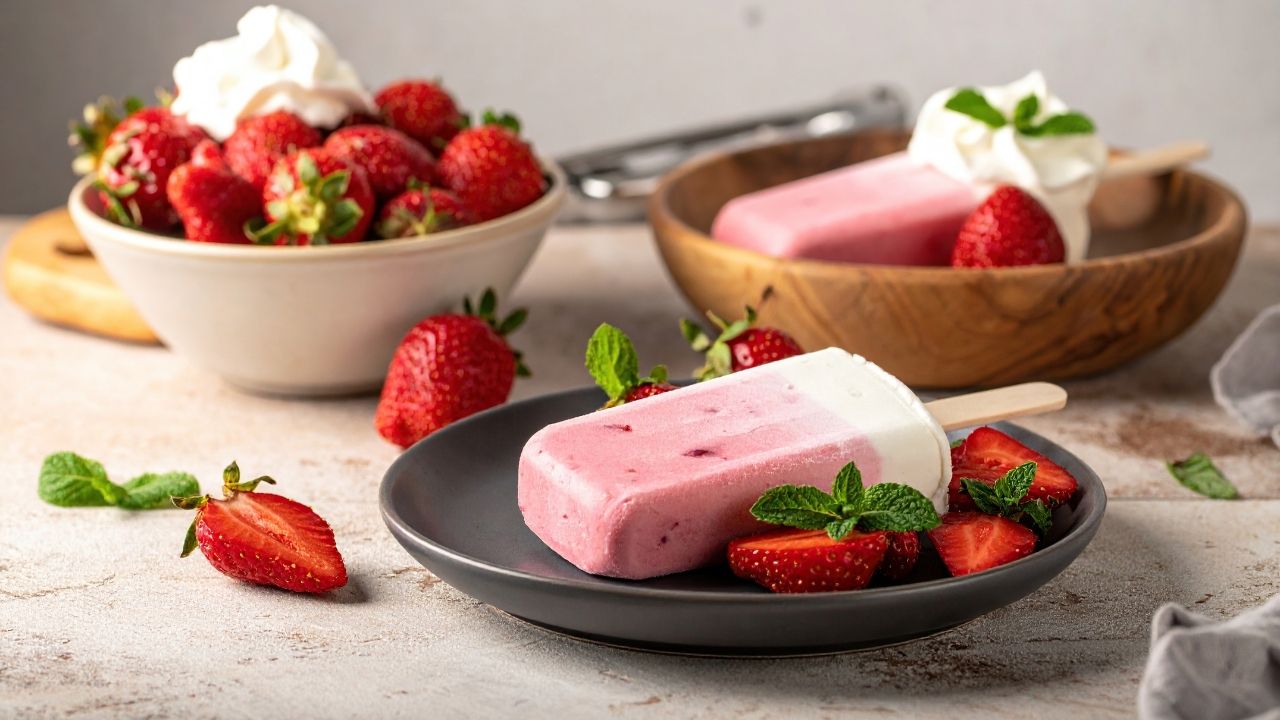
If you’re trying to reduce added sugar in your family’s diet without turning every treat into a battleground, no added sugar ice lollies sit in that sweet spot between “actually healthy” and “the kids will eat them without complaint.”
This guide is for anyone who wants to make better freezer choices but doesn’t have time to overthink it. Whether you’re comparing shop-bought brands, wondering if homemade is worth the effort, or just trying to understand what “no added sugar” actually means on a label, I’ve done the comparison work so you don’t have to.
This isn’t for you if you’re looking for completely sugar-free options (those need artificial sweeteners, which is a different conversation) or if you’re after elaborate frozen dessert recipes. This is straightforward: fruit-based ice lollies that don’t need added sugar to taste good.
What makes this more useful than the standard listicles? I’ve actually bought the shop versions, made the homemade ones multiple times, dealt with the sticky fingers, and worked out which approach genuinely fits into a normal week. No fluff, no recipes you’ll never make. Just honest comparison!
What ‘No Added Sugar’ Actually Means
Let’s sort this out first, because the labelling can be confusing.
“No added sugar” means exactly that – no sugar has been added during manufacturing. But it doesn’t mean the product is sugar-free. Fruit contains natural sugars (fructose), and those are still present in fruit-based ice lollies.
This is genuinely fine. The natural sugars in whole fruit come packaged with fibre, vitamins, and water, which means they’re processed differently by your body than refined sugar. An ice lolly made from blended strawberries and banana isn’t the same as one made from sugar syrup, even if both contain sugar.
What you’re avoiding with no added sugar ice lollies is:
- Refined white sugar
- Glucose syrup
- Fruit juice concentrate (which is essentially concentrated sugar)
- Honey or agave (still added sugars, despite being “natural”)
Some brands use fruit juice concentrate and still claim “no added sugar” because technically it’s fruit. Legally accurate, nutritionally questionable. The best options use whole fruit or fruit puree instead.
If you see “sugar-free” on a label, that usually means artificial sweeteners have been used. Different category entirely, and one I’m not covering here.
Why Choose No Added Sugar Ice Lollies
The honest reason most of us reach for these isn’t complicated: they feel like a reasonable choice when a child asks for something cold and sweet on a hot day.
Standard ice lollies can contain 10-15g of added sugar per lolly. That’s about 3 teaspoons of sugar in something that disappears in five minutes. No added sugar versions typically have 6-8g of natural sugar from the fruit itself, which comes with actual nutrients.
Beyond the sugar content, there’s the mental load aspect. Having a freezer stocked with something you feel OK about saying yes to means one less negotiation, one less moment of “is this fine or am I being too strict or too lenient.” Decision fatigue is real, and small systems like this help.
They’re also genuinely useful for:
- Soothing sore throats or teething
- Cooling down after school or activities
- Treating minor bumps (works better than ice packs for some children)
- Portion control – one lolly is one serving, no second-guessing
The practicality matters more than the perfection.
Best Shop-Bought No Added Sugar Ice Lollies
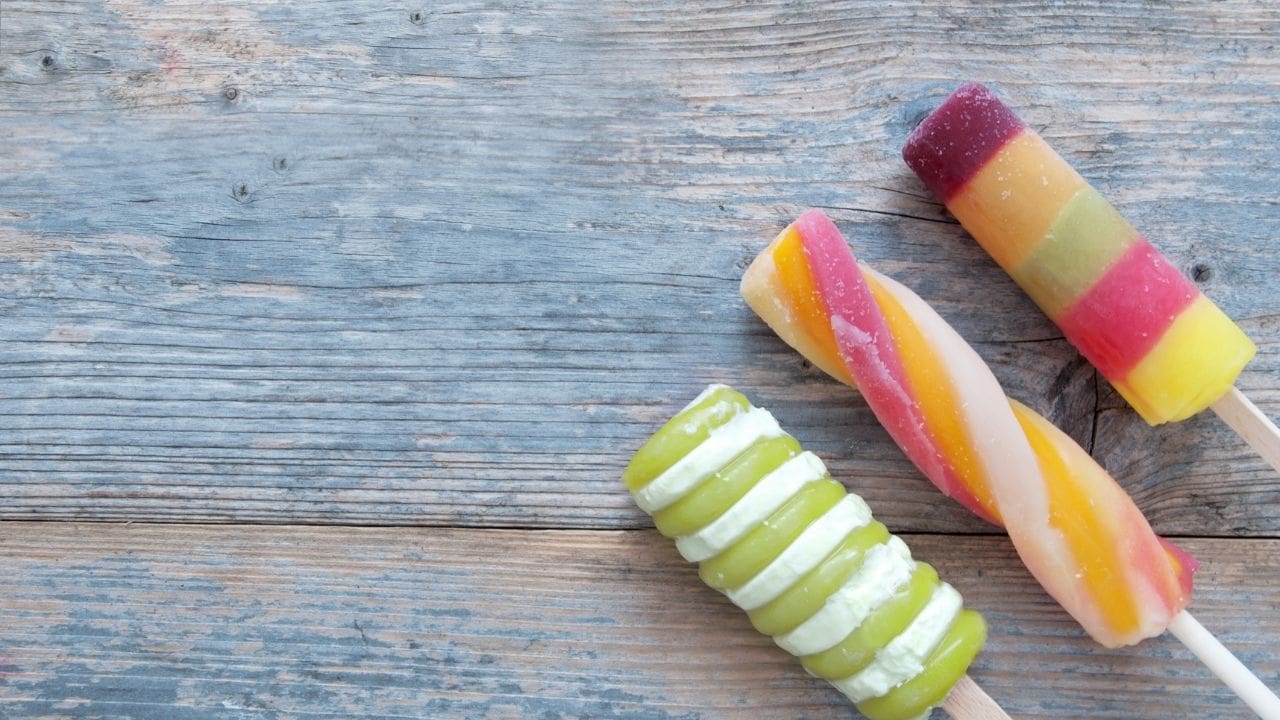
I’ve worked through most of the supermarket options over several summers. Here’s what actually works.
Rowntree’s Fruit Pastilles Ice Lollies (No Added Sugar)
These are the most reliably available across major supermarkets. About £2.50 for a pack of 10.
They taste like proper Fruit Pastilles, which means children recognise and accept them immediately. Each lolly contains fruit juice and puree with no added sugar, though they do use concentrated fruit juice, so they’re not perfect nutritionally.
Practical notes: they’re small, which is ideal for younger children but feels mean for teenagers. They melt fast in warm weather, so factor in sticky hands. The wrappers can be fiddly.
Good fit for: Families with children under 10, keeping costs down, easy availability
Not ideal for: Anyone avoiding concentrated fruit juice, teenagers who want a more substantial lolly
Del Monte No Added Sugar Fruit Tubes
Around £3 for 10 tubes. Slightly more expensive but genuinely fruit-forward.
These use fruit puree rather than juice, which means more fibre and a thicker texture. Flavours include strawberry, tropical, and orange. They taste properly fruity rather than artificially sweet.
The tube format is excellent for small children – less mess, easier to hold, and you can squeeze it up as it melts. Downside: more plastic waste than stick lollies.
Good fit for: Toddlers and young children, reducing mess, actually tasting like real fruit
Not ideal for: Reducing plastic use, older children who prefer traditional lolly formats
Tesco Finest Fruit Ice Lollies
About £2 for 6. Premium end of supermarket own-brand.
Made with fruit puree and a small amount of fruit juice. Flavours tend to be more sophisticated (raspberry and elderflower, mango and passionfruit). They’re larger than Rowntree’s, which makes them better for older children and adults.
Honestly, these taste closer to homemade than any other shop-bought option I’ve tried. The texture is grainy in a good way, like you’ve actually frozen blended fruit.
Good fit for: Adults, older children, wanting something that feels premium
Not ideal for: Budget-conscious buying, very young children (the size is too much)
What to Avoid
Some “no added sugar” options rely heavily on apple juice concentrate as a base. Apple juice concentrate is basically sugar water with the fibre removed. Not terrible, but not particularly useful either.
Watch out for products that list “concentrated fruit juice” high on the ingredients list while actual fruit puree appears much lower down. You want the opposite.
Homemade No Added Sugar Ice Lollies: Is It Worth It?
Short answer: yes, if you’re already doing Sunday batch prep. No, if you’re expecting to make them on demand when someone asks for one.
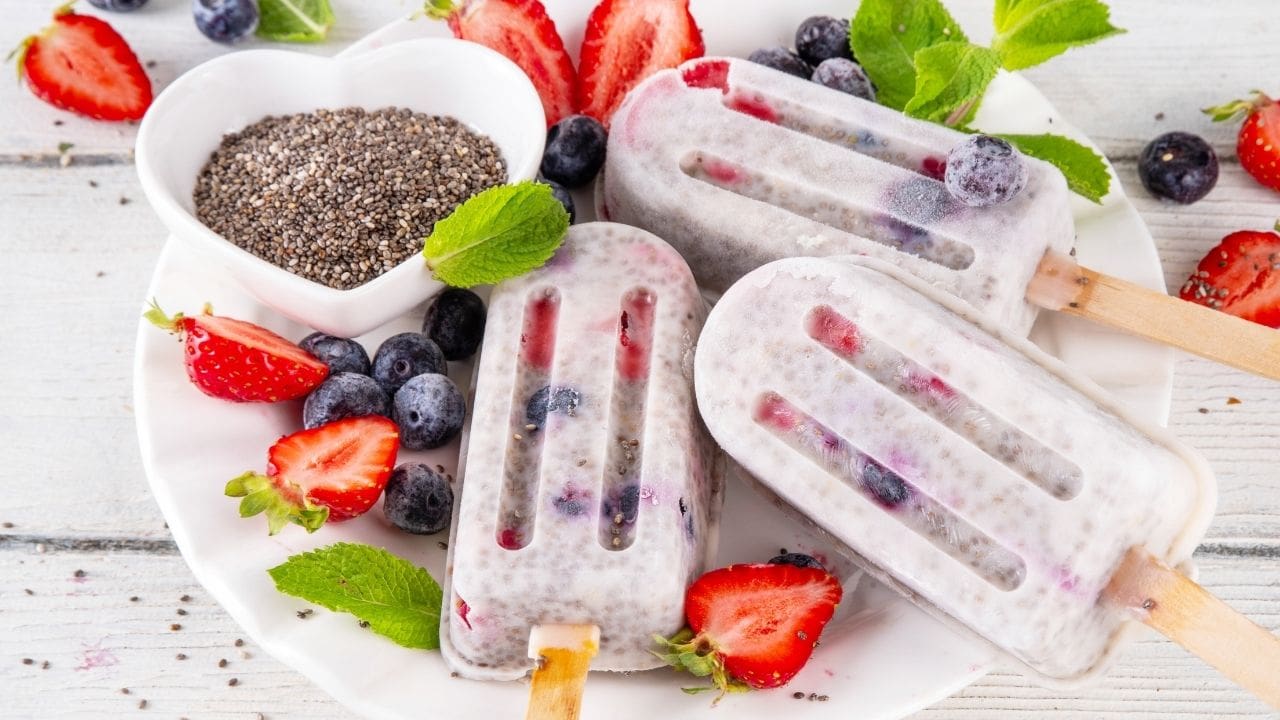
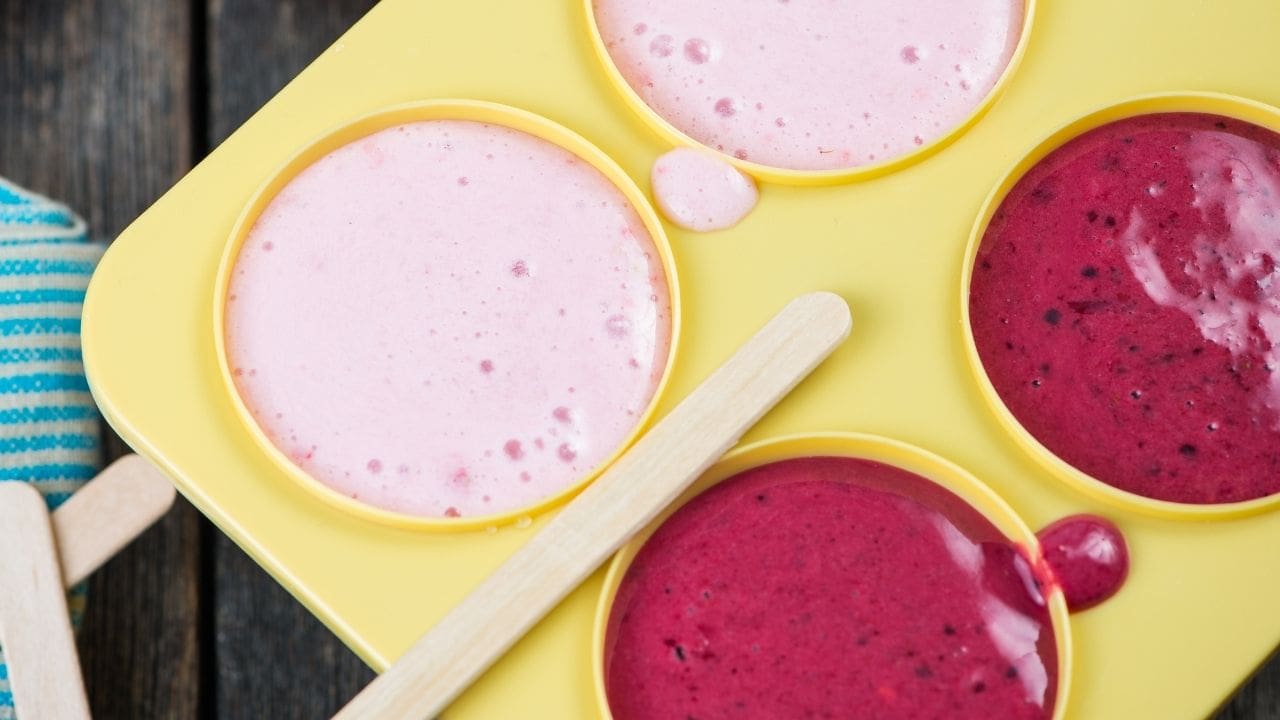
The active time is genuinely quick – about 10 minutes. But they need 4-6 hours to freeze solid, which means planning ahead. I make a batch every Sunday during summer, and it works because it’s routine, not reactive.
Basic Equipment You’ll Need
Ice lolly moulds are the only essential purchase. Expect to spend £8-15 for a decent set.
Look for:
- BPA-free plastic or silicone
- Moulds with drip-catcher rims (this matters!)
- Individual moulds that release easily
- Dishwasher-safe
I use a set from Lakeland (about £12 for 6 moulds). They’ve lasted three summers without cracking or staining.
You’ll also need:
- A blender (even a basic stick blender works)
- Measuring jug
- Sieve (optional but useful for removing seeds)
Three Actually Simple Recipes
All measurements below include both metric (UK) and US conversions.
1. Strawberry and Banana (Makes 6 lollies)
- 200g (1⅓ cups) strawberries, hulled
- 1 ripe banana
- 100ml (scant ½ cup) water or coconut water
Blend everything until smooth. Pour into moulds. Freeze for at least 4 hours.
That’s it. The banana adds natural creaminess and sweetness. If the mixture seems too thick, add more water until it pours easily.
2. Mango and Lime (Makes 6 lollies)
- 300g (2 cups) frozen mango chunks
- Juice of 1 lime
- 100ml (scant ½ cup) coconut milk
Blend until smooth. Taste and add more lime if you want it sharper. Pour and freeze.
Frozen mango is cheaper than fresh and works perfectly for this. The coconut milk adds richness without dairy.
3. Watermelon and Mint (Makes 6 lollies)
- 400g (2½ cups) watermelon chunks, seeds removed
- 5-6 fresh mint leaves
- Squeeze of lemon juice
Blend briefly – you want some texture, not completely smooth. Strain through a sieve if you prefer no pulp. Pour and freeze.
This is the most refreshing option and genuinely tastes like summer. Children either love or hate the mint, no middle ground.
Cost Comparison
A batch of homemade strawberry and banana lollies costs approximately:
- Strawberries (200g): £1.50
- Banana: £0.20
- Total: £1.70 for 6 lollies = 28p per lolly
Shop-bought no added sugar lollies average 25-30p each, so the cost is comparable. You’re not saving significant money, but you do get complete control over ingredients and no plastic waste beyond the reusable moulds.
Ice lolly moulds (£12) pay for themselves after about 3-4 batches compared to buying equivalent shop versions.
Common Mistakes and How to Avoid Them
Filling moulds too full Leave about 1cm at the top. Liquid expands when it freezes, and overfilled moulds either crack or push the lid off, creating freezer mess.
Not tapping out air bubbles After filling, tap each mould firmly on the counter a few times. This releases trapped air bubbles that create weak spots and make lollies break when you try to remove them.
Trying to remove them too soon If a lolly won’t release easily, it’s not frozen enough. Run the outside of the mould under warm water for 10-15 seconds, then try again. Forcing it just breaks the lolly.
Using only fruit juice Fruit juice freezes into solid ice without any creaminess. Add banana, coconut milk, or yogurt (if you’re OK with dairy) to improve texture.
Making them when someone asks This doesn’t work. Batch-make on a Sunday, and they’re available all week. Trying to make them on demand leads to disappointed children and your own frustration.
Not labelling batches If you make multiple flavours, mark them with a permanent marker on the stick or use different coloured moulds. Otherwise, you’re playing freezer roulette.
Comparison: Shop-Bought vs Homemade
| Factor | Shop-Bought | Homemade |
|---|---|---|
| Time investment | Zero (just buy them) | 10 mins active, 4-6 hours freezing |
| Cost per lolly | 25-30p | 25-35p |
| Ingredient control | Limited | Complete |
| Availability | Immediate | Requires planning |
| Texture | Consistent | Can vary by recipe |
| Plastic waste | High (individual wrappers) | Low (reusable moulds) |
| Child acceptance | High (familiar brands) | Variable (depends on flavour) |
The genuine trade-off is convenience versus control. Shop-bought wins for grab-and-go ease. Homemade wins if you want to know exactly what’s in them and avoid packaging waste.
Most practical approach? Keep both. Shop-bought for daily availability, homemade for weekend batches when you’re already in the kitchen.
Storing and Batch-Making Tips
How long do homemade ice lollies last? About 2-3 months in the freezer, though texture quality is best within the first month. After that, they can develop freezer burn or ice crystals.
Best batch-making system Make 12 lollies every Sunday using two sets of moulds. That gives you roughly two per person (family of four) during the week, with a few spare for Friday treats.
Storage after removing from moulds Once frozen solid, you can pop them out of the moulds and store them in a freezer bag or container. This frees up the moulds for the next batch. Wrap each lolly in parchment paper first to prevent them sticking together.
Rotating flavours Make the same flavour for two weeks running, then switch. This is more efficient than trying to make three different flavours every week, and children generally prefer consistency anyway.
Using leftover smoothie If you make smoothies for breakfast, double the batch and freeze the extra as ice lollies. Same ingredients, different format, no additional effort.
What About Yogurt-Based Options?
Technically, these move into “added sugar” territory if you’re using sweetened yogurt, but natural yogurt with fruit is worth mentioning.
Mix 200g natural yogurt with 150g blended fruit (strawberries or mango work well). This creates a creamier lolly that’s more substantial and filling.
Natural yogurt contains lactose (milk sugar), so these aren’t sugar-free, but they’re protein-rich and work well for children who need something more filling than fruit-only options.
If you want to stay strictly no added sugar, use plain Greek yogurt and very ripe fruit for sweetness. The yogurt’s tang balances the fruit nicely.
Frequently Asked Questions
Are no added sugar ice lollies actually healthier than regular ones?
Yes, in the sense that you’re avoiding refined sugar and getting some vitamins from the fruit. But they’re still treats, not health food. A fruit-based ice lolly is better than a sugar-syrup lolly, but it’s not the same as eating a piece of whole fruit. Think of them as the better option in the “frozen treats” category rather than a nutritious snack.
Can I use frozen fruit instead of fresh?
Absolutely. Frozen fruit is often cheaper, available year-round, and works perfectly in ice lollies. It’s already partially broken down from freezing, so it blends more smoothly. I use frozen mango and berries constantly.
How do I get children to try homemade versions if they prefer branded ones?
Start by making flavours that mimic familiar ones (strawberry, orange, tropical). Involve them in making the lollies – children are more likely to eat something they helped create. Keep some shop-bought options available so it doesn’t feel like deprivation. Gradually introduce new flavours once homemade lollies are accepted.
What’s the difference between no added sugar and sugar-free?
No added sugar means no sugar was added during manufacturing, but natural sugars from fruit are still present. Sugar-free means the product contains less than 0.5g of sugar per 100g and usually uses artificial sweeteners instead. For fruit-based ice lollies, no added sugar is more common and generally preferable to artificial sweeteners.
Do ice lolly moulds stain?
Berries (especially strawberries and raspberries) can stain plastic moulds over time. Silicone moulds resist staining better. To minimise staining, rinse moulds immediately after use rather than leaving them in the sink. If they do stain, it’s cosmetic only and doesn’t affect safety.
How can I make ice lollies freeze faster?
You can’t significantly speed up the process without specialised equipment. But you can use a colder freezer setting temporarily, make sure moulds aren’t touching each other (this allows better air circulation), and avoid opening the freezer repeatedly during the freezing period. Really, just plan ahead rather than trying to rush it.
Making This Work in Real Life
The best system I’ve found is stupidly simple: Sunday prep, weekday availability.
Every Sunday after breakfast, I make one batch of ice lollies (whichever flavour I have fruit for) and refill the shop-bought stock from the weekly shop. Takes less than 15 minutes including washing up.
This means:
- Monday-Friday, there are lollies available without thinking about it
- No scrambling to make them when someone asks
- No guilt about giving children something with added sugar
- One less decision to make during the week
I keep a permanent spot in the freezer for lollies – top drawer, front left. Everyone knows where they are. This reduces the “Can I have a lolly?” question to a simple yes or no based on timing, rather than a whole production.
During summer holidays, I double the batch to 12 lollies instead of 6. During term time, 6 lasts the week comfortably.
The shop-bought multipacks live in the same drawer and get rotated through. I’m not precious about homemade being “better” – they both serve the same purpose.
My Final Thoughts
No added sugar ice lollies sit in that practical middle ground between restricting treats entirely and giving up on ingredient awareness.
Shop-bought options like Rowntree’s and Del Monte work well for convenience and consistent availability. Homemade versions give you complete control and reduce packaging waste, but only if you’re willing to build them into your weekly routine.
The actual answer for most families? Both. Keep shop-bought lollies in the freezer for immediate availability, and make homemade batches when you’re already doing weekend food prep.
The goal isn’t perfection. It’s having something in the freezer that you feel fine about, that children will actually eat, and that doesn’t require a family debate every time someone asks for one.
That’s genuinely all this needs to be!
See more posts about Healthy Ice Lollies here:
Healthy Ice Lollies: Easy, Low-Sugar Ideas for Kids
Healthy Ice Lollies for Toddlers
Yoghurt Ice Lollies

Becky is the voice behind Life in Velvet, an organised, intentional living blog focused on practical food, calm homes, thoughtful projects, and everyday systems that make real life feel easier. A mum of 3 living in the UK, Becky writes from lived experience, sharing what works, what doesn’t, and the decisions that make family life run more smoothly.
With a background in marketing and content writing, and over a decade of blogging experience, she brings a thoughtful, structured approach to everything from baking and home projects to routines and decision-making. Life in Velvet is where planning meets creativity, with ideas designed for real homes and real life.