
The under-sink cupboard might be the most chaotic spot in the entire kitchen, and if yours looks like mine did six months ago, you already know what I mean. Sponges with no fixed address. A bottle of Flash that’s been on its side since 2022. Some sort of mystery cloth that nobody will claim. The good news is that organising under the kitchen sink is genuinely one of the quickest wins in the whole house. An hour, a handful of the right products, and you’ll have a space that actually functions rather than one you open, wince at, and close again.
Here’s what actually works, what most posts get wrong, and the specific challenges that come with a UK kitchen that you won’t find covered anywhere else.
Start by accepting that this space is awkward, and plan around it
Most organisation advice tells you to “empty everything out and start fresh,” which is fine as far as it goes. But what nobody tells you is that the under-sink cupboard in a typical British kitchen often isn’t a neat empty box waiting to be filled. It’s a jumble of pipework, possibly the stopcock, maybe a boiler overflow pipe, and in older terraced houses sometimes half the plumbing for the whole ground floor seems to route through there.
Before you buy a single bin, get down on your hands and knees with a tape measure. You need:
- The full width of the cupboard at its widest point
- The usable depth from front to back (often less than it looks because of the pipe housing)
- The height on both sides of the pipe column, not just the middle
- Whether your stopcock or isolation valve is in there, because you need to keep that accessible at all times
This last point matters more than most organisation guides acknowledge. Your stopcock is what you reach for when a pipe bursts or an appliance starts leaking. If you’ve got a tall pull-out organiser blocking it, that’s going to be a genuinely stressful moment at 11pm on a Sunday. Keep that area permanently clear, or at minimum make sure whatever’s in front of it slides out of the way easily.
Sort what actually belongs under here
This is the bit that makes the biggest difference, and it’s not about buying anything. It’s about being honest with yourself about what this space is for.
Under the kitchen sink should ideally hold:
- Washing up liquid and dishwasher products
- Everyday surface and kitchen cleaning sprays
- Bin bags
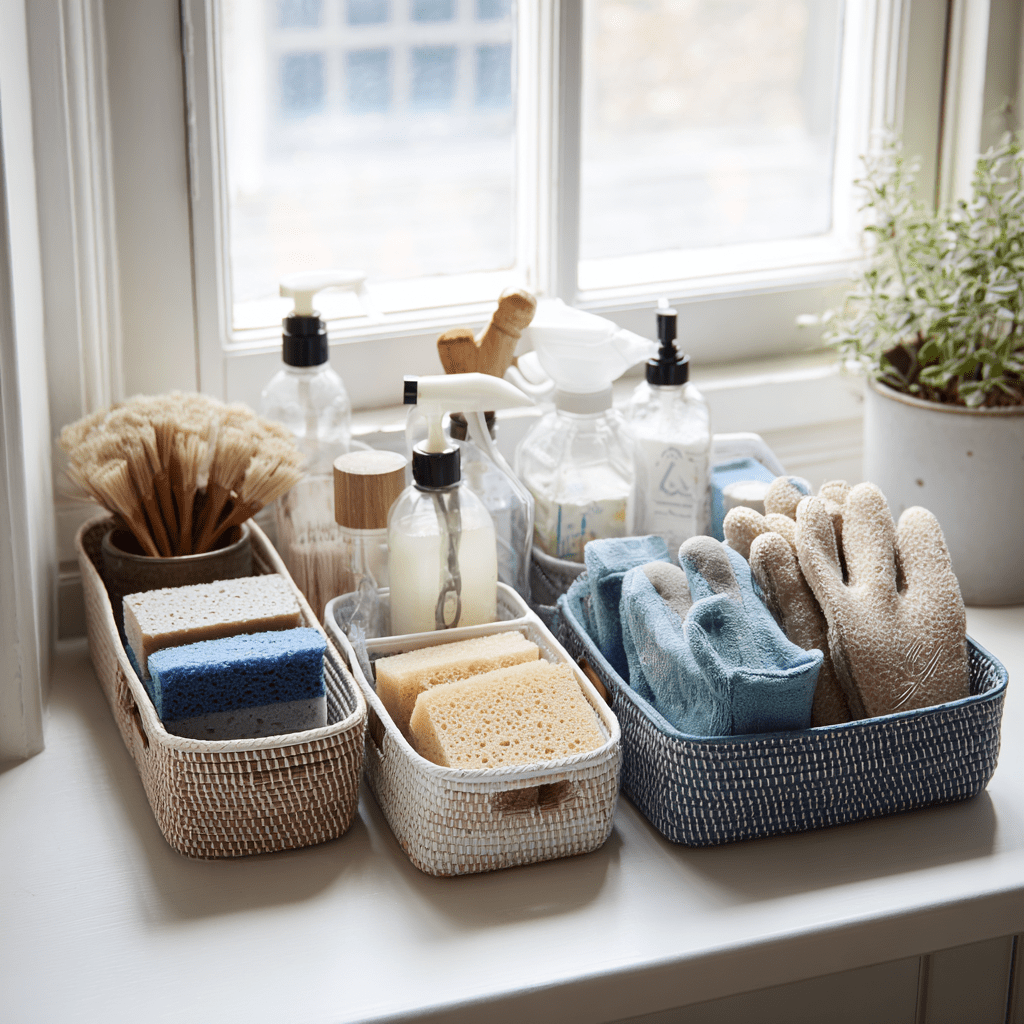
- Sponges, scourers and cloths
- Rubber gloves
- A small brush or dustpan if you use one daily
What it probably shouldn’t hold, but often ends up holding:
- Every cleaning product you own for the entire house
- Four mostly-empty bottles of the same thing
- Things that don’t belong in the kitchen at all
- “Useful” bags you’ve been saving (bin them, there are too many)
- Old products from cleaning tasks you did once and never repeated
When I did this sort properly, I moved all the bathroom cleaning products to the bathroom, the floor cleaner to the utility area, and got honest about the fact that I had three different oven cleaners opened and none of them used because I kept forgetting they were there. It halved the volume immediately, without buying a single organiser.
If you’ve got children, there’s also a real question about whether strong chemicals should live under the sink at all. It’s an easy-access cupboard at exactly the wrong height. Once my youngest was mobile I moved bleach, oven cleaner and anything corrosive to a high shelf in the utility room with a proper catch-all tray underneath. What lives under the kitchen sink now is genuinely lower-risk stuff, which means I don’t have to worry about child locks quite as much either. It’s worth thinking about whether you can do the same.
The pipe problem and how to work around it
If you’re reading American organisation blogs (most of the top-ranking content for this topic is American), you’ll notice they spend a lot of time discussing garbage disposals. The vast majority of UK homes don’t have these, so that whole section is irrelevant to us. What we do have is more exposed pipework, sometimes an overflow connection, and in older kitchens often quite unpredictable pipe positions.
The most flexible solution I’ve found is to use a combination of:
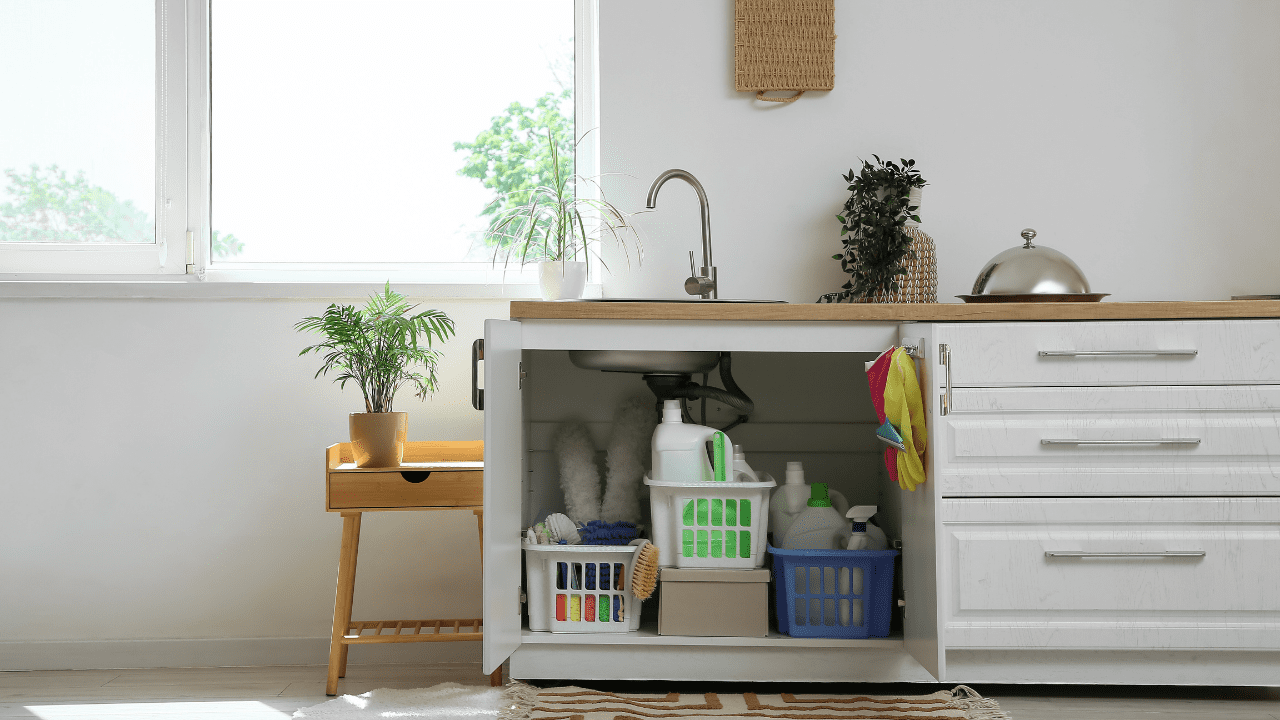
A two-tier pull-out shelf either side of the pipes. You can find these on Amazon for around £15-£25, and the good ones are adjustable in width so they fit the available space on each side of the central pipe column. They let you use the vertical space properly rather than just stacking things on the floor of the cupboard.
A caddy or carry tote for your most-used cleaning products. Something you can lift out in one go when you need it. This works brilliantly if you clean multiple rooms, because you grab the whole thing and carry it with you rather than making multiple trips. Dunelm and IKEA both do decent versions. I use an old wooden caddy I already had, which is the kind of thing you’ll often find in B&M or Home Bargains.
A tension rod across the front section for hanging spray bottles. This is one of those genuinely clever ideas that costs almost nothing. A basic spring tension rod from IKEA or Wilko, placed horizontally across the front of the cupboard, lets you hang spray bottles from the trigger handles. It frees up the floor of the cupboard completely and keeps the sprays visible and accessible. The only watch-out is weight: don’t overload it with full heavy bottles.
Dealing with damp under the sink
This is something almost nobody covers in the organisation posts I’ve read, but it’s a real issue, particularly in older UK kitchens. Under-sink cupboards can get damp from condensation on cold pipes, slow drips you haven’t noticed, or just from damp cloths being dropped in there. Left unchecked, that leads to mould on the cupboard base or a musty smell that spreads to everything stored nearby.
Before you put anything back in, check the base of the cupboard carefully. If it feels soft, or there are any dark patches, that’s worth investigating properly before you organise on top of it.
A waterproof shelf liner cut to size is a genuinely useful addition here: it protects the base from drips, is easy to wipe down, and can be replaced cheaply if it gets manky. Dunelm sell these by the roll, or you can use any non-slip drawer liner. I use a spare piece of vinyl flooring I had left over from a kitchen project, which works perfectly and cost nothing.
If your pipes are sweating (condensation on the cold water pipe, especially in summer), pipe lagging from a DIY shop like B&Q is a cheap fix and stops the drips before they start.
What to use for storage, and where to buy it in the UK
You don’t need an expensive matching set to make this work. Genuinely, a couple of well-chosen things do the job. Here’s what’s actually worth buying:
Pull-out tiered shelves: The ones designed to work around pipes are worth the small investment. Look for “under sink organiser adjustable” on Amazon, or check TK Maxx home section if you have one nearby – they often have good versions for less.
A simple carry caddy or tote: For the products you use most. Doesn’t need to be fancy. IKEA VARIERA is fine, as is anything similar from Dunelm.
Tension rod: A spring tension curtain rod, costs about £3-£5 from IKEA or Wilko.
Shelf liner or tray: To protect the base and catch drips.
Over-door organisers: The inside of the cupboard door is often wasted space. You can get stick-on hooks or a small wire rack to hold things like rubber gloves, a small brush or extra cloths. If you’re renting, check what’s behind the door before you drill anything: command-style adhesive hooks work well here and come off cleanly.
What you probably don’t need: matching labelled canisters for your under-sink cleaning products. This is Pinterest organisation, not real life. Nobody is opening that cupboard to admire the aesthetic. It just needs to function.
If you rent, here’s what’s different
Renting in the UK means you’re often working with limitations that owner-occupiers don’t have: you can’t drill into the inside of cupboard doors, you might not be able to put anything on the walls inside the unit, and the cupboard itself might be in poor condition that you can’t actually fix.
Focus on freestanding solutions only. Pull-out shelf units that sit on the floor, carry caddies and tension rods don’t require any fixings at all. The inside of a cupboard door is a slightly grey area in most tenancy agreements, so if you want to use adhesive hooks in there, use proper command-style ones that remove cleanly, and check your agreement if you’re unsure.
If the cupboard itself is in poor condition (mouldy, damp, soft base) that’s actually a landlord issue. Document it with photos and raise it: they’re responsible for maintaining the property including inside kitchen units.
The maintenance bit (the part everyone skips)
The reason under-sink cupboards become chaos again six months after a big organisation session is usually that the system doesn’t quite fit how the space actually gets used. You need to account for how products get used up, replaced, and restocked.
A few things that help:
Keep a small bin bag roll or rubber band around it so you can always pull one off and tie the others easily. Don’t decant bin bags into a basket. It sounds obvious but I’ve seen it suggested and it makes refilling genuinely more annoying.
Don’t store backstock here. If you buy three bottles of washing up liquid, only keep one under the sink. The others live in a cupboard or the utility area. This keeps the space lighter and means you’re not constantly reorganising around stuff that shouldn’t be there yet.
Do a five-minute reset every couple of months: take everything out, wipe the liner, and put it back. It takes almost no time and stops the slow creep back towards chaos.
FAQs
What should I store under the kitchen sink?
The most useful things to keep under the kitchen sink are everyday washing-up and dishwasher products, surface cleaning sprays, bin bags, sponges and cloths, and rubber gloves. Anything used less frequently or that’s for a different area of the house can live somewhere else, which frees up this prime-access space considerably.
How do I organise under the sink if there are lots of pipes?
The key is to measure the space either side of the pipe column and use that space deliberately. Adjustable pull-out tiered shelves work well because they’re designed around this exact problem. Using the door and the front of the cupboard for hanging storage also helps you avoid the pipe area entirely.
Is it safe to store cleaning products under the kitchen sink?
It depends what they are and who else is in your house. Low-risk products like washing up liquid and dishwasher tablets are fine. If you’ve got young children, it’s worth moving anything corrosive, bleach-based or genuinely hazardous to a higher, harder-to-reach location. Even with a child lock, under the sink is easy to get into for curious little hands.
What’s the best product to organise under the kitchen sink in the UK?
A combination of an adjustable pull-out shelf (available on Amazon for £15-£25), a simple carry caddy for your most-used sprays, and a tension rod for hanging spray bottles covers most situations. You don’t need a matching set or anything expensive. TK Maxx, Dunelm and IKEA all have useful options at reasonable prices.
How do I stop the under-sink cupboard getting damp and mouldy?
Start by checking there are no slow drips from the pipework or waste connections: even a slow drip causes significant damage over time. Then line the base of the cupboard with a waterproof shelf liner. If the cold water pipes are sweating in warmer months, pipe lagging from B&Q is a simple fix. Keeping fewer things stored down there also helps airflow and makes it easier to spot any moisture early.
See more home organisation posts here

Becky is the voice behind Life in Velvet, an organised, intentional living blog focused on practical food, calm homes, thoughtful projects, and everyday systems that make real life feel easier. A mum of 3 living in the UK, Becky writes from lived experience, sharing what works, what doesn’t, and the decisions that make family life run more smoothly.
With a background in marketing and content writing, and over a decade of blogging experience, she brings a thoughtful, structured approach to everything from baking and home projects to routines and decision-making. Life in Velvet is where planning meets creativity, with ideas designed for real homes and real life.