KEY TAKEAWAYS
✓ Delia Smith’s Dundee Cake uses an all-in-one method that’s quick and nearly foolproof
✓ Lighter than Christmas cake – no heavy fruit soaking or weeks of feeding required
✓ Gets better with age – wait 2-3 days after baking for the best flavour
✓ Perfect with tea – the citrus and almond combo is absolutely divine
✓ No fancy decorating – just beautiful concentric circles of almonds
Introduction: Why I’m Obsessed with Delia Smith Dundee Cake
Right, let’s talk about Delia Smith Dundee Cake. I know what you’re thinking – fruit cake? Really? But hear me out, because this isn’t your nan’s dense, boozy Christmas brick that sits in a tin for three months getting “fed” with whisky every week. This is something completely different, and honestly? It’s become one of my go-to bakes whenever I need something that looks impressive but doesn’t require me to channel Mary Berry levels of perfection.
I discovered Delia’s version about five years ago when I was desperately searching for something that felt properly British to serve at a coffee morning (yes, I’ve become that person since moving to the UK from Boston). The house smelled incredible – all citrus and butter and toasted almonds – and when I sliced into it two days later? Absolute magic. Light, crumbly, packed with fruit but not heavy, and that distinctive orange flavour just singing through every bite.
The best bit? It’s dead easy. Like, “throw-everything-in-a-bowl-and-give-it-a-whiz” easy. No creaming butter until your arm falls off. No complicated steps. Just Delia’s clever all-in-one method and a bit of patience while it bakes.
In this post, I’m going to walk you through everything you need to know about making Delia Smith Dundee Cake – from the fascinating history (Mary Queen of Scots! Scottish marmalade makers!) to exactly why Delia’s recipe is the one you want, plus all my hard-won tips for getting it absolutely perfect every single time.
What is Delia Smith Dundee Cake? (And Why It’s Not Just Another Fruit Cake)
The Scottish Classic with Royal Connections
Dundee Cake is a traditional Scottish fruit cake that’s been around since the late 1700s, and it’s got quite the pedigree. Legend has it (and I love this story) that the cake was originally created for Mary Queen of Scots back in the 16th century because she absolutely despised glacé cherries in her cakes. Rather than serving Her Majesty something she’d hate, clever Scottish bakers created a lighter fruit cake studded with almonds instead.
The more documented history points to Janet Keiller of Dundee – yes, the marmalade Keillers – who started commercially producing Dundee Cake in the late 1700s. They had all these gorgeous Seville oranges coming through the port for their marmalade business, and someone had the brilliant idea to use that distinctive citrus flavour in a cake. Genius!
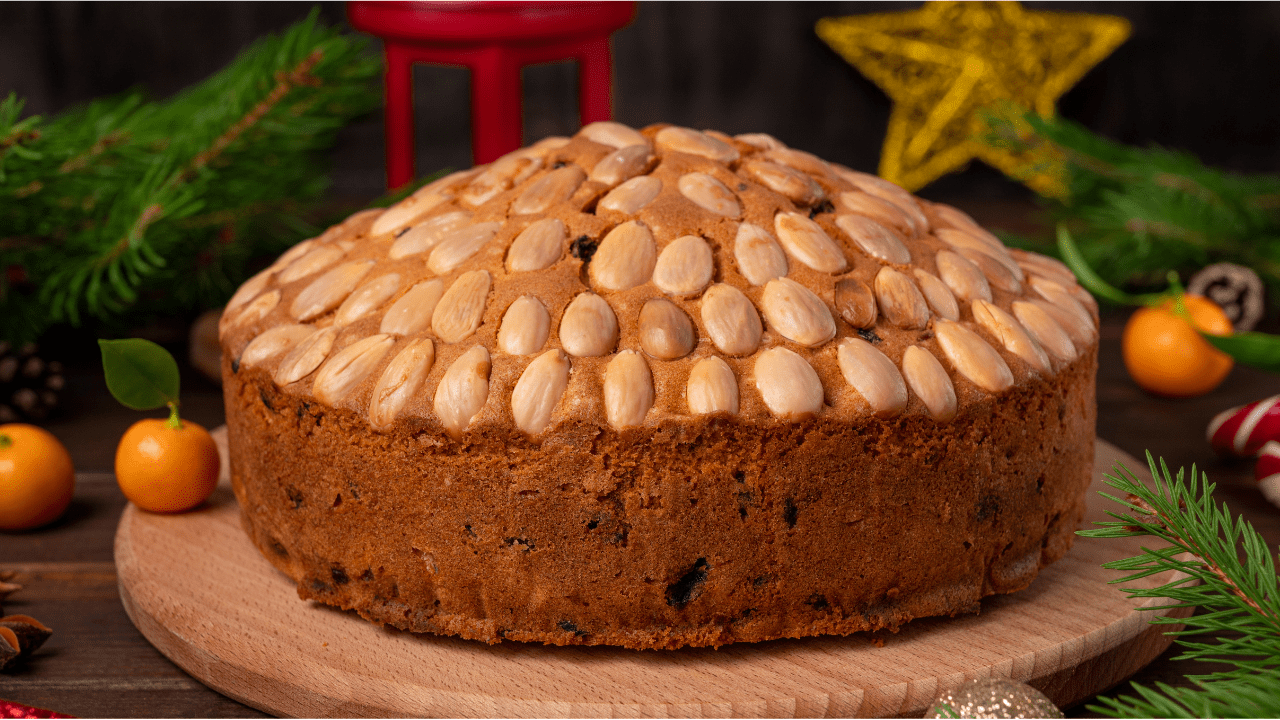
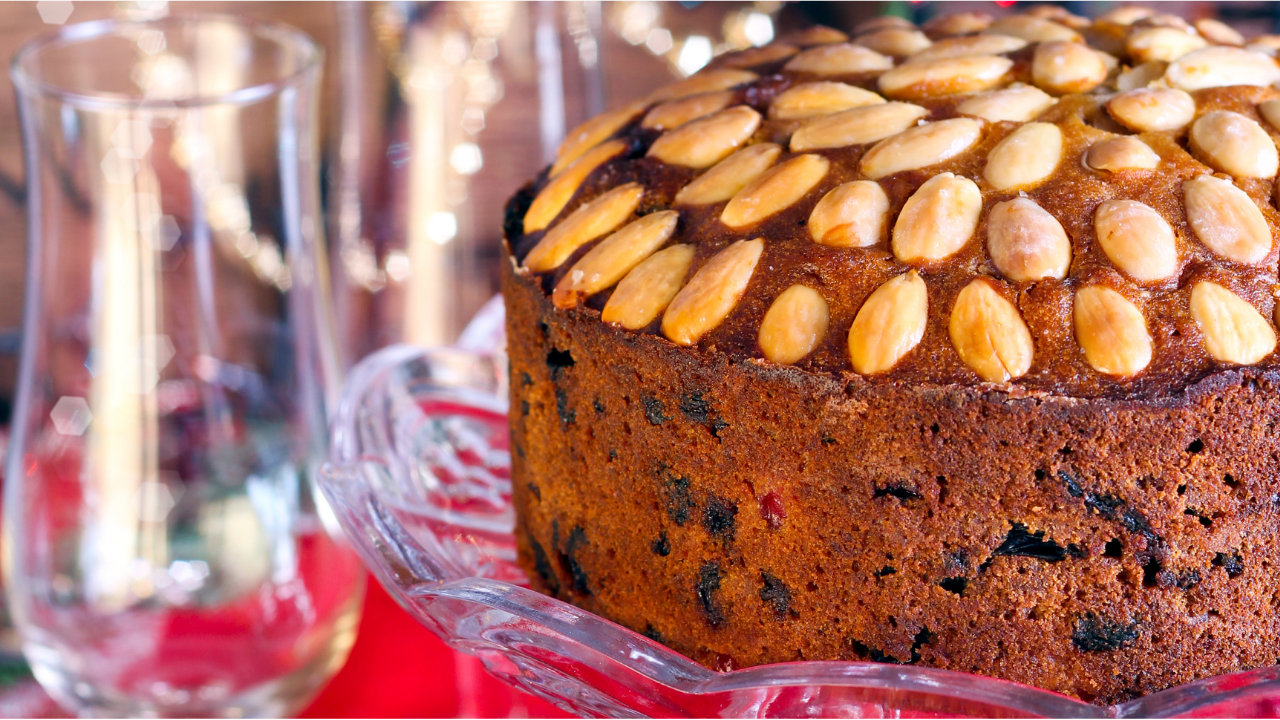
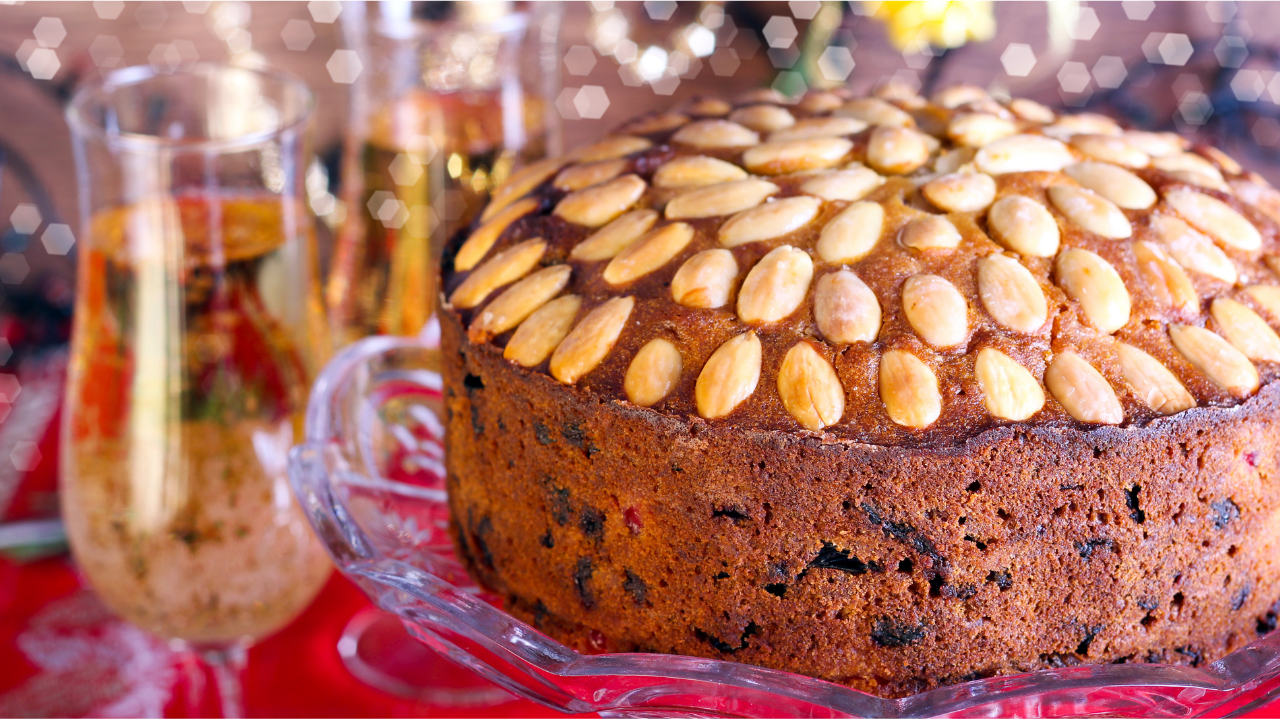
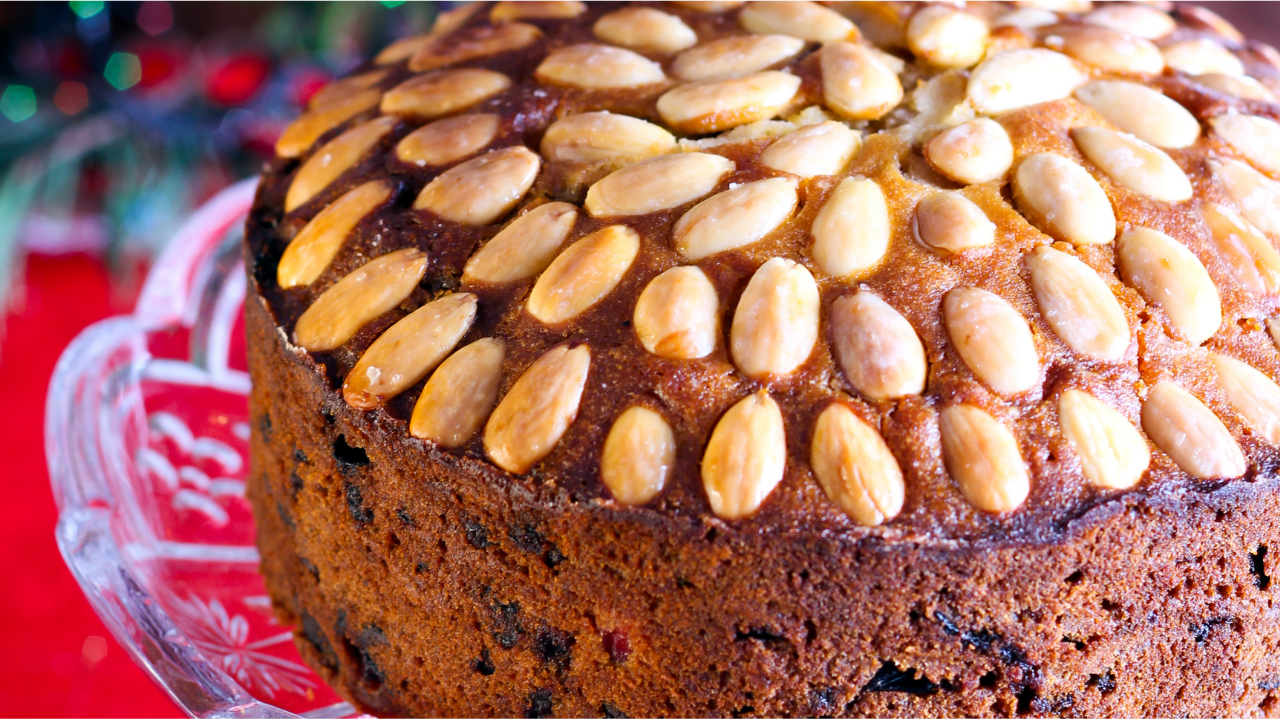
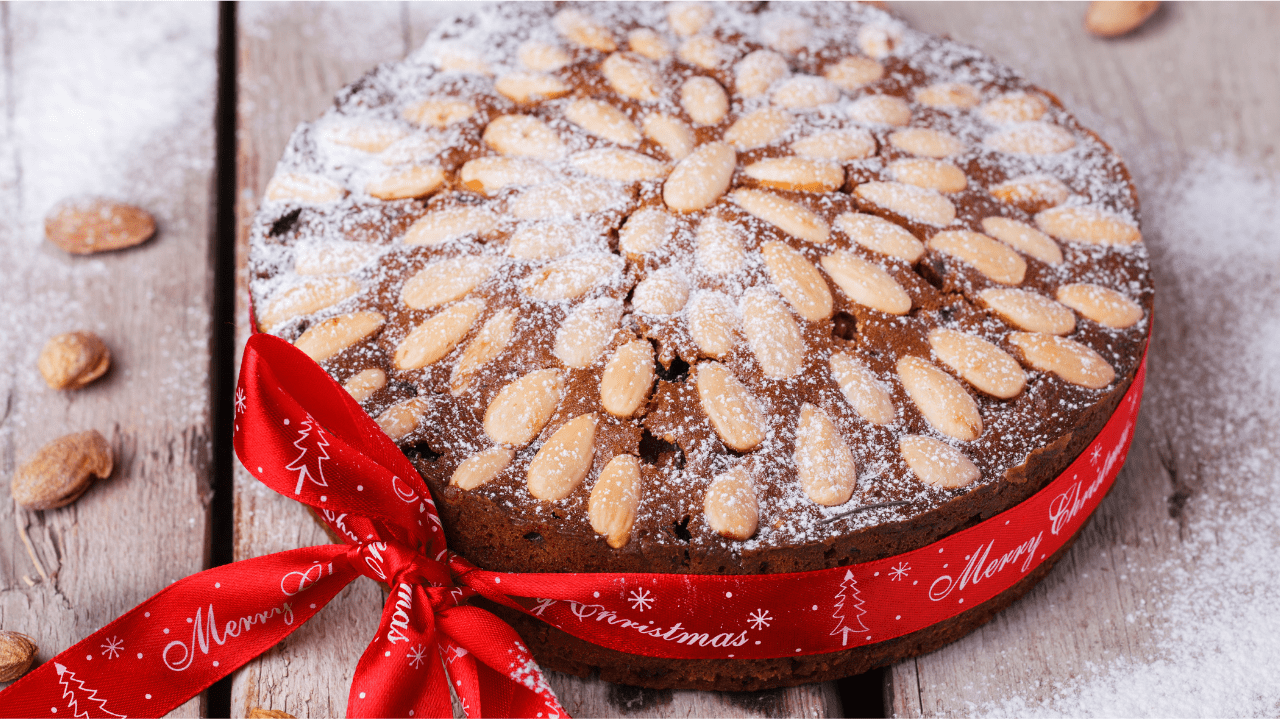
What makes Dundee Cake instantly recognisable? Those beautiful concentric circles of whole blanched almonds on top. It’s like a little crown – which feels appropriate given the royal connection!
How Delia Smith’s Version Stands Out
Here’s where Delia Smith Dundee Cake becomes special. Delia’s been refining this recipe for decades – it first appeared in her 1977 cake book, then got tweaked in her Christmas book in 1990, and finally perfected in her revised Cakes book with the brilliant all-in-one method.
What I absolutely love about Delia’s approach:
The All-In-One Method: No faff. You literally sift the flour and baking powder, add everything else (butter, sugar, eggs), and whisk for about 2 minutes. If you’ve got an electric hand whisk, you’re golden. None of this creaming butter and sugar for 10 minutes business.
Perfectly Balanced Fruit Ratio: Delia uses 175g each of currants and sultanas, 50g glacé cherries (halved), and 50g mixed peel. Not so much fruit that it’s heavy, but enough that every bite has something lovely in it.
The Citrus Zing: Fresh orange and lemon zest plus a bit of ground almonds give this cake a lighter, fresher taste than traditional Christmas cakes. It’s fruit cake, but make it springtime.
No Booze Required: Unlike traditional fruit cakes that need feeding with brandy or whisky for weeks, Delia’s Dundee Cake is ready to eat within days. Though if you want to add a few teaspoons of whisky to the cooled cake, go right ahead – I won’t tell!
Dundee Cake vs Christmas Cake: What’s the Difference?
I get asked this all the time, so let’s clear it up:
Christmas Cake:
- Dark, rich, heavily fruited
- Soaked in alcohol for weeks/months
- Usually covered in marzipan and icing
- Dense and intensely flavoured
- Made well in advance (some people make them a year ahead!)
Delia Smith Dundee Cake:
- Lighter in colour and texture
- No long soaking period needed
- Decorated with almonds (no icing)
- Fresher, zestier flavour profile
- Ready within a few days
- More crumbly, less sticky
Think of Christmas cake as the heavyweight champion, and Dundee Cake as the elegant middleweight. Both delicious, completely different vibes.
The Delia Smith Dundee Cake Recipe: Ingredients You’ll Need
Main Cake Ingredients
For the Cake:
- 225g (1¾ cups / 8 oz) plain flour – all-purpose flour for my US friends
- 1 level teaspoon baking powder – for that gentle rise
- 150g (⅔ cup / 5.3 oz) spreadable butter – Delia specifically uses spreadable, not block butter
- 150g (¾ cup / 5.3 oz) golden caster sugar – that gorgeous caramel colour
- 3 large eggs – at room temperature works best
- 1 dessertspoon milk (if needed) – about 10ml or 2 teaspoons
- 175g (1 cup / 6.2 oz) currants
- 175g (1 cup / 6.2 oz) sultanas
- 50g (⅓ cup / 1.8 oz) glacé cherries – rinsed, dried, and halved
- 50g (⅓ cup / 1.8 oz) mixed candied peel – finely chopped
- Zest of 1 large orange
- Zest of 1 large lemon
- 2 level tablespoons ground almonds – about 25g
For the Topping:
- 60g (½ cup / 2.1 oz) whole blanched almonds – these are your crown jewels
Kitchen Equipment You’ll Need
- 18cm (7 inch) round cake tin – loose-bottomed is ideal
- Baking parchment/greaseproof paper
- Large mixing bowl
- Electric hand whisk (or stand mixer if you’re fancy)
- Sieve for the flour
- Grater for the citrus zest
- Wire cooling rack
How to Make Delia Smith Dundee Cake: Step-by-Step Instructions
Prep Work (Don’t Skip This!)
1. Prepare Your Tin
Line your 18cm cake tin with baking parchment – I do the base and sides, making sure the parchment comes about 5cm (2 inches) above the rim. This protects the cake during the long, slow bake. Butter the tin first so the parchment sticks.
2. Sort Your Cherries
This is important! Rinse those glacé cherries under warm water to remove the sticky syrup, then pat them completely dry with kitchen paper. If they’re wet, they’ll sink to the bottom of the cake. Halve them once dry.
3. Prep Your Citrus
Finely grate the zest from the orange and lemon. You want just the colourful outer layer, not the bitter white pith underneath. A Microplane grater is your best friend here.
4. Get Everything to Room Temperature
This isn’t fussy baker chat – it genuinely makes a difference. Room temperature eggs and butter mix better and create a lighter cake.
The Actual Baking (It’s Easier Than You Think!)
Step 1: Sift and Lift (5 minutes)
Preheat your oven to 170°C (150°C fan / 325°F / Gas Mark 3).
Sift the flour and baking powder into a large mixing bowl. Here’s Delia’s genius tip: hold the sieve up high (like, proper high) and let the flour fall down. This aerates it and makes for a lighter cake. I feel like a right muppet doing it, but it works!
Step 2: The All-In-One Magic (2-3 minutes)
Add the spreadable butter, golden caster sugar, and eggs straight into the flour. Now, using an electric hand whisk, beat everything together for about 1-2 minutes until you have a smooth, pale mixture.
Check the consistency – when you lift the whisk, the mixture should drop off slowly. If it’s looking a bit stiff and not moving, add that dessertspoon of milk and give it another quick whisk.
Step 3: Fold in the Good Stuff (5 minutes)
Now gently fold in (using a large metal spoon or spatula):
- The currants
- The sultanas
- The halved glacé cherries
- The chopped candied peel
- The orange and lemon zest
- The ground almonds
Fold gently – you don’t want to knock out all that air you’ve just beaten in. The mixture will look absolutely packed with fruit. This is correct! Don’t panic.
Step 4: Into the Tin (2 minutes)
Spoon the mixture into your prepared tin. Use the back of the spoon to level it out and smooth the top. It doesn’t need to be perfect, but roughly flat helps it bake evenly.
Step 5: The Almond Crown (5 minutes)
Right, this is the fun bit. Arrange your whole blanched almonds in concentric circles on top of the cake. Start from the outside and work your way in.
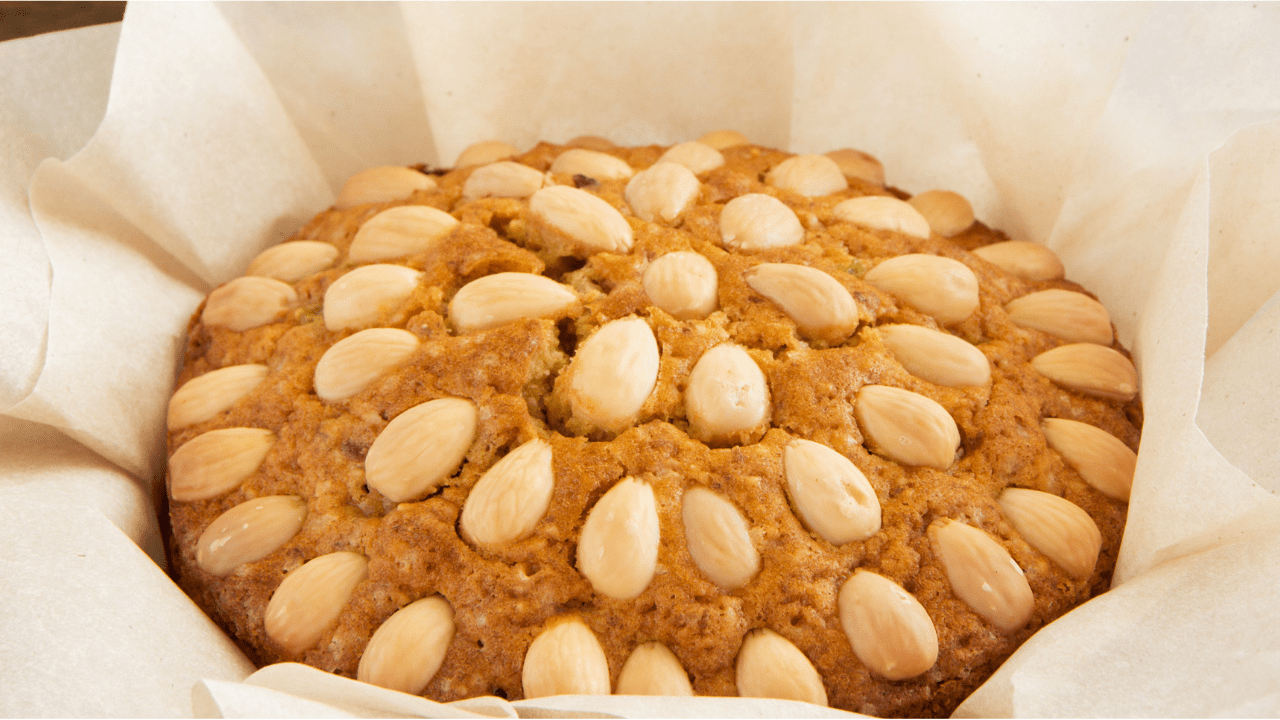
CRUCIAL TIP: Just rest them gently on the surface. If you press them in, they’ll sink during baking and you’ll lose that beautiful pattern. They’ll stick themselves down as the cake bakes, trust me.
Step 6: The Long, Slow Bake (1 hour 45 minutes)
Pop the cake into the centre of your preheated oven and bake for 1¾ hours.
After about an hour, check on it. If the top is browning too quickly, cover it loosely with a piece of baking parchment or foil. The cake is done when:
- The centre feels firm and springy when you gently press it
- A skewer inserted in the middle comes out clean (a few crumbs are fine, but no wet batter)
- The almonds are golden and toasted
Step 7: Cool and Rest (The hardest part!)
Leave the cake in its tin to cool completely on a wire rack. Once it’s cold, wrap it in fresh baking parchment (not clingfilm – it needs to breathe) and store it in an airtight tin.
Now here’s where your patience gets tested: Don’t cut it for at least 24 hours, ideally 2-3 days. I know, I know. But this cake genuinely improves as it sits. The flavours meld together, the texture becomes more perfect, and honestly? It’s worth the wait.
IMAGE SUGGESTIONS:
- Sifting flour from high up
- The all-in-one mixture before whisking
- Folding in the fruit
- Arranging almonds in circles
- The baked cake with golden almonds
My Top Tips for Perfect Delia Smith Dundee Cake Every Single Time
After making this cake approximately 47 times (give or take), here’s what I’ve learned:
The Secret to Success
Use Spreadable Butter, Not Block Butter
Delia specifies spreadable for a reason in her all-in-one method. It incorporates faster and more evenly. I use it straight from the fridge – you don’t need to soften it further.
Don’t Overmix
Once you’ve added the fruit, fold gently. You’re not trying to win a vigorous stirring competition. Gentle folding keeps the cake light and crumbly.
The Almond Trick
If your almonds keep rolling off when you’re trying to arrange them, the mixture might be too stiff. Add a tiny splash more milk to the batter. Also, slightly damp hands help when positioning them.
Check It Early
Ovens vary wildly. Start checking at 1 hour 30 minutes with a skewer. My fan oven is brutal and mine’s always done by 1 hour 40 minutes.
The Patience Game
Seriously, wrap it up and forget about it for two days. Set a reminder on your phone if you must. The cake that emerges will be infinitely better than if you’d cut it fresh.
Common Pitfalls to Avoid
The Cake Sank in the Middle
This usually means it came out too early. Give it the full time and use the skewer test. Also check your oven temperature with an oven thermometer – mine runs hot!
The Top Burned
Cover it with baking parchment or foil after the first hour. The long, slow bake is essential for cooking the dense fruity middle, but the top can protest.
It’s Too Dry
Could be overbaking, or not enough milk. The batter should have a soft dropping consistency. If it looks stiff before adding the fruit, add a bit more milk.
The Fruit Sank
Did you rinse and dry those cherries properly? Wet fruit sinks. Also, make sure you halve them – whole cherries are too heavy.
My Almonds Disappeared
You pressed them in too hard. They should just rest on top like they’re sunbathing.
How to Store and Serve Your Delia Smith Dundee Cake
Storage Tips
Room Temperature:
Wrap in baking parchment (not clingfilm), then pop in an airtight tin. It’ll keep beautifully for up to 2 weeks. Some people reckon it’s at its absolute peak around day 5-7.
Freezing:
Wrap individual slices or the whole cake tightly in clingfilm, then foil. Freezes brilliantly for up to 3 months. Defrost at room temperature for a few hours.
Feeding It (Optional):
If you want to add whisky like the old-fashioned Christmas cake feeding ritual, poke a few holes in the cooled cake with a skewer and drizzle over 2-3 teaspoons of good Scottish whisky. Do this once or twice over a week. It adds depth without making it boozy.
Serving Suggestions
Classic Afternoon Tea:
Slice nice and thin (this is rich!), serve with a proper cup of builder’s tea. Milk, two sugars, none of this Earl Grey business.
With Cheese:
Oh my word. A chunk of mature cheddar or Wensleydale alongside a slice of Dundee Cake? Heaven. The sweetness of the fruit with the sharp cheese is chef’s kiss.
Toasted with Butter:
Pop a slice under the grill or in a toaster for 30 seconds until just warm, then slap on some salted butter. Game changer.
With Coffee:
Works beautifully with a mid-morning cappuccino or latte.
Dressed Up:
A dollop of clotted cream or crème fraîche on the side makes it feel fancy for when the in-laws visit.
As a Gift:
Wrap in cellophane and ribbon, tie on a cute tag. People love receiving homemade Dundee Cake!
The History and Heritage of Dundee Cake (Because It’s Fascinating!)
The Mary Queen of Scots Legend
The most romantic version of Dundee Cake’s origin involves Mary Queen of Scots in the 1500s. According to legend, she despised glacé cherries (relatable, they’re a bit polarising), so her royal bakers created a fruit cake using almonds instead. The concentric circle pattern supposedly represents a crown.
Is it true? Probably not, if we’re being honest. But it’s a lovely story and Mary’s tastes were certainly discerning, so who knows!
The More Likely Story: Keiller’s of Dundee
The better-documented history points to Janet Keiller and her marmalade empire in Dundee in the late 1700s. Dundee was a major port city, and Spanish ships would bring Seville oranges for the marmalade trade. Janet and her descendants started using these same oranges – along with Spanish sultanas and almonds – in a cake that became phenomenally popular.
By the 1800s, Keiller’s was mass-producing Dundee Cake commercially, shipping it all over Britain and even to British India. For a long time, they were the only company making “real” Dundee Cake, and other bakeries couldn’t call their versions by that name.
Queen Elizabeth II’s Favourite
While we can’t verify the Mary Queen of Scots connection, we can confirm that Queen Elizabeth II was a huge fan of Dundee Cake. It was reportedly one of her favourite afternoon tea treats. The woman had excellent taste!
Protected Geographical Indication Status
There was actually an application for Dundee Cake to get Protected Geographical Indication (PGI) status – like Champagne or Cornish pasties. It didn’t go through, but it shows how seriously Scottish bakers take this cake!
Frequently Asked Questions About Delia Smith Dundee Cake
Can I make Delia Smith Dundee Cake without glacé cherries?
Absolutely! In fact, some purists argue that traditional Dundee Cake shouldn’t have cherries at all (thanks to the Mary Queen of Scots story). If you leave them out, just add an extra 25g each of currants and sultanas to make up the weight. The cake will still be delicious, just without those little jewels of colour.
What’s the difference between Delia’s versions from different books?
Great question! Delia’s first Dundee Cake recipe appeared in her 1977 Complete Cookery Course. The Christmas book (1990) version included feeding it with whisky. Her revised Cakes book introduced the all-in-one method using spreadable butter instead of block butter, and she stopped recommending the whisky feeding. The latest version is quicker and easier while tasting just as good. I use the newer all-in-one method because I’m lazy and it works brilliantly.
Can I make this in a different sized tin?
You can, but you’ll need to adjust baking time. An 20cm (8 inch) tin will need less time (check at 1 hour 30 minutes). A 15cm (6 inch) tin will need longer (start checking at 2 hours). The cake should always feel firm and springy in the centre when done.
My cake cracked on top – have I ruined it?
Nope! Fruit cakes often crack a bit during baking. It’s totally normal and doesn’t affect the taste. If it really bothers you aesthetically, you can cover the crack with extra almonds or brush with apricot glaze. But honestly, rustic cracks give it character!
Can I use different dried fruits?
Yes, but keep the total weight the same (around 400g of dried fruit total). Some lovely variations:
- Replace half the sultanas with chopped dried apricots
- Use all sultanas if you don’t like currants
- Add some chopped dried figs
- Mixed dried berries (cranberries, blueberries) work beautifully
Just avoid anything too large or wet – you want roughly uniform pieces that won’t sink or make the batter soggy.
How do I know when it’s perfectly done?
Three tests:
- The Spring Test – Gently press the centre. It should feel firm and spring back.
- The Skewer Test – Insert a metal skewer into the centre. It should come out clean or with just a few dry crumbs (not wet batter).
- The Visual Test – The almonds should be golden brown and toasted.
If you’re unsure, give it another 10 minutes. This cake is quite forgiving and won’t dry out easily.
Can I make it gluten-free?
I haven’t tried this personally, but several readers have reported success using a good quality gluten-free plain flour blend (1:1 ratio). You might need to add a touch more milk as GF flour can be thirstier. The texture won’t be exactly the same, but it should still be delicious!
What’s the best whisky to use if I want to feed it?
A good Speyside single malt like Glenfiddich works beautifully, but honestly, any decent Scotch whisky will do. I’ve even used Irish whiskey in a pinch! You only need a few teaspoons, so don’t break the bank. Save the fancy stuff for drinking.
Variations and Twists on the Classic Recipe
While Delia’s recipe is perfect as-is, here are some variations I’ve experimented with:
Whisky-Soaked Version
Soak the currants and sultanas in 50ml whisky overnight before making the cake. Use the soaking liquid as part of your wet ingredients. Gives a deeper, richer flavour.
Marmalade Dundee Cake
Replace 2 tablespoons of the sugar with 2 tablespoons of Seville orange marmalade. Fold it in with the fruit. This is very traditional and adds that gorgeous bitter-sweet marmalade note.
Spiced Dundee Cake
Add ½ teaspoon mixed spice and a pinch of ground ginger to the flour before sifting. Not traditional, but lovely for Christmas.
Chocolate-Dipped Variation
Once the cake is cooled and sliced, dip one side of each slice in melted dark chocolate and let it set. Feels very indulgent!
Individual Dundee Cakes
Make these in muffin tins for cute individual portions. Bake at the same temperature for about 25-30 minutes. Perfect for gifting!
Why This Recipe Works: The Science Bit
If you’re a baking nerd like me, here’s why Delia’s method is so clever:
The All-In-One Method:
By adding room-temperature eggs directly to the flour with the butter and sugar, you create an emulsion quickly without overworking the mixture. This keeps the cake tender.
The High Sifting:
Aerating the flour by sifting from height incorporates air, which helps create a lighter texture despite the heavy fruit.
Spreadable vs Block Butter:
Spreadable butter has a higher water content and softer consistency, which means it incorporates faster at room temperature. It also creates a more tender crumb.
Ground Almonds:
These add moisture and prevent the cake from being dry, while also contributing that lovely marzipan-adjacent flavour.
The Long, Slow Bake:
The low temperature (170°C) ensures the dense, fruit-packed batter cooks through evenly without burning the outside.
Resting Time:
As the cake sits, the moisture redistributes throughout the crumb, the flavours meld, and the texture becomes more cohesive. Science!
The Best Occasions for Serving Delia Smith Dundee Cake
While Dundee Cake isn’t technically a Christmas cake, it’s brilliant for:
- Burns Night (January 25th) – Very Scottish!
- Easter celebrations – Lighter than Christmas cake
- Mother’s Day – Feels special but not fussy
- Afternoon tea parties – Classic choice
- Coffee mornings – Goes perfectly with a good brew
- Bake sales – Always a bestseller
- Gift giving – Homemade feels thoughtful
- Weddings – Some Scottish weddings serve it instead of traditional cake
- Hogmanay (Scottish New Year) – Another Scottish celebration
- Any random Tuesday – Because why not?!
Shopping List: Where to Get Your Ingredients
Essential Ingredients
Dried Fruit:
Most supermarkets stock currants, sultanas, and mixed peel year-round. I buy Whitworths dried fruit which is reliably good quality. At Christmas time, you’ll find “luxury” mixes which work beautifully.
Glacé Cherries:
Don’t buy the cheap bright red ones that taste like chemicals! Look for natural coloured glacé cherries – Waitrose has nice ones, or hunt out Silver Spoon brand.
Blanched Almonds:
You can buy these ready-blanched (the skin removed) which saves time. Health food shops often sell them loose if you don’t need a huge bag. Amazon does good value bulk packs.
Golden Caster Sugar:
Gives that lovely golden colour. If you only have white caster sugar, it’ll work fine – the cake just won’t be quite as golden.
Essential Equipment
Cake Tin:
A good 18cm (7 inch) loose-bottomed tin is worth the investment. Delia Online actually sells their own range if you want to go full Delia!
Electric Hand Whisk:
You can do this by hand but honestly, get a cheap electric whisk.
Delia’s Books:
If you love this recipe, Delia’s Cakes book is genuinely worth having. Loads of brilliant, reliable recipes.
Final Thoughts: Why You Need to Make This Cake
Look, I could waffle on about Delia Smith Dundee Cake for days (clearly), but here’s the bottom line:
This is a gorgeous, classic British cake that’s infinitely easier than it looks, tastes absolutely spectacular, keeps brilliantly, improves with time, and makes you look like a proper baker even if you usually burn toast.
It’s not fussy. It doesn’t require special skills. You don’t need to feed it with booze every day for three months. You just need a couple of hours, some good quality ingredients, and a bit of patience while it bakes.
The smell alone will make your house smell like a proper Scottish bakery. The taste? Light, fruity, perfectly balanced citrus and almond notes. And that beautiful almond crown on top? Pure Instagram bait.
Whether you’re making it for a special occasion, afternoon tea, or just because it’s Tuesday and you fancy something lovely with your cuppa – Delia Smith Dundee Cake delivers every single time.
So go on. Make the cake. Wait the two days (I believe in you). Slice yourself a piece. Put the kettle on. And enjoy one of Britain’s finest baking traditions.
You’re welcome.
See more Baking Posts
See more of my favourite Delia Smith Recipes:
Delia Smith Pancakes
Delia Smith Pavlova
Delia Smith Scones
Delia Smith Chocolate Torte
Delia Smith Meringue
Delia Smith Red Cabbage
Delia Smith Lasagne
Delia Smith Plum Jam
Delia Smith Victoria Sponge
Delia Smith Trifle
Delia Smith Christmas Cake
Browse my full Delia Smith recipe collection here → Delia Smith Recipes

Becky is the voice behind Life in Velvet, an organised, intentional living blog focused on practical food, calm homes, thoughtful projects, and everyday systems that make real life feel easier. A mum of 3 living in the UK, Becky writes from lived experience, sharing what works, what doesn’t, and the decisions that make family life run more smoothly.
With a background in marketing and content writing, and over a decade of blogging experience, she brings a thoughtful, structured approach to everything from baking and home projects to routines and decision-making. Life in Velvet is where planning meets creativity, with ideas designed for real homes and real life.