
Yes, you can freeze milk – and it’s one of the easiest ways to cut food waste and stretch your shopping further. Stick it in a freezer-safe container before the use-by date, leave a bit of space at the top, and it’ll keep for up to three months. That’s the short version. But there’s a bit more to it if you want the milk to actually taste decent once it’s thawed, so let me walk you through everything I’ve learned from doing this fairly regularly!
I started freezing milk properly a couple of years ago when I noticed we were consistently pouring half a bottle down the sink at the end of the week. With three kids, you’d think we’d get through milk quickly, but it’s weirdly unpredictable – one week we’re running out by Thursday, the next there’s half a four-pinter sitting there going yellow. Freezing it has genuinely changed that, and on top of that, I now buy extra when it’s on offer at Sainsbury’s and stick it straight in the freezer. It sounds small but it adds up.
Does freezing milk actually work?
It does, with one caveat: the texture changes a little. When milk freezes, the fat separates slightly from the liquid. When you thaw it back out, it can look a bit grainy or uneven, and if you just drink a glass of it straight, you might notice it tastes slightly different – a bit thinner, or just off compared to fresh. It’s still perfectly safe to drink, but most people find it’s better used in cooking, baking, or hot drinks rather than a cold glass on its own.
That said – for porridge, sauces, cups of tea, smoothies, pancakes, scrambled eggs – honestly, you can’t tell the difference at all. I use thawed milk in cooking all the time and it’s completely fine.
If texture bothers you, give the bottle or container a really good shake once it’s thawed (more on that below), and it comes back together reasonably well. Full-fat milk separates more noticeably than semi-skimmed, which is probably why most of us freezing standard supermarket milk don’t have much of an issue – semi-skimmed is the sweet spot for freezing.
What containers can you use to freeze milk?
This is where most people go slightly wrong, so it’s worth paying attention.
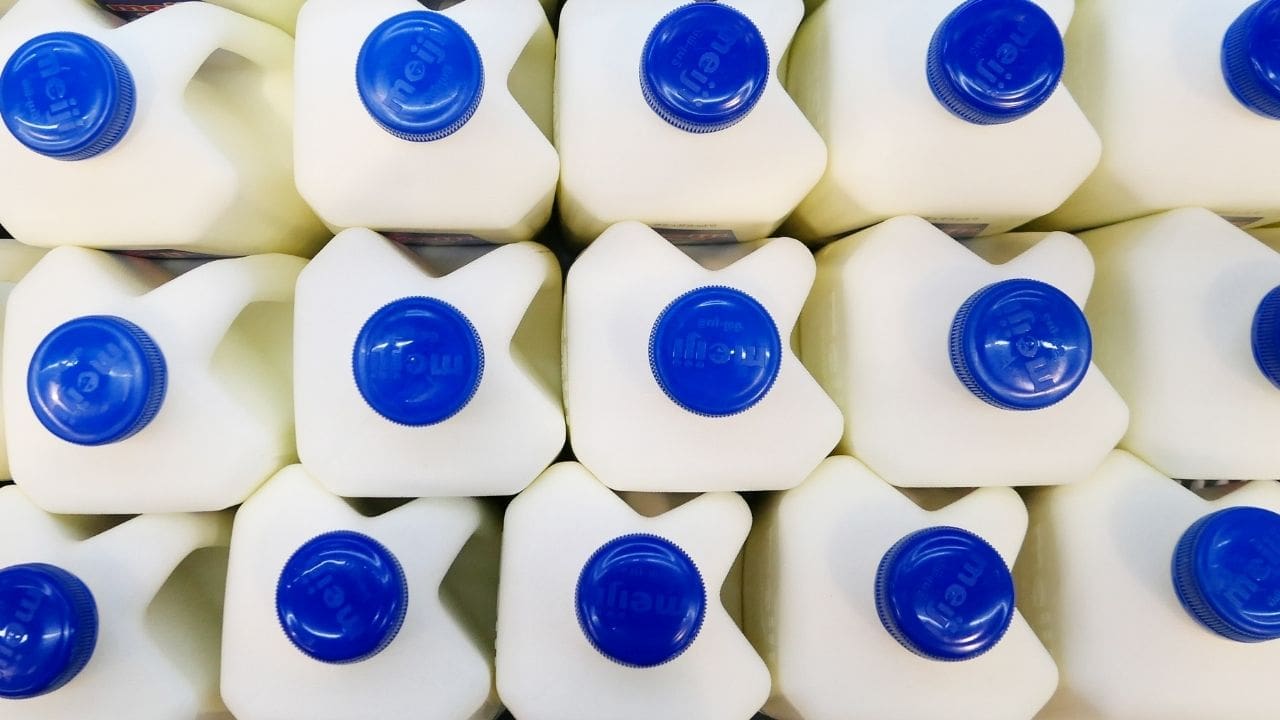
Plastic milk bottles from the supermarket – these are generally fine to freeze in, as long as they’re not completely full. Milk expands as it freezes (like most liquids), so you need to pour a bit out first – about an inch or so – to give it room. A completely full bottle of milk in the freezer will bulge, crack, or in dramatic cases, burst. Leave the space. Seriously.
Tetrapak cartons – slightly trickier. The carton itself can freeze okay, but again, it needs to not be completely full, and the seal can sometimes give way as it expands. I tend to pour the milk into a plastic Tupperware-style container rather than freezing it in the carton, just because I’ve had a couple of messy situations.
Glass bottles – if you get milk delivered (hello fellow milk round enthusiasts), do not freeze it in the glass bottle. Glass does not play nicely with expanding frozen liquid and it will crack. Decant it into a plastic freezer-safe container first.
Ice cube trays – genuinely one of my favourite methods for this. Pour milk into an ice cube tray, freeze until solid, then tip the cubes into a freezer bag. It takes up less space, you can grab exactly as much as you need, and it’s brilliant for things like smoothies, sauces, or porridge. Two standard ice cube portions is roughly 60ml, so it’s easy to measure out.
Small freezer bags – work fine if you press out the air before sealing. I wouldn’t use the ones you’d use for sandwiches – get proper freezer-grade bags, they’re much more reliable.
How long does milk last in the freezer?
The general guideline is up to three months, but for best quality, use it within a month. After that it’s still safe, but the texture and flavour can start to deteriorate more noticeably. I always write the date on whatever I’m freezing – a bit of masking tape and a Sharpie takes two seconds and saves a lot of squinting at frozen containers trying to remember when they went in.
One important point: you need to freeze milk before its use-by date, not on the day it’s about to turn. The point is to preserve good milk, not rescue already-off milk.
How to thaw frozen milk properly
The best way is simply to move it from the freezer to the fridge the night before you need it. It takes around 24 hours for a standard bottle to fully thaw in the fridge, so plan ahead. For smaller amounts – like those ice cubes – it’ll be much quicker.
Once it’s thawed, give it a really good shake. This helps bring the fat back together with the rest of the milk and reduces any graininess. If it still looks a bit separated, a quick blitz with a hand blender sorts it out completely.
A few things not to do:
- Don’t thaw milk on the kitchen counter at room temperature. This sits it in the danger zone for bacterial growth for too long.
- Don’t use hot water or a microwave to speed up thawing – it heats the milk unevenly and can partially cook it, which affects both the taste and safety.
- Don’t refreeze milk once it’s been thawed. Use it within three days of thawing and treat it like fresh milk from that point.
If you’re in a hurry, you can sit the sealed container in a bowl of cold water in the sink. Change the water every 30 minutes or so, and it should thaw in a couple of hours depending on the quantity.
What about oat milk, almond milk, and other plant-based milks?
This is worth addressing because so many households now use a mix of dairy and non-dairy milks. The honest answer is: it depends, and the results are more variable than with cow’s milk.
Oat milk – freezes okay but the texture does change more noticeably. It can become gloopy or separate quite a bit. Fine for cooking and hot drinks, but not ideal if you’re hoping to use it as a cold drink or in cereal.
Almond milk and other nut milks – tend to separate and go grainy after freezing. Again, using it in cooked dishes is fine, but the texture isn’t great for drinking.
Soya milk – better than the nut milks but can still curdle slightly on thawing. Shake well and use it in hot drinks or cooking.
Coconut milk (carton) – similar to oat milk. Works okay for cooking. Coconut milk from a tin is a different matter – don’t freeze it in the tin, and it tends to separate dramatically on thawing, though it’s still usable in curries and soups.
For all of the plant-based milks, the ice cube tray method is particularly useful – freeze in small portions and use straight from frozen in smoothies or blended drinks so the texture issue doesn’t really matter.
The practical family use case: buying on offer and batching
One thing I don’t see mentioned much in other posts about freezing milk is the strategic side of it – which is honestly where it becomes a proper money-saver rather than just a food-waste reduction thing.
When milk is on offer at the supermarket – and it does go on promotion reasonably regularly – I’ll buy two or three extra bottles and freeze them. Milk keeps for three months in the freezer, which means you can build up a small stock during the cheaper weeks and draw from it during the more expensive or inconvenient weeks. With three children and the amount of porridge, hot chocolate, and cereal this household gets through, that genuinely makes a difference over the course of a year.
The same applies if you’re going away on holiday. Rather than trying to time your last shop perfectly or chucking a full bottle before you leave, just freeze it. It’ll be there when you get back.
Using frozen and thawed milk in cooking
As I mentioned earlier, thawed milk is brilliant in anything cooked. Here are the situations where I use it most:
Porridge – you truly cannot tell the difference. Chuck it in from frozen if you’re using cubes and it works perfectly.
Baking – pancakes, scones, banana bread, white sauce – all completely fine with thawed milk. The slight texture change is irrelevant once it’s been heated or mixed into a batter.
Tea and coffee – if you shake it well after thawing, it works fine. It might look very slightly different in the mug but it tastes the same.
Smoothies – especially if you’re using the frozen cube method, this is ideal. You don’t even need to thaw it first.
Mashed potato and white sauce – both work brilliantly. The cooking process handles any separation entirely.
What I wouldn’t use thawed milk for is anything where the texture really matters in its raw state – like a cold glass of milk, or poured straight onto cereal (it can look a bit watery or uneven). Nothing dangerous about it, just not as nice.
A note on full-fat vs semi-skimmed vs skimmed
Semi-skimmed is the easiest to freeze and thaw successfully. It has a lower fat content than whole milk, which means less separation and a better texture after thawing. If you’re buying milk specifically to freeze, semi-skimmed is a good call.
Full-fat milk freezes safely but separates more noticeably. It’s still usable – just shake or blend it well. If you’re using it for cooking where the fat content matters (a rich white sauce, for instance), it’s worth the extra effort.
Skimmed milk freezes very well because there’s so little fat to separate. It may become slightly watery-looking but is otherwise fine.
Frequently Asked Questions
Can you freeze milk in the original bottle?
Yes, as long as it’s a plastic bottle rather than glass, and as long as it isn’t completely full. You need to leave about an inch of space at the top for the milk to expand as it freezes. Glass bottles will crack or shatter, so always decant into a plastic freezer-safe container first if you’re getting a glass bottle delivery.
How long does frozen milk last?
Up to three months in a standard freezer. For the best taste and texture, use it within a month. Always write the date on it when you freeze it so you’re not guessing later. Once thawed, treat it like fresh milk and use within two to three days.
Why does milk go grainy after freezing?
The fat content in milk separates from the liquid when frozen, because fat and water freeze at different rates. When it thaws, it can look grainy or uneven as a result. This is completely normal and doesn’t mean the milk is off. A good shake – or a quick blitz with a hand blender – brings it back together.
Can you freeze milk for tea?
Yes, absolutely. Once thawed and shaken, it works fine in tea and coffee. The slight texture change isn’t noticeable once you’re adding it to a hot drink. If you’re making a large batch of tea or using milk in a latte-style drink where you’re heating the milk anyway, you won’t notice any difference at all.
Can you refreeze milk once it’s been thawed?
No. Once milk has been thawed, don’t refreeze it. Use it within two to three days and treat it the same as fresh milk. This is a food safety rule, not just a quality one – refreezing and thawing dairy increases the risk of bacterial growth.
Freezing milk is one of those genuinely useful kitchen habits that takes about thirty seconds to do and saves a surprising amount of waste and money over time. The main things to remember: leave space in the container, freeze before the use-by date, always thaw in the fridge, and give it a good shake before using. After that, it’s just milk.
If you’ve been freezing milk already or have a method that works particularly well for you, I’d love to hear about it in the comments – especially if you’ve cracked the oat milk texture issue, because I’m still working on that one.
See more Home Organisation posts and more Food posts here!

Becky is the voice behind Life in Velvet, an organised, intentional living blog focused on practical food, calm homes, thoughtful projects, and everyday systems that make real life feel easier. A mum of 3 living in the UK, Becky writes from lived experience, sharing what works, what doesn’t, and the decisions that make family life run more smoothly.
With a background in marketing and content writing, and over a decade of blogging experience, she brings a thoughtful, structured approach to everything from baking and home projects to routines and decision-making. Life in Velvet is where planning meets creativity, with ideas designed for real homes and real life.