
Key Takeaways
- Greek side dishes are essential to creating an authentic Mediterranean feast, not just afterthoughts
- Lemon, olive oil, and fresh herbs are the holy trinity of Greek sides
- Most traditional Greek sides are vegetarian-friendly, making them perfect for mixed gatherings
- Greek meals follow a mezze tradition where multiple small dishes create a communal dining experience
- Many Greek sides taste better the next day, making them brilliant for meal prep and entertaining
Right, let’s talk Greek side dishes, shall we? Because honestly, if you’ve ever had a proper Greek meal, you’ll know that the sides are where the magic really happens. I’m talking about those crispy, lemony potatoes that somehow manage to be fluffy inside and crunchy outside. That fresh, zingy Greek salad with hunks of feta the size of your fist. The creamy tzatziki you want to eat with a spoon when no one’s looking.
I fell head over heels for Greek food on a family holiday to Crete about six years ago (before baby number three arrived and made international travel feel like organising a military operation!). We stumbled into this tiny taverna in Chania, and the owner just kept bringing out dish after dish. Not fancy stuff, mind you, just simple, gorgeous food that tasted like sunshine. The kids were actually eating vegetables without being bribed. My husband looked at me and said, “Can we just move here?”
We didn’t move to Crete (sadly), but I did bring back a serious obsession with Greek cooking. And here’s what I’ve learnt: Greek side dishes aren’t just an afterthought or something to fill space on your plate. They’re an integral part of how Greeks eat, this beautiful tradition of sharing multiple dishes around the table, everyone helping themselves, chatting, laughing, probably arguing about football if my Greek friends are anything to go by.
So whether you’re planning a full Greek feast, need something brilliant to go with your grilled chicken, or just fancy trying something new for dinner tonight, I’ve got you sorted. These are the Greek side dishes I make on repeat in our house, the ones my kids actually ask for, and the ones that’ll make your kitchen smell absolutely divine.
Understanding Greek Side Dishes: More Than Just Extras
Before we dive into the recipes, let’s chat about what makes Greek side dishes special. Because if you’ve only ever had that sad, soggy Greek salad from a dodgy takeaway, you’re in for a treat.
The Mezze Tradition
Greek dining has this gorgeous tradition called mezze (or meze), where you serve lots of small dishes that everyone shares. It’s not quite like Spanish tapas, but similar vibe. The idea is that meals are communal, social affairs. You’re not just fuelling your body; you’re spending time with people you love, and the food facilitates that.
This means Greek side dishes are designed to complement each other and the mains, but they’re also substantial enough to be brilliant on their own. That spanakopita (spinach pie) you’re serving as a side? In Greece, that could easily be someone’s entire lunch with a bit of salad.
The Holy Trinity: Lemon, Olive Oil & Herbs
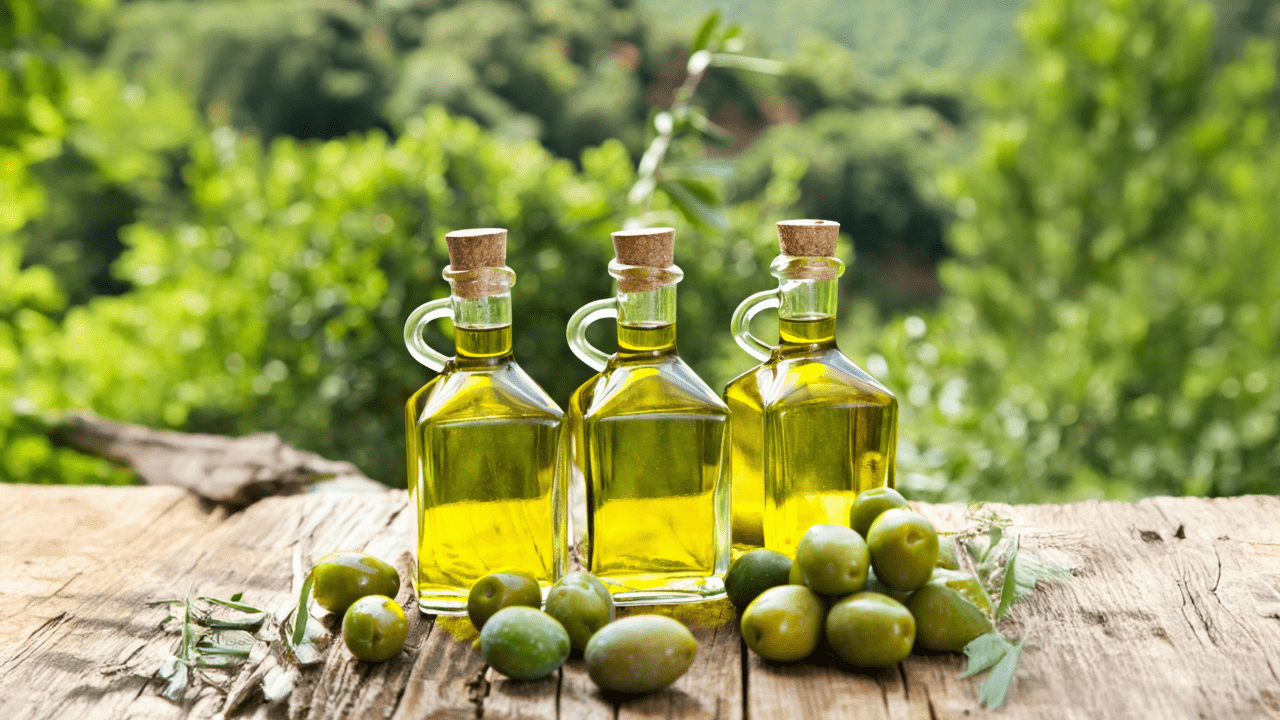
If you learn nothing else from this post, learn this: Greek cooking is built on three ingredients. Fresh lemon juice, good quality olive oil (and I mean good quality, not that rubbish that’s been sitting in your cupboard since 2019), and fresh herbs, particularly oregano and dill.
These three things appear in nearly every Greek side dish, and they’re what give Greek food that distinctive, bright, fresh flavour. It’s why Greek food doesn’t feel heavy even though you’re eating carbs and cheese and olive oil. Everything’s balanced.
Seasonal Eating
Greeks are mad about seasonal eating. In summer, it’s all about fresh salads, grilled vegetables, and cold dishes. Winter brings heartier sides like gigantes plaki (those massive butter beans in tomato sauce) and roasted vegetables. This isn’t just some trendy farm-to-table nonsense; it’s how Greeks have cooked for literally thousands of years.
The Best Greek Side Dishes (That I Actually Make)
Right, let’s get to the good stuff. I’ve organised these roughly by type, so you can find what you fancy.
The Absolute Classics (You Need These in Your Life)
Greek Lemon Potatoes (Patates Lemonates)
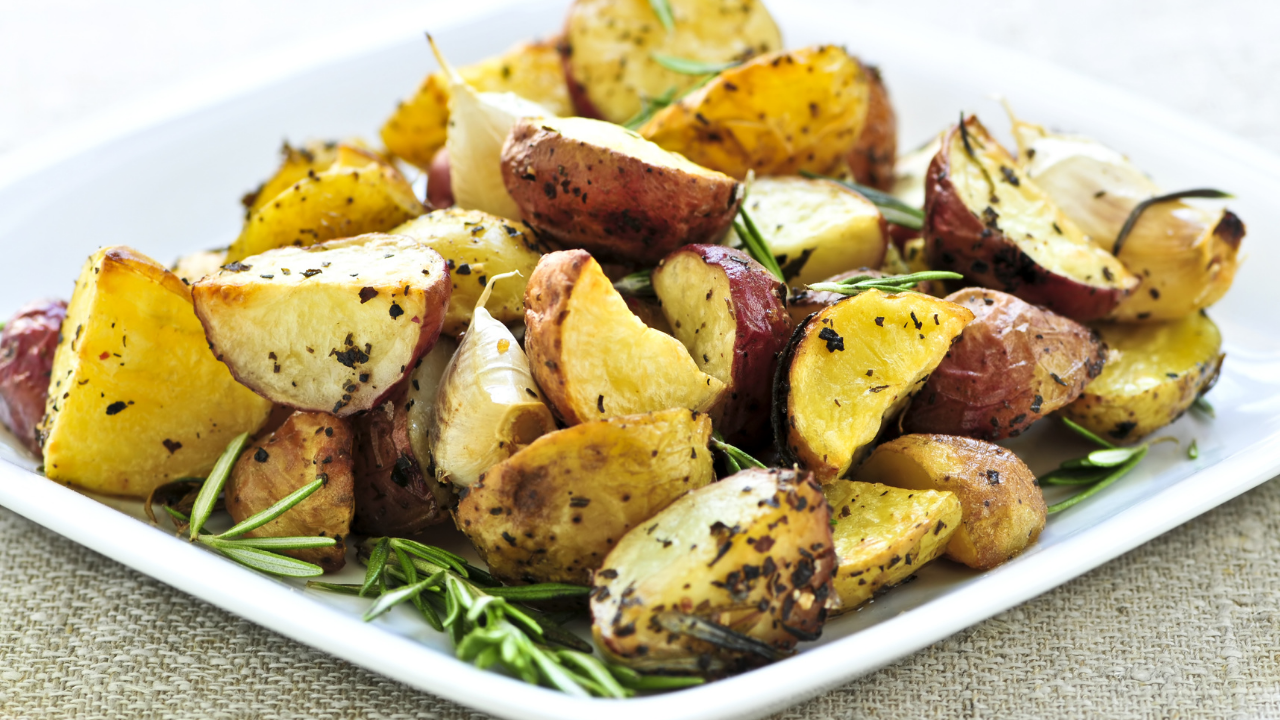
Oh my days, these potatoes. If I could only make one Greek side dish for the rest of my life, it’d be these. They’re roasted in a mixture of lemon juice, olive oil, and chicken stock (or vegetable stock if you prefer), which sounds like way too much liquid until you realise it’s what makes them impossibly creamy inside whilst getting all crispy and golden on the outside.
What makes them special: The potatoes actually braise in all that lovely lemony liquid before crisping up, so the flavour goes right through them. None of this “crispy outside, bland inside” nonsense.
Perfect with: Literally anything. Roast chicken, grilled lamb, even fish. My kids eat them with fish fingers and don’t complain, which is saying something.
Mom tip: Cut your potatoes into wedges rather than chunks. More surface area equals more crispy bits. You’re welcome.
US measurements: For 1kg (2.2 lbs) potatoes, you’ll need about 120ml (½ cup) olive oil, 120ml (½ cup) lemon juice, and 240ml (1 cup) stock.
Greek Salad (Horiatiki Salata)
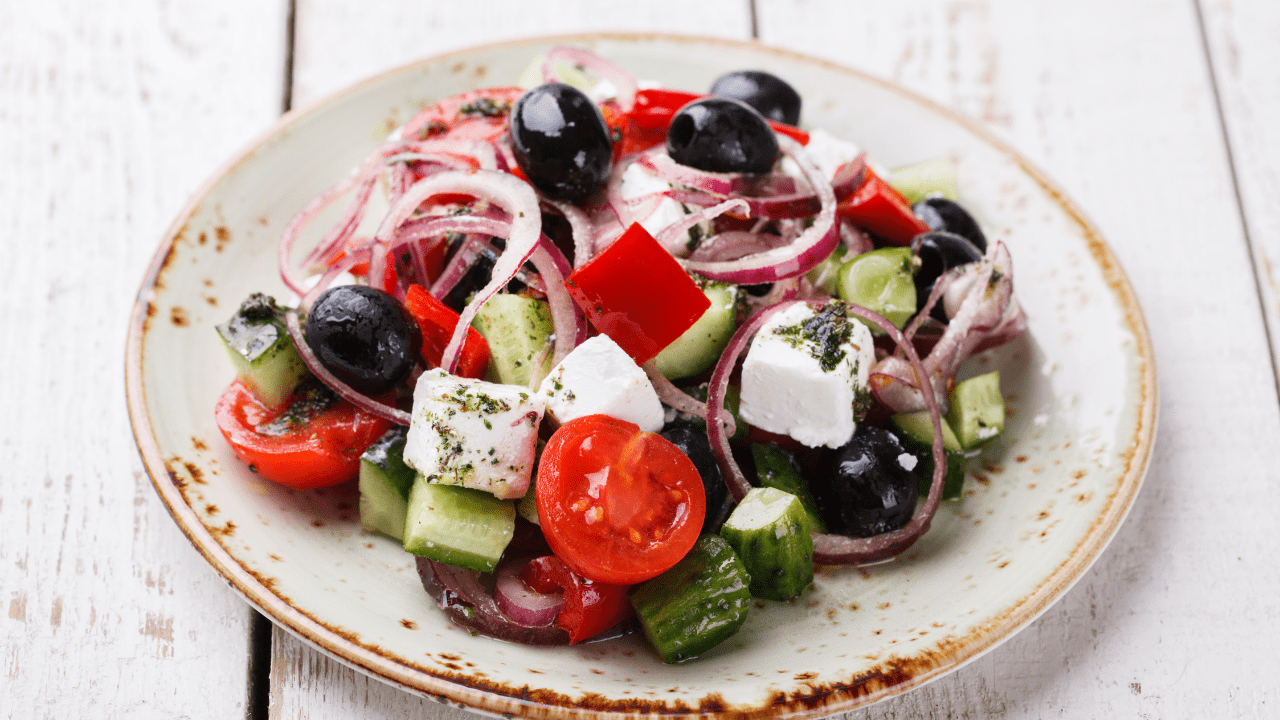
Right, let’s clear something up: a proper Greek salad does NOT have lettuce in it. I know, I know, every restaurant in Britain seems to think it does, but they’re wrong. A traditional horiatiki salata is chunky tomatoes, cucumber, red onion, green peppers, olives, and a big slab of feta on top, all dressed simply with olive oil, oregano, and sometimes a splash of red wine vinegar.
What makes it special: It’s all about the quality of your ingredients here. You need ripe, flavourful tomatoes (not those sad, pale things from the supermarket in January), proper feta (not the crumbly pre-packaged stuff), and good olives.
Perfect with: Everything. Absolutely everything. It’s like the little black dress of side dishes.
Mom tip: Don’t mix it all together until just before serving, and don’t skimp on the olive oil. Greeks are VERY generous with their olive oil.
Make-ahead advice: You can prep all the vegetables in advance and keep them in separate containers in the fridge, but only dress it right before serving or it’ll go soggy.
Tzatziki (Greek Yogurt & Cucumber Dip)
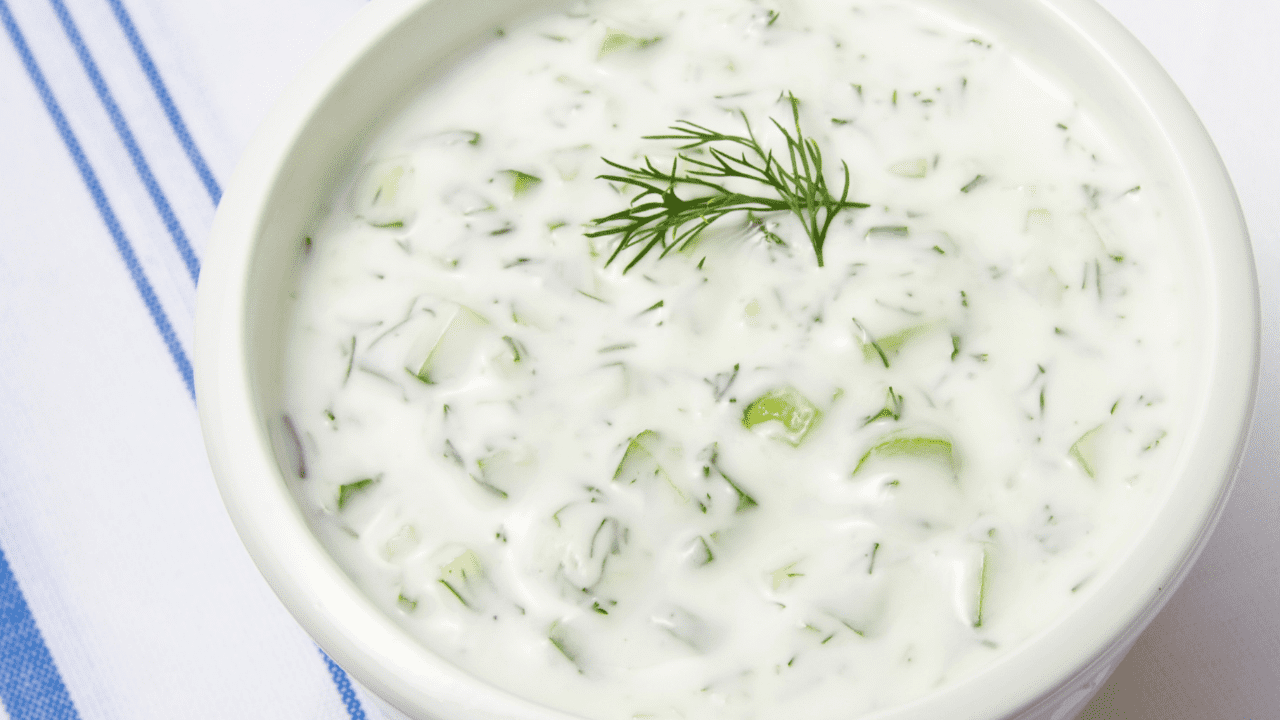
If you’ve only ever had that watery, boring tzatziki from the supermarket, please, PLEASE try making it yourself. It takes about ten minutes and the difference is honestly night and day.
What makes it special: Greek yogurt (the thick, creamy stuff), finely grated cucumber (and you’ve got to squeeze out the excess water, or your tzatziki will be swimming), garlic, fresh dill, olive oil, and a squeeze of lemon.
Perfect with: Grilled meats, as a dip for vegetables or pitta bread, dolloped onto roasted vegetables, stirred into rice… I mean, I’d probably eat it on cornflakes if socially acceptable.
Mom tip: Make it the night before if you can. The flavours develop and get even better.
The Vegetable Stars
Spanakopita (Spinach & Feta Pie)
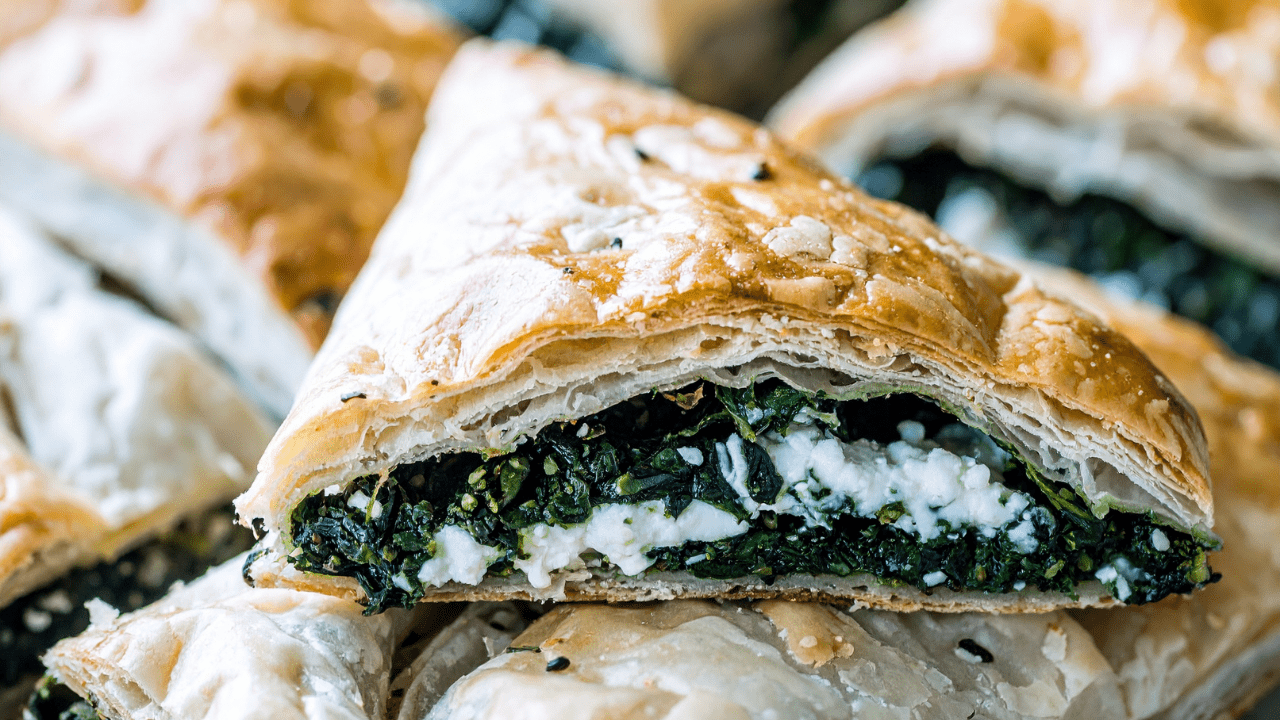
This is my “fancy guest” side dish, even though it’s dead simple to make. Layers of crispy filo pastry filled with spinach, feta, herbs, and just enough egg to bind it all together.
What makes it special: That crackling, golden filo pastry combined with the creamy, tangy filling. It’s all about the texture contrast.
Perfect with: It’s actually substantial enough to be a main for lunch with a salad, but I usually serve it as a side with roasted meats or other Greek dishes for a proper feast.
Mom tip: Keep your filo pastry covered with a damp tea towel while you work, or it’ll dry out and crack. Also, don’t be shy with the melted butter between layers.
Baked Feta with Tomatoes & Peppers
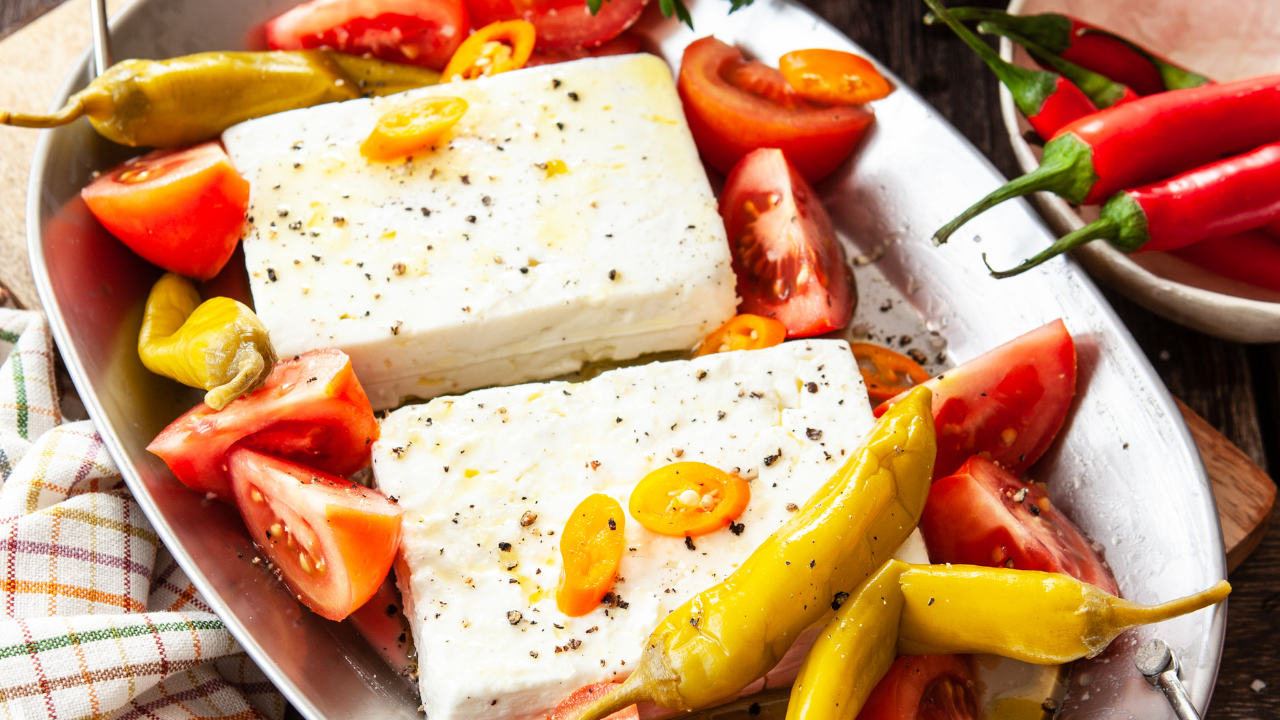
Remember when baked feta went absolutely viral on TikTok? Well, the Greeks have been doing this for ages, and theirs is even better because they add peppers, olives, and herbs.
What makes it special: The feta gets all soft and creamy in the middle while the edges go slightly golden, and it soaks up all the lovely flavours from the tomatoes and herbs.
Perfect with: Crusty bread for scooping, or you can toss it through pasta for a quick dinner.
Mom tip: Use a good quality feta in a block, not the pre-crumbled stuff. You want it to hold its shape.
Gigantes Plaki (Giant Baked Beans)
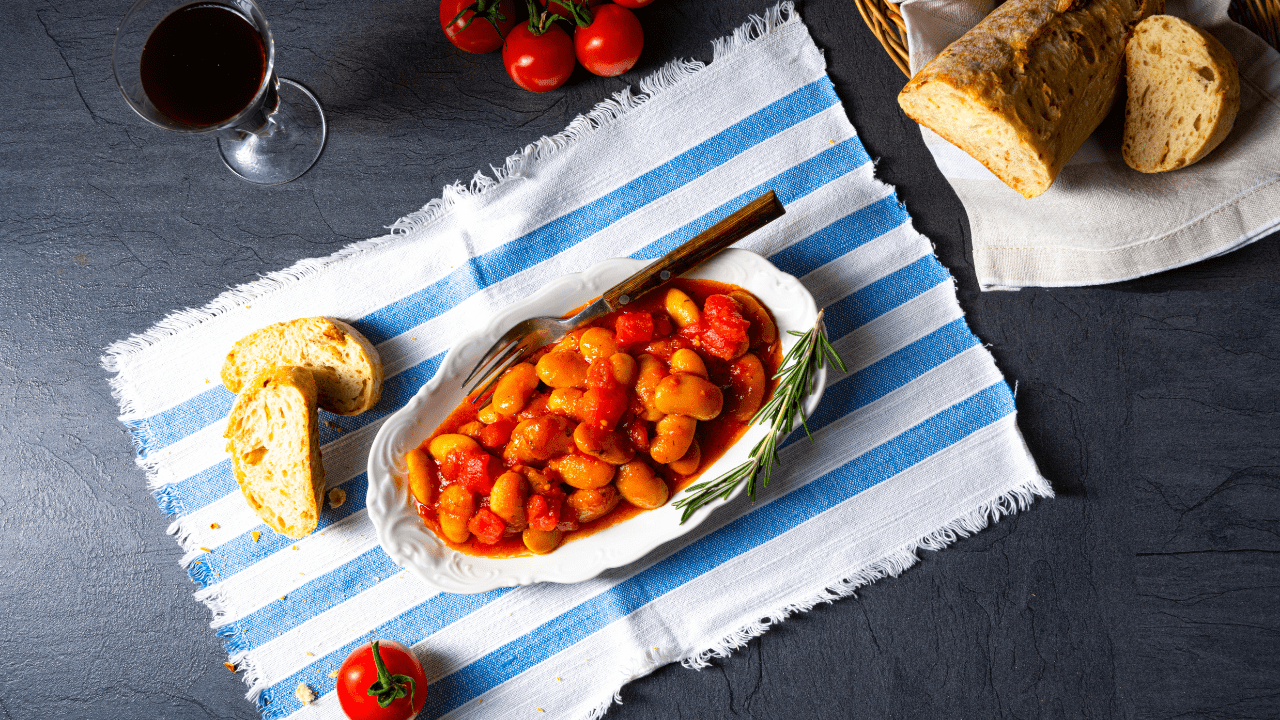
These are comfort food at its finest. Massive butter beans in a rich tomato sauce with loads of herbs, all baked until the beans are creamy and the sauce is thick.
What makes it special: They’re filling enough to be a main (I’ve had them for lunch many times) but work brilliantly as a hearty side dish.
Perfect with: Grilled meats, crusty bread, or alongside other mezze dishes.
Mom tip: If you can’t find gigantes beans, big butter beans work fine. And yes, you can use tinned ones; just rinse them well.
The Rice & Grain Sides
Greek Lemon Rice

This is my go-to “I need a side dish in 20 minutes” recipe. Fluffy rice cooked in chicken stock (or vegetable stock) with loads of lemon juice, fresh herbs, and a knob of butter.
What makes it special: It’s like rice pilaf’s cooler, zingier cousin. The lemon makes it really fresh and bright, so it cuts through rich main dishes beautifully.
Perfect with: Chicken dishes especially, but also brilliant with fish or grilled vegetables.
US measurements: For 200g (1 cup) rice, use 480ml (2 cups) stock, juice of 1 lemon, 2 tbsp butter.
Orzo Salad with Feta & Herbs
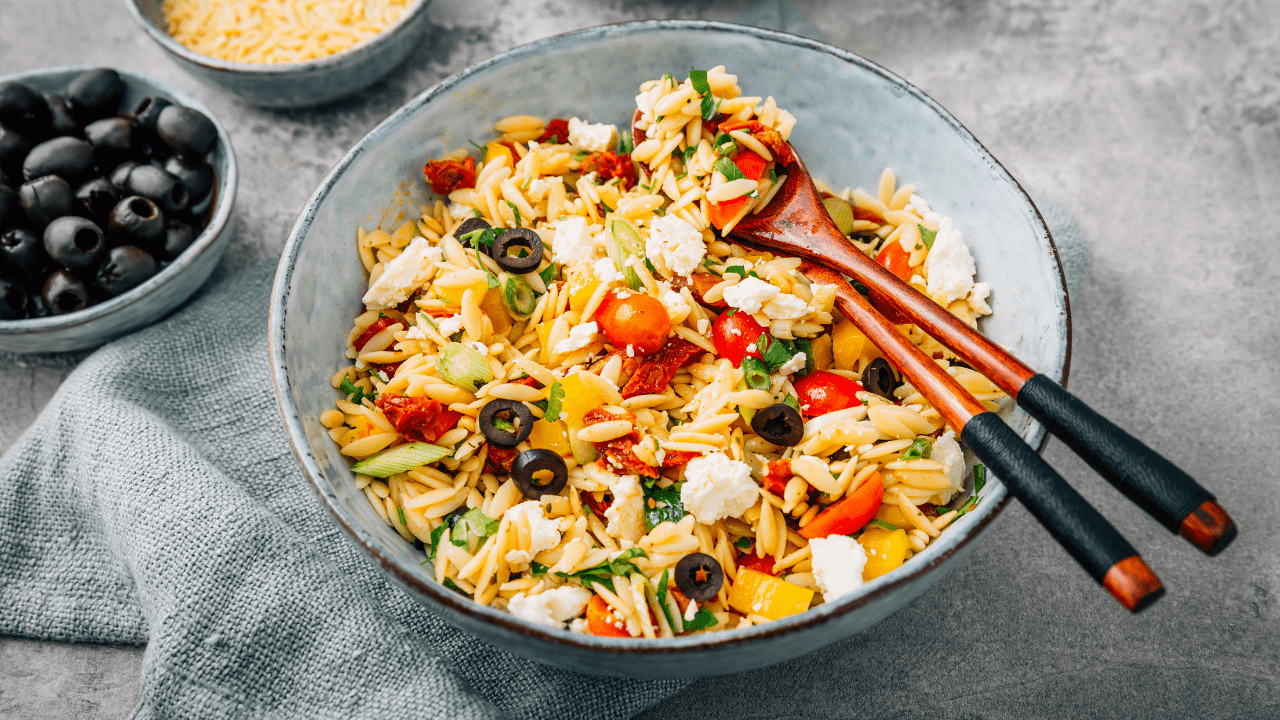
Orzo is those little rice-shaped pasta pieces, and they’re absolutely brilliant in salads. I make mine with loads of fresh herbs, cherry tomatoes, cucumber, feta, and a lemony dressing.
What makes it special: It’s more substantial than a regular salad, so it’s great for lunch boxes or picnics.
Perfect with: Grilled meats or fish, or just on its own for lunch.
Mom tip: Rinse your cooked orzo under cold water to stop it clumping together.
The Bread & Dips
Simple Greek Pitta Bread
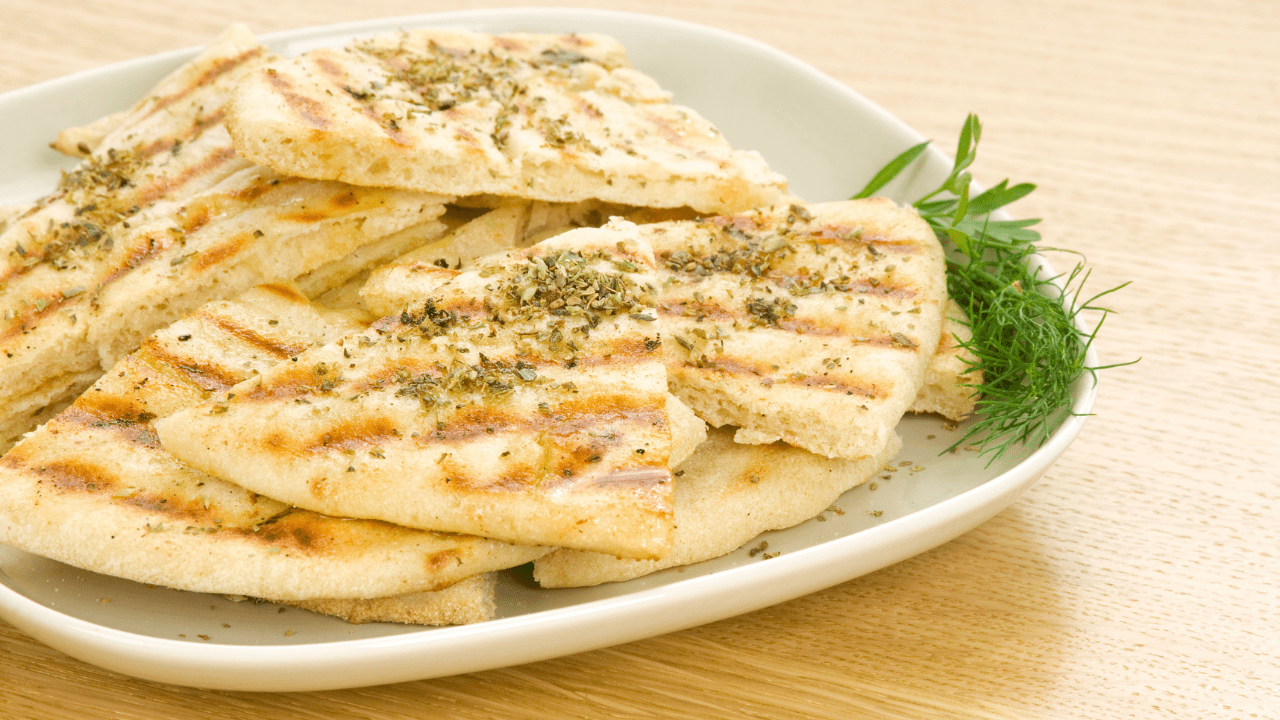
Yes, you can buy pitta, but homemade is honestly so much better and it’s not difficult. Plus, your house will smell amazing.
What makes it special: They puff up in the oven like little pillows, and when they’re fresh and warm, they’re absolutely gorgeous.
Perfect with: All the dips! Tzatziki, hummus, baked feta, you name it.
Hummus (Greek-Style)
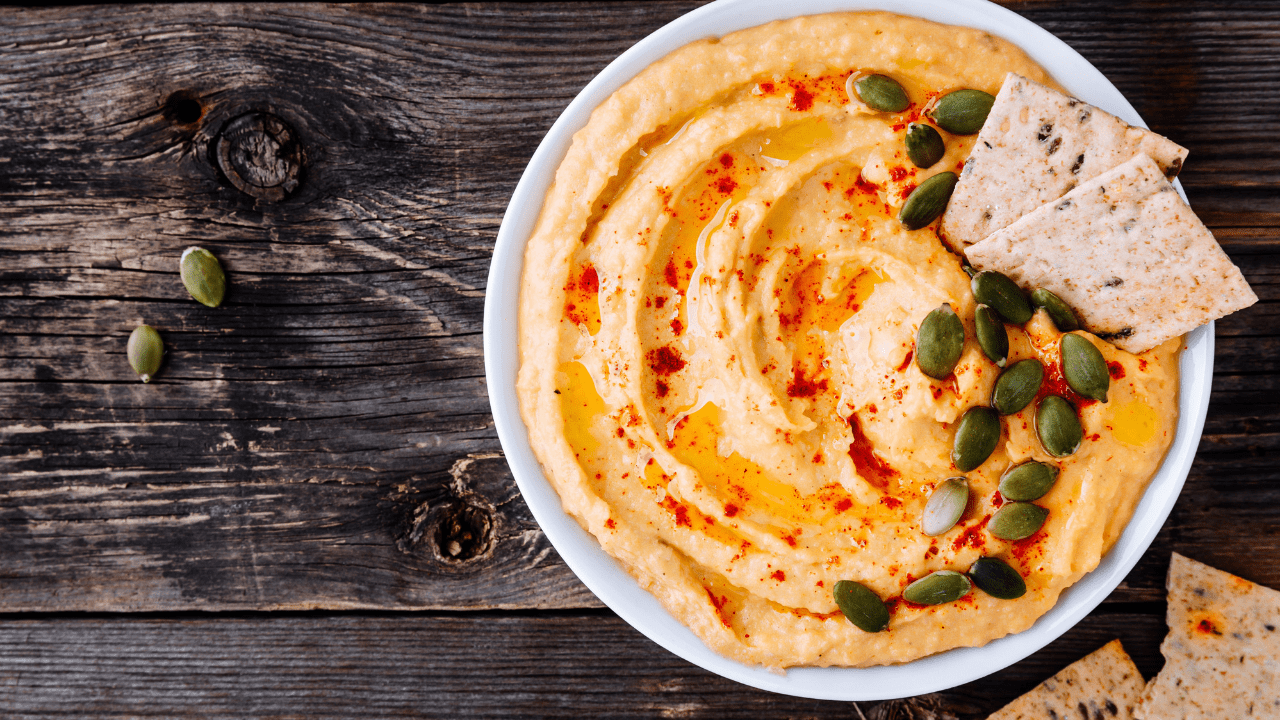
Now, I know hummus is originally Middle Eastern, but the Greeks have well and truly adopted it. Their version tends to be super smooth and creamy with loads of good olive oil and a sprinkle of paprika.
What makes it special: Making your own means you can control the texture and flavour. I like mine really garlicky with extra lemon.
Perfect with: Vegetables, pitta bread, as a spread in sandwiches, or just eaten with a spoon from the fridge at midnight (no judgment here).
US measurements: For 400g (14 oz) chickpeas, use 60ml (¼ cup) tahini, 60ml (¼ cup) lemon juice, 60ml (¼ cup) olive oil.
The “Different But Delicious” Category
Halloumi Fries

These aren’t traditional traditional, but they’re very popular in Greek restaurants and oh my goodness, they’re addictive. Sticks of halloumi cheese, floured and fried until crispy outside and melty inside.
What makes it special: That squeaky, salty halloumi with a crispy coating. Serve with sweet chilli sauce or honey for dipping.
Perfect with: Everything, honestly. Or just as a snack.
Mom tip: Make sure your oil is hot enough before frying, or they’ll go soggy.
Greek Coleslaw (Lachano Salata)
This is basically shredded cabbage dressed with lemon juice, olive oil, and sometimes a bit of yogurt. Much lighter than traditional coleslaw.
What makes it special: It’s crunchy, fresh, and cuts through rich main dishes brilliantly.
Perfect with: Grilled meats, souvlaki, anything rich or fatty.
Regional Variations: How Greek Sides Change Across the Country
One thing I’ve learnt from my Greek friends is that Greek food varies quite a bit depending on where you are in the country. The islands have different specialities to the mainland, and northern Greece cooks differently to southern Greece.
Island Specialties
The Greek islands tend to focus more on seafood and lighter dishes. You’ll find lots of fresh salads, grilled vegetables, and fish dishes. Santorini is famous for its split pea puree (fava), while Crete is known for dakos (those rusks topped with tomato and feta).
Mainland Hearties
Mainland Greece, especially in the north, has heartier sides. More pulses, more meat-based stocks in vegetable dishes, and dishes that’ll stick to your ribs a bit more. This is where you’ll find the best gigantes plaki and thick vegetable stews.
What This Means for You
The beauty of Greek side dishes is that you can adapt them to what you’ve got and what you fancy. Making them in summer? Go lighter with fresh salads and cold mezze. Making them in winter? Load up on the roasted vegetables and warm dips.
Planning a Greek Feast: What Goes With What?
Right, so you’re sold on Greek side dishes (good choice!), but now you’re staring at this list thinking, “Where do I even start?” Let me help you out.
For a Casual Family Dinner
Pick 1-2 sides maximum. I usually go with:
- Greek lemon potatoes + simple Greek salad + tzatziki
That’s it. Three components, all easy, and it feels like a proper meal.
For Entertaining Friends
This is when you can go a bit mad. I’d do:
- Greek lemon potatoes
- Greek salad
- Spanakopita or baked feta
- Tzatziki
- Hummus with pitta
That gives you a mix of hot and cold, creamy and fresh, and looks really impressive without requiring you to live in the kitchen all day.
For a Proper Greek Feast
Right, if you’re really going for it:
- Greek lemon potatoes
- Horiatiki salata
- Spanakopita
- Baked feta with tomatoes
- Gigantes plaki
- Tzatziki
- Hummus
- Halloumi fries
- Pitta bread
- Greek lemon rice
- Marinated olives
Yes, that’s a lot. But that’s how Greeks eat! Remember, these are all meant to be shared, so you just put everything in the middle of the table and everyone helps themselves.

Make-Ahead Magic: Getting Organised
Here’s the thing about Greek side dishes that makes them brilliant for entertaining: loads of them are actually better made ahead. I’m talking game-changer territory here.
The Day Before
These actually improve overnight:
- Tzatziki (flavours develop beautifully)
- Hummus
- Gigantes plaki
- Greek potato salad
- Any dips or spreads
- Spanakopita (you can assemble and refrigerate unbaked)
Morning Of
These can be prepped in advance:
- Greek salad components (chop everything, keep separate, assemble before serving)
- Marinated vegetables
- Orzo salad
- Greek lemon rice (reheat with a splash of water)
Must Be Fresh
These need to be made fresh:
- Greek lemon potatoes (they lose their crispy texture if made ahead)
- Halloumi fries
- Anything fried, really
- Fresh pitta bread
Shopping for Greek Ingredients: Where to Find What You Need
When I first started cooking Greek food, I got a bit overwhelmed trying to find authentic ingredients. But here’s the thing: you don’t need to source everything from specialist shops. Most supermarkets in the UK stock everything you need these days.
The Essentials
Greek Extra Virgin Olive Oil: Look for PDO (Protected Designation of Origin) Kalamata or Crete olive oil. Yes, it’s more expensive than regular olive oil, but the flavour is so much better. I buy mine from Waitrose or online from [Amazon](affiliate link opportunity).
Greek Feta (PDO): Proper Greek feta is made from sheep’s milk or a mixture of sheep’s and goat’s milk. It’s creamier and less salty than the Danish-style feta. Tesco and Sainsbury’s both stock proper Greek feta now.
Greek Yogurt: Look for Total Greek yogurt or similar. It should be thick enough to stand a spoon up in.
Kalamata Olives: These dark purple olives from Kalamata in southern Greece are what you want. Waitrose, M&S, and most supermarkets stock them.
The Nice-to-Haves
Dried Greek Oregano: Worth getting the proper stuff from a Greek shop or online. It’s much more fragrant than regular dried oregano.
Greek Honey: Thyme honey from Greece is absolutely gorgeous. Not essential, but lovely if you can get it.
What You Can Substitute
Can’t find Greek feta? Any good quality feta will do, just go for one that’s not too salty.
No Kalamata olives? Any good quality black olives work fine.
Greek yogurt sold out? You can strain regular yogurt through muslin to thicken it, but honestly, just grab Turkish yogurt instead.
Common Questions (Because I Get Asked These A LOT)
Are Greek side dishes healthy?
Generally, yes! Greek cooking uses loads of vegetables, legumes, whole grains, and healthy fats from olive oil. It’s basically the Mediterranean diet everyone’s always going on about. Obviously, if you’re eating fried halloumi three times a day, that’s different, but overall, Greek side dishes are pretty nutritious.
Can I make Greek sides vegetarian/vegan?
Absolutely! Most traditional Greek side dishes are vegetarian anyway (Greeks fast from meat regularly for religious reasons, so there’s a whole tradition of vegan Greek food). Just swap butter for extra olive oil, skip the feta or use a vegan version, and use vegetable stock instead of chicken stock.
How do I stop my filo pastry from cracking?
Keep it covered with a damp (not wet!) tea towel while you work. Filo dries out really quickly, and once it’s dry, it cracks. Also, brush each layer with melted butter or olive oil; this helps keep it pliable.
Why does my Greek salad go watery?
You’re probably dressing it too early. Dress it right before serving, and don’t add salt until the last minute (salt draws moisture out of the tomatoes and cucumber). Also, make sure you’re using ripe but firm tomatoes, not overripe ones.
Can I freeze Greek side dishes?
Some yes, some no:
- Freeze well: Spanakopita (unbaked or baked), gigantes plaki, most dips and spreads
- Don’t freeze: Greek salad, tzatziki (the cucumber goes watery), rice dishes, roasted potatoes
What’s the difference between Turkish and Greek food?
Honestly? Not that much, and suggesting otherwise will start arguments. There’s huge overlap because of centuries of shared history. Some dishes have different names (dolmades vs dolma), and there are regional specialities, but the basics are very similar.
Do I really need to use lemon in everything?
You absolutely do! Lemon is to Greek cooking what butter is to French cooking. It brightens everything up and stops dishes feeling heavy. Fresh lemon juice, mind you, not the stuff from a bottle.
My Favourite Greek Side Dish Combinations
After six years of cooking Greek food regularly, I’ve figured out which combinations work really well together. Here are my go-to pairings:
For Grilled Chicken: Greek lemon potatoes, horiatiki salata, and tzatziki. Classic for a reason.
For Lamb: Gigantes plaki, Greek lemon rice, and a simple tomato and onion salad.
For Fish: Greek potato salad, grilled vegetables, and tzatziki. The cool sides balance the delicate fish.
For Vegetarian Mains: Spanakopita, baked feta with vegetables, Greek salad, and hummus with pitta.
For Mezze Night: Tzatziki, hummus, baked feta, halloumi fries, spanakopita, olives, pitta bread. Just put it all out and let everyone graze.
A Word About Greek Dining Culture
One last thing before I wrap this up. Greek meals are long, social affairs. You’re not meant to inhale your food and rush off. You linger, you chat, you have another glass of wine, you argue about something, you laugh, you eat a bit more.
This is why Greek side dishes work so well for family meals. Everything goes in the middle of the table, everyone helps themselves, and there’s no pressure to eat a certain amount or finish your plate. My kids actually eat more vegetables when I serve things this way because they can choose what they fancy and don’t feel forced.
Plus, it makes me look like I’ve made loads of effort when actually half of it was made yesterday and I’ve just warmed some bits up. Win-win.
Final Thoughts
Greek side dishes have properly changed how I cook for my family. They’ve made me more relaxed about meal planning (because so many can be made ahead), they’ve got my kids eating more vegetables (because they taste so good), and they’ve given us this lovely tradition of sitting around the table sharing food rather than everyone eating their own separate plates.
You don’t need to make everything from scratch or source rare ingredients. Start with one or two simple sides (maybe those lemon potatoes and a Greek salad) and go from there. Once you’ve got the hang of the basic flavours (lemon! olive oil! oregano!), you can adapt anything.
And honestly? Even if you completely mess it up, it’ll probably still taste pretty good. Greek food is forgiving like that.
Now, if you’ll excuse me, I’ve got some Greek lemon potatoes in the oven that need checking on, and I may or may not have a glass of wine with my name on it.
What’s your favourite Greek side dish? Have you got any family recipes or tips to share? Let me know in the comments below, I love hearing from you lot!
Check out some more Delicious Side Dishes:
Creamed Peas
Enoki Mushroom Recipe Guide
Delia Smith Red cabbage
Parmentier Potatoes
Miso Green Beans
Side Dishes for Ham

Becky is the voice behind Life in Velvet, an organised, intentional living blog focused on practical food, calm homes, thoughtful projects, and everyday systems that make real life feel easier. A mum of 3 living in the UK, Becky writes from lived experience, sharing what works, what doesn’t, and the decisions that make family life run more smoothly.
With a background in marketing and content writing, and over a decade of blogging experience, she brings a thoughtful, structured approach to everything from baking and home projects to routines and decision-making. Life in Velvet is where planning meets creativity, with ideas designed for real homes and real life.