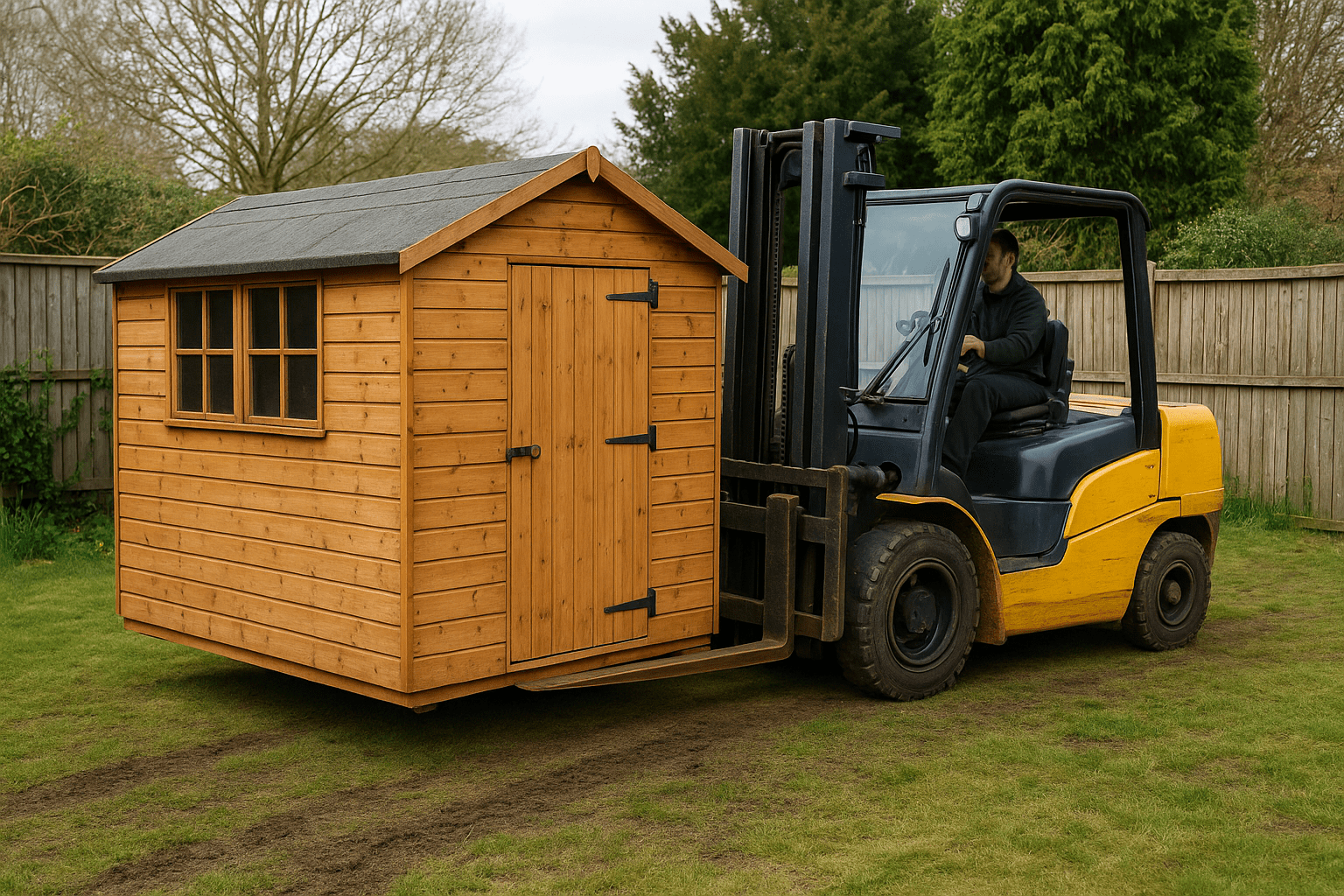
So, you’ve got a garden shed that needs moving. Maybe it’s blocking your grand vision for a new patio, or the neighbour’s tree is suddenly shading your prized tomatoes. Whatever the reason, you’re staring at the wooden beast and thinking, “How on earth do I move that?”
Well, good news — it can be done. In fact, if you’ve got access to a forklift (or can hire one), you’ve already got a head start. Moving a shed with a forklift isn’t just possible — it can be surprisingly efficient. That said, it does need a bit of planning and care, or you risk ending up with a shed in bits and a few choice words shouted into the wind.
Whether you’re moving a small potting shed or a full-sized man cave, here’s your guide to how to move a shed with a forklift and doing it the right way — with your forklift, a bit of patience, and a few mates to help out.
First Things First: Is Your Shed Moveable?
Before you even think about renting a forklift or bribing a mate who’s got one, have a proper look at your shed.
Some sheds are built like fortresses. Others are glorified garden wardrobes. The more solid yours is, the better the chances it’ll survive the move.
How to Move a Shed with a Forklift – Check these key things:
-
Is the floor intact? You’ll be lifting from the base, so the floor needs to be structurally sound.
-
Is it bolted down? Some sheds are fixed to concrete or paving slabs. If yours is, you’ll need to unbolt it or detach it safely.
-
Can it be moved in one piece? A prefab metal shed might flex or buckle under pressure, while a sturdy timber one might be fine.
If your shed’s already listing to one side or the roof’s sagging, you might want to consider dismantling it and rebuilding it instead.
Step-by-Step: How to Move a Shed with a Forklift
1. Clear Out the Shed
This might sound obvious, but you’d be amazed how many people try to shift a shed with all their garden tools still rattling around inside. Not only does this make the shed heavier, but it increases the risk of internal damage — or worse, an escaping rake taking a chunk out of your shin.
Empty it completely, and while you’re at it, sweep it out too. You’ll thank yourself later.
2. Inspect the Base
Forklifts need something solid to lift. If your shed sits on a timber base or raised platform, check it’s intact and that the forks can slide under.
If the base is flush with the ground or on a concrete slab, you might need to gently lift the shed slightly with a crowbar or jack to allow fork access.
3. Prep the Ground
Have a good look at the route you’re planning to take. Forklifts aren’t great with uneven terrain, so check for soft ground, tree roots, or tight turns.
If the garden is particularly boggy or sloped, you might want to lay down plywood boards or use wooden pallets as a temporary track to give the forklift more stability.
4. Position the Forklift
Slide the forks under the shed from the strongest side — usually the side parallel to the floor joists.
Make sure the forks are spaced as wide as possible to distribute the weight evenly. If you’re not sure where the joists run, try to locate them using the gaps in the floor or by gently tapping and listening for solid vs hollow sounds.
5. Lift Slowly and Steadily
This isn’t a race. Take your time lifting the shed gently. Watch for any movement, flexing, or ominous creaks. If something doesn’t sound right — stop and reassess.
Use a second person (or two!) to watch from the sides and back, checking for tilts, overhangs, or any garden gnomes that might be in danger.
6. Drive with Caution
Once it’s off the ground, go slowly. Very slowly.
Most sheds aren’t designed to be lifted like this, so avoid bumps, sudden stops, or sharp turns. If you’re navigating a tight space, have someone walk alongside to guide you and keep an eye on the clearance.
7. Lower the Shed in Its New Spot
Once you’ve reached the new location, lower the shed gently and make sure it’s level. Use a spirit level to check — if it’s out of alignment, shim the base with treated timber offcuts or concrete blocks.
If you’re placing it on a new base, make sure it’s prepped and ready. The smoother and more stable the base, the happier your shed will be.

Top Tips for How to Move a Shed with a Forklift
Get Help
Even if you’re the DIY king or queen, don’t try this alone. You’ll need spotters, especially when navigating tight garden paths or awkward corners.
Protect Your Lawn
Forklifts can be brutal on grass. Lay down boards or temporary paths to avoid leaving deep ruts or ripping up your turf.
Secure Loose Parts
Remove glass panes or doors if they look fragile. At the very least, secure them with tape or straps to stop them swinging open during the move.
Check Forklift Clearance
Don’t forget to check the height of your shed compared to trees, fences, and the eaves of your house. It’s easy to misjudge this once it’s off the ground.
Alternative Shed-Moving Methods
No forklift? No worries! Here are a few other tried-and-tested ways to shift a shed:
Roll It with Pipes
An old-school method, but it works. Place metal or sturdy PVC pipes underneath the shed base and roll it forward, leapfrogging the pipes as you go.
Great for short distances — and flat gardens.
Use Shed Moving Wheels or Dollies
There are purpose-built kits available that let you raise and wheel your shed like a piece of furniture. These are ideal for smaller sheds.
Disassemble and Rebuild
If the shed is too big, flimsy, or awkward to move whole, sometimes it’s best to take it apart and start again. It sounds like a faff, but it can save time and stress if things go pear-shaped.
What About Moving a Shed on a Trailer?
If you’re relocating the shed to a different property (or giving it away), you might need to load it onto a trailer.
In that case, your forklift can come in handy again — just make sure:
-
The trailer is rated for the weight of the shed.
-
You secure the shed thoroughly with ratchet straps.
-
You double-check height clearance before hitting the road.
Always consult a professional or hire help if you’re unsure. Moving a shed across town isn’t quite the same as shuffling it to the end of your garden.
FAQs: Moving a Shed
Can I move a shed by myself?
Realistically, no — unless it’s very small. Sheds are bulky, heavy, and awkward. Always get help, even if you’re using equipment.
Do I need planning permission to move my shed?
Not usually, if it stays on your property and complies with garden building regulations. But if you’re repositioning it closer to a boundary or using it as a home office, it’s worth checking local council guidelines.
How much does it cost to hire a forklift in the UK?
Roughly £100–£200 per day, depending on location and size. You’ll also need to factor in delivery/collection and whether you need a driver. You can find places to hire a forklift on sites like this one.
What’s the best base for a shed after moving it?
Concrete is ideal, but paving slabs or pressure-treated timber bearers are also good options. Just make sure it’s level, stable, and allows air to circulate under the shed.
Will moving a shed damage it?
If done carefully, most sheds can be moved without issue. However, age, construction quality, and how it’s lifted all play a part. Check all joints and panels afterwards, and re-treat any exposed wood if needed.
Can I use a pallet jack or sack truck to move a shed?
Not for a full-size shed. These tools can help shift materials or small sections if dismantled, but they’re not suitable for the whole structure.
Moving a shed with a forklift might sound a bit extreme, but in the right hands, it can be a game-changer — turning what could be a week-long dismantling job into a half-day reshuffle. Whether you’re reclaiming space for a greenhouse, making room for a hot tub, or just following the sun, getting your shed to a new home is totally doable.
Just remember when it comes to how to move a shed with a forklift: plan ahead, don’t rush, and always have someone on hand to guide and watch out for flying fence panels.
See more home-related posts here and more outdoor space posts here!

Becky is the voice behind Life in Velvet, an organised, intentional living blog focused on practical food, calm homes, thoughtful projects, and everyday systems that make real life feel easier. A mum of 3 living in the UK, Becky writes from lived experience, sharing what works, what doesn’t, and the decisions that make family life run more smoothly.
With a background in marketing and content writing, and over a decade of blogging experience, she brings a thoughtful, structured approach to everything from baking and home projects to routines and decision-making. Life in Velvet is where planning meets creativity, with ideas designed for real homes and real life.