
Eruption cysts in teething babies are one of those parenting curve-balls that look terrifying but are usually nothing to panic about. I learned this the (slightly) hard way with my middle child, T. One morning, just as his first molar was due, I spotted a bluish-purple bubble on his gum. It resembled a miniature bruise filled with jelly, and naturally I spiralled into Google-induced fear. Spoiler: it was an eruption cyst. Spoiler #2: it went away on its own, and he’s now happily chomping breadsticks like no-one’s business!
Below is everything I’ve since gathered about these odd little cysts—what they are, when you do need professional help, plenty of soothing hacks for sore gums, plus a quick-fire FAQ at the end. Grab a cuppa; it’s a long read but, I promise, worth your while.
What on earth is an eruption cyst?
An eruption cyst in teething babies (sometimes called an eruption haematoma) is a small, fluid-filled sac that forms over a tooth about to break through the gum. Think of it as a protective bubble that’s got a bit carried away. The sac can look translucent, grey, blue, even deep purple, which makes it startling to see. But in most cases it’s painless for the baby and completely benign. Most simply pop or drain when the tooth erupts, leaving no trace.
Why does it happen?
When a tooth is on the move, it normally breaks through the overlying gum quietly. Occasionally, fluid or a tiny bit of blood pools between the crown of the tooth and the thin gum tissue above. Voilà: a cushiony cyst. It’s rare in infants (more commonly seen when older children’s permanent teeth come in), but clearly babies like mine didn’t read that statistic.
Does it hurt?
Surprisingly, many little ones don’t seem bothered. Theo, who moans if his yoghurt isn’t the right shade of pink, barely noticed. If there’s irritation, it’s often from the tooth pushing, not the cyst itself. General teething grumbles—drooling, crankiness, fist-chewing—tend to cause more distress than the bubble.
“Treatment of eruption cyst” — do we actually treat them?
Usually, no. “Watchful waiting” is the posh phrase dentists use. Most eruption cysts in teething babies resolve the moment the tooth pierces through. Your job: keep the area clean (soft baby toothbrush or a damp muslin), offer cold teething toys, and practise saint-level patience. That is legitimate “eruption cyst treatment” for the vast majority of families.
When to call the dentist
Even though eruption cysts are self-limiting, ring your dentist or GP if you notice:
-
Rapid swelling, spreading redness or heat.
-
Pus, yellow discharge, or a foul smell (possible infected eruption cyst).
-
Fever or a generally poorly baby.
-
Pain so intense they won’t feed or sleep.
-
The cyst hanging around for weeks with no sign of the tooth pushing through.
These signs may indicate infection or that a tiny snip is needed to help the tooth along. Dentists perform a quick, painless incision with topical anaesthetic—10 seconds of fuss for a lifetime of bragging rights on the parenting front.
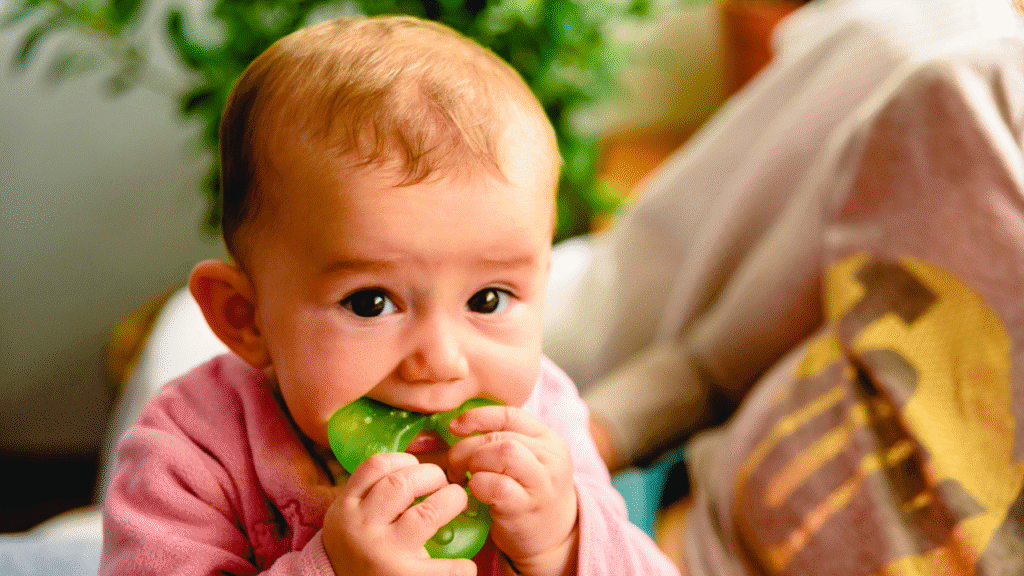
Home comfort hacks for eruption cysts in teething babies (a.k.a. how we survived)
-
Chilled silicone chew toys – The cold temp shrinks the blood vessels in the gum ever so slightly, easing pressure.
-
Cucumber sticks straight from the fridge – Soft enough not to damage gums, cool enough to soothe.
-
Breast milk ice lollies – Magic if you’re breastfeeding. (Formula works too, but leaks faster.)
-
Gum massage – A clean finger in circular motions; you’ll feel the tooth’s outline.
-
Lots of cuddles and distraction – Inevitably the most effective tool in the kit.
For even more tips, hop over to my earlier post [How to Relieve Tooth Pain in Children]—it’s a post with some safe, pharmacist-approved solutions you probably already have in your kitchen drawer.
What about gels and medicines?
In the UK, licensed teething gels are limited. If you opt for one, stick to the dosage guidelines. Infant paracetamol or ibuprofen can help on really fractious nights, but check age limits and spacing between doses. Remember, medication won’t shrink the cyst; it merely takes the edge off gum ache.
Cleaning around an eruption cyst
-
Soft brush, small head – Don’t avoid the area completely; plaque raises infection risk.
-
Water only for babies under six months; from six months, use a smear of family fluoride toothpaste (1,000 ppm).
-
Wipe after feeds – A damp muslin removes milk sugars that bacteria love.
Can they pop when baby eats?
Occasionally. If your tot bites into something firm and the cyst bursts, expect a tiny blood-tinged trickle and one very confused face. It’s usually painless and heals fast. Offer a cool drink, keep it clean, and pat yourself on the back for crossing one more odd milestone.
| Myth | Reality |
|---|---|
| “It’s a tumour!“ | It’s just fluid, not a growth. |
| “The dentist must remove it.“ | Most resolve naturally. Surgical help is rare. |
| “It will ruin the tooth.“ | The tooth enamel underneath is unaffected. |
| “You caused it by letting baby chew toys.“ | Nope. Eruption cysts happen internally. |
Quick cheat sheet for midnight Googling parents for eruption cysts in teething babies
-
Colour: blue, purple, grey, even black-ish.
-
Size: pea to grape.
-
Pain level: mild to none.
-
Usual lifespan: a week or two, until tooth appears.
-
Red flags: spreading redness, discharge, fever, refusal to feed.
-
Primary mantra: Observe, clean, soothe — and breathe.
FAQs
Q1. How long does an eruption cyst in teething babies last?
Typically 7–14 days. T’s vanished on day 8—one minute a bubble, the next a shiny molar peeking through.
Q2. What’s the best treatment of eruption cyst if my baby seems in pain?
Cold teething rings, gentle gum rubs, and infant paracetamol if needed. True “eruption cyst treatment” rarely goes beyond comfort care unless infection sets in.
Q3. How do I spot an infected eruption cyst?
Look for pus, swelling that spreads beyond the lump, redness creeping along the gum or cheek, fever, or a foul smell. Seek dental advice promptly.
Q4. Could the cyst damage the adult tooth later on?
No. The tooth beneath generally erupts perfectly healthy. The cyst is outside the tooth, not inside.
Q5. Will every new tooth cause another cyst?
Unlikely. Most babies never develop even one. If your child is a repeat cyst-maker, let your dentist know so they can monitor future eruptions.
Q6. Can I pop it myself?
No, please don’t. You risk introducing bacteria and turning a harmless bubble into an infection hotspot.
Q7. Does diet matter?
Keeping sugary foods low and cleaning gums daily helps ward off secondary infection, but diet doesn’t stop cysts forming in the first place.
If you find yourself staring at a bluish blob on your baby’s gum, remember: you’re looking at a normal—if dramatic-looking—stage of teething. Nine times out of ten, the best eruption cyst treatment is patience paired with good oral hygiene and a stash of chilled teething rings.
Watching T’s cyst disappear felt oddly anti-climactic given the initial panic. Now, whenever his younger sister dribbles like a leaky tap, I’m calm as anything. And if another cyst appears? I’ll just pop the kettle on and start the countdown to a brand-new toothy grin.
Here’s to fewer midnight panics and more gummy smiles—happy teething, fellow mums and dads!
See more health-related posts here and more baby-related posts here

Becky is the voice behind Life in Velvet, an organised, intentional living blog focused on practical food, calm homes, thoughtful projects, and everyday systems that make real life feel easier. A mum of 3 living in the UK, Becky writes from lived experience, sharing what works, what doesn’t, and the decisions that make family life run more smoothly.
With a background in marketing and content writing, and over a decade of blogging experience, she brings a thoughtful, structured approach to everything from baking and home projects to routines and decision-making. Life in Velvet is where planning meets creativity, with ideas designed for real homes and real life.