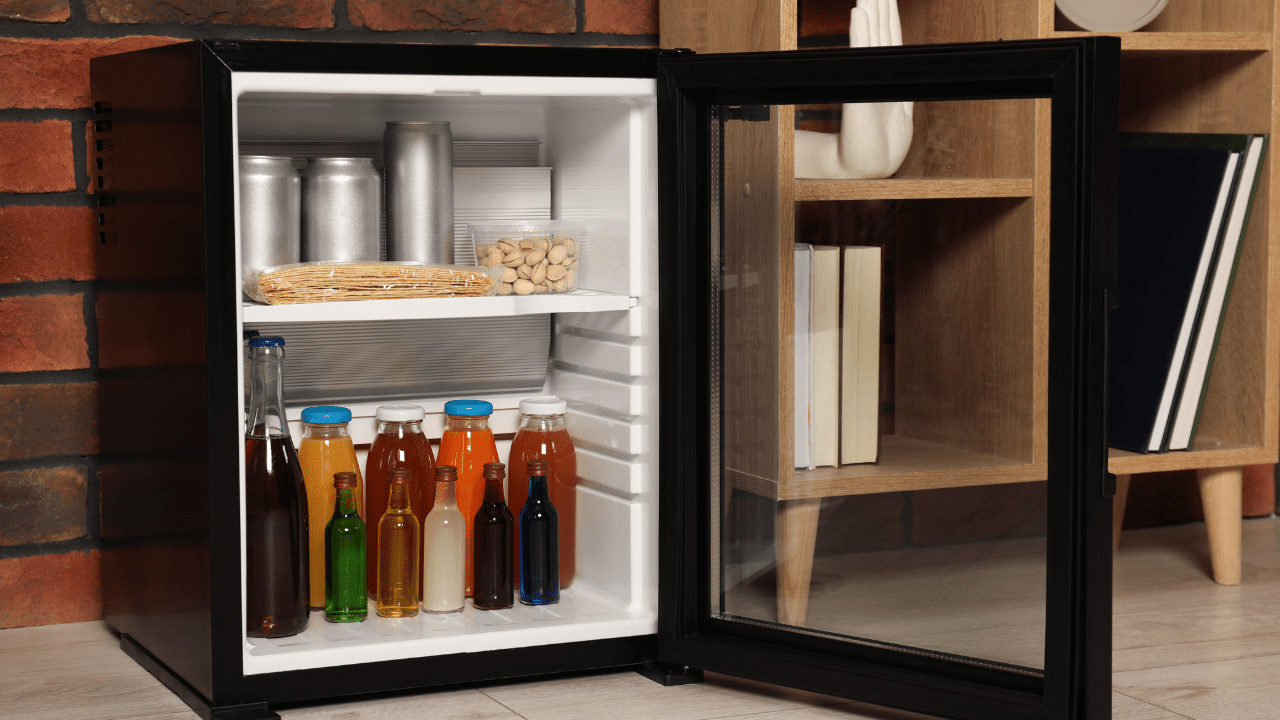
There’s a moment that happens with every mini fridge, and if you’ve got one, you already know exactly what I mean. You open it after about three weeks of “keeping on top of it,” and somehow there are four open jars of something, a mystery Tupperware you’re not ready to investigate, and absolutely no space for anything you actually want. The good news is that organising a mini fridge is genuinely straightforward once you understand how the space works. The bad news is that most of the advice out there assumes you’re a student with six items to store, which isn’t quite the reality for most of us.
Whether your mini fridge is living in a utility room doing overflow duty for the main kitchen, quietly humming in a home office, cooling drinks in a garage, or doubling as your teenager’s bedroom fridge that you’re vaguely pretending you’re not responsible for, the principles are the same. Small space, big chaos potential, fixable in under an hour if you approach it properly.
Here’s what actually works.
Start by taking everything out. Everything.
I know, I know. You want to skip this bit and just “tidy round” what’s already in there. Don’t. The only way to properly organise a small fridge is to start with an empty one.
Pull everything out onto the counter. Wipe down the shelves and the door storage. Check expiry dates ruthlessly. This is also the moment to ask yourself a question that nobody else seems to raise in these guides: does this item actually need to be in the fridge at all?
A huge chunk of mini fridge chaos comes from refrigerating things that don’t need to live in there. Whole, uncut tomatoes do better at room temperature. Garlic, onions, potatoes. Soy sauce, Worcestershire sauce, HP sauce, most vinegar-based condiments. Jams and preserves that haven’t been opened yet. Butter, if you’re going through it quickly enough. Lots of us reflexively refrigerate everything out of habit, and in a mini fridge that wastes space you genuinely can’t spare.
Once you’ve been brutal about what actually needs refrigeration, you’ll probably find you’ve already got more room to work with.
The temperature zone thing actually matters more in a mini fridge
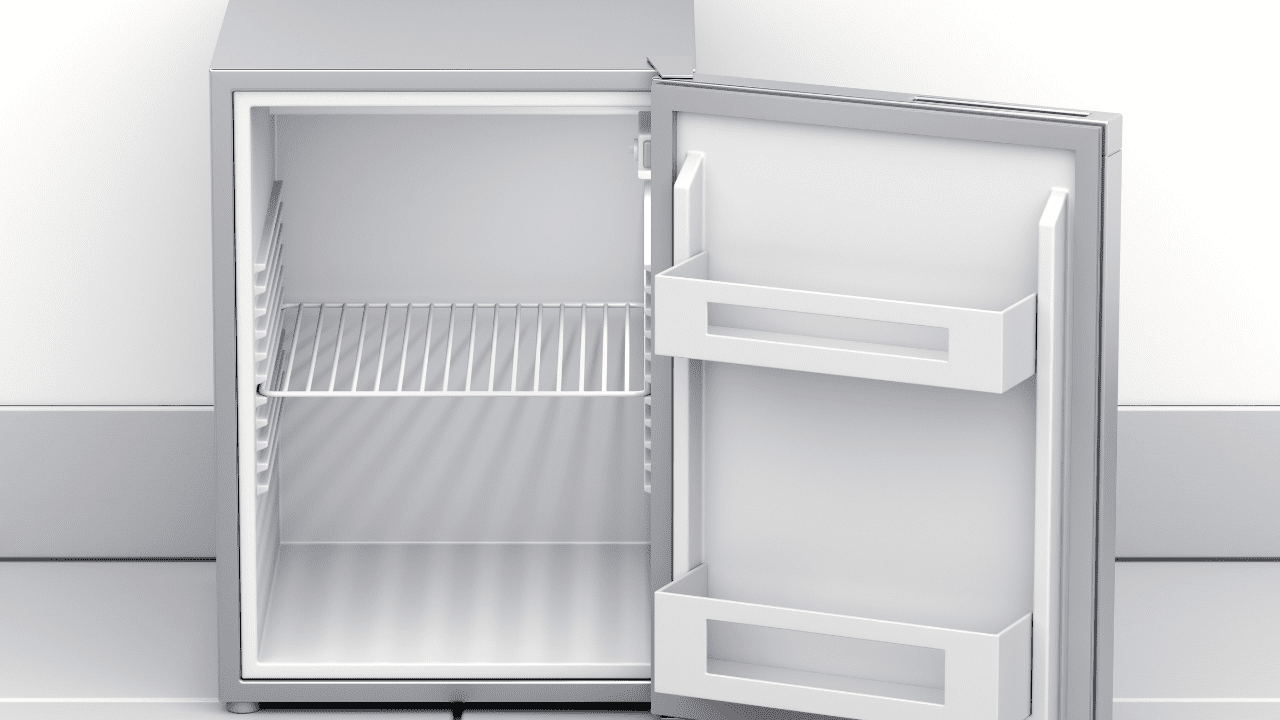
Full-size fridges are forgiving. Mini fridges are not. The temperature varies quite significantly from top to bottom, and from the shelves to the door, so putting things in the wrong zone doesn’t just affect organisation, it affects how long your food stays fresh and whether it’s actually safe.
Here’s the general rule of thumb:
- Top shelf: This is the most consistent temperature zone. Ready-to-eat foods go here: leftovers, cooked meats, hummus, yoghurt, anything that doesn’t need cooking before you eat it.
- Middle shelf: Dairy. Milk, cheese, eggs. Not the door for milk, despite what a lot of people default to. The door fluctuates in temperature every time you open it, and milk doesn’t thank you for that.
- Bottom shelf: Raw meat and fish, well wrapped and ideally in a sealed container. This is non-negotiable. Raw meat should always be at the bottom to avoid any drips contaminating food below it.
- Crisper drawer (if you have one): Salad, fruit, veg. If your mini fridge doesn’t have a drawer, use a small shallow bin on the bottom shelf instead.
- Door shelves: Condiments, drinks, anything with a long shelf life that can tolerate the temperature variations. Ketchup, mustard, salad dressing. Not milk, not anything you’re planning to eat straight from the container without cooking.
The Food Standards Agency has good guidance on safe fridge temperatures, and it’s worth knowing your fridge is meant to sit at 5°C or below. If yours doesn’t have a thermostat display, a cheap fridge thermometer from somewhere like Dunelm or Amazon will tell you if yours is running warm.
The bin situation: less is almost always more
If you’ve spent any time on Pinterest looking at fridge organisation, you’ve seen those immaculate fridges where every single item is decanted into matching glass containers, categorised into colour-coded acrylic bins, with little chalkboard labels on everything. They look amazing. They are also, in my experience, completely exhausting to maintain and genuinely counterproductive in a mini fridge.
Too many bins in a small space reduces your flexibility. You end up with rigid zones that don’t work the week you’ve got a big batch of leftovers, or a slightly taller bottle than usual, or a flat of strawberries from the market. The bins take up space themselves, and in a mini fridge, you can’t always afford that.
What actually works is being selective. One small shallow bin or basket for the things that tend to roll around or get lost (think babybel cheeses, small yoghurt pots, things with lids that don’t stack properly) can genuinely help. A turntable/lazy susan on a deep shelf is brilliant if you have one because it means nothing gets shoved to the back and forgotten. But beyond that? Group things loosely and leave yourself room to adapt.
Adjustable shelves are there for a reason, use them
Most mini fridges come with shelves that can be repositioned, and most people never touch them from the day the fridge is installed. This is a missed trick. Before you start loading things back in, think about what you’re actually storing and set your shelf heights accordingly.
If you’re storing a lot of tall bottles, cans, or a regular pint of milk, give yourself a shelf height that accommodates them without wasted air space above. If you’ve got a lot of small items, you might want to create an extra zone by bringing a shelf down and using the space underneath for a small stackable bin.
It takes ten minutes to experiment and it can transform how much a mini fridge will hold.
The real reason mini fridges get disorganised again within two weeks
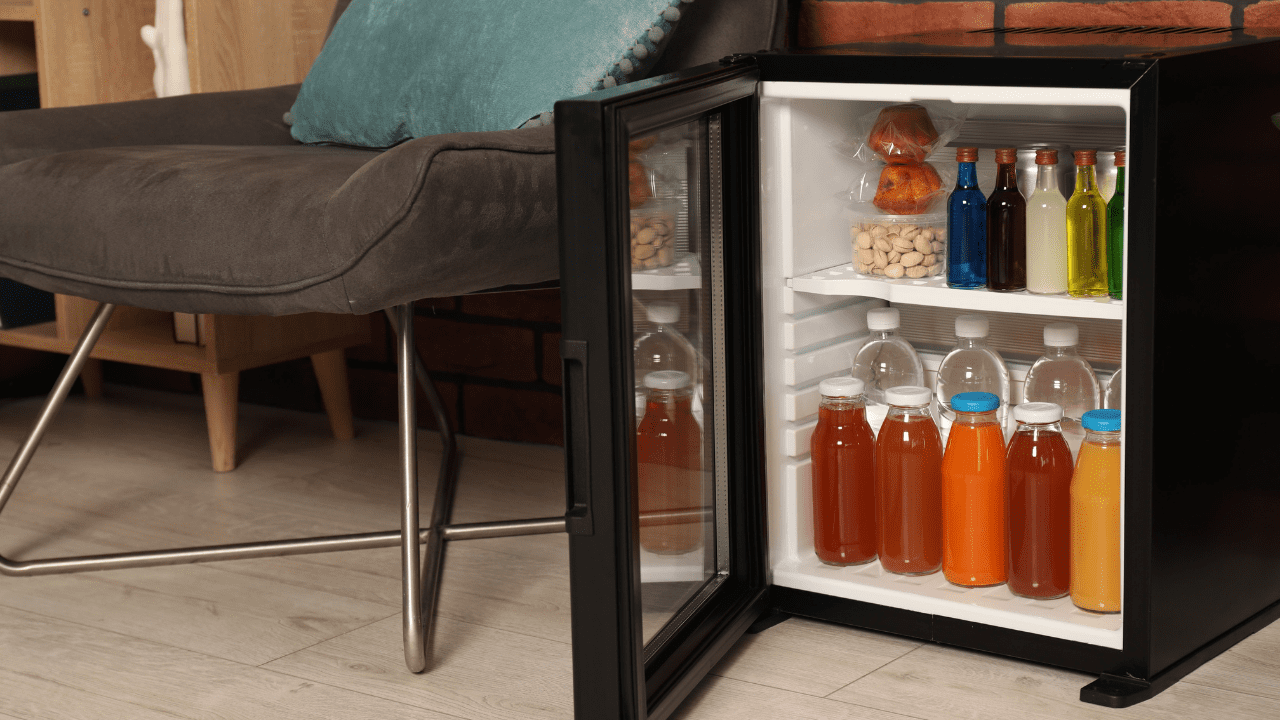
Here’s the bit that most organisation guides skip over entirely. Your mini fridge doesn’t get chaotic because you haven’t got the right bins. It gets chaotic because of restocking habits.
When you bring in new shopping, do you just open the fridge and put things wherever there’s space? If so, that’s your actual problem. It takes about 30 seconds longer to reload items properly, putting newer things behind older ones (the restaurant FIFO method: first in, first out), keeping categories roughly together, and checking if something’s running low while you’ve got everything in your hands anyway.
It’s not a complicated system. It’s more of a small discipline, and once it becomes habit you barely notice you’re doing it.
A note on odours, because nobody mentions this enough
Mini fridges, especially if they’re in a warmer room or not opened and cycled through regularly, can develop a stale smell that no amount of organising will fix if you don’t address it.
A small open pot of bicarbonate of soda on a shelf absorbs odours and genuinely works. Lakeland sells little fridge deodorant containers if you want something more aesthetically considered, but honestly a ramekin with a layer of bicarb does the same thing for about 20p.
If the fridge itself smells musty after you’ve cleaned it, wipe the inside down with a solution of warm water and white wine vinegar. Leave the door open for an hour before reloading. That usually sorts it.
What to do if you’re organising a mini fridge for a teenager’s room
This is a specific situation that deserves a mention, because the approach is slightly different. You’re not curating it for optimal meal prep or food safety in the same way as a kitchen fridge. You’re mostly trying to stop it becoming a biohazard.
A few things that actually help: keep it simple. Don’t put lots of small containers in there that will get abandoned and grow things. Stick to things with obvious expiry indicators (drinks, yoghurts, fruit). Have one “use this up first” rule. And make it clear that weekly empties of anything open are non-negotiable, not because you’re being controlling, but because a mouldy forgotten smoothie in a closed fridge in a teenager’s bedroom is an experience nobody needs.
A small whiteboard or dry-erase label on the front for a quick running list of what’s in there can help too, particularly if they’re making their own snacks and drinks independently.
Maintenance: the part that takes five minutes, not fifty
The reason most fridge organisation falls apart isn’t a bad system. It’s that people treat it as a one-time project rather than something that needs a tiny bit of ongoing attention.
Once a week when you’re doing your food shop: pull things forward, check for anything that needs using up that day, do a quick wipe of any sticky spots before they set. That’s genuinely all it takes to maintain a well-organised mini fridge long term. If you can fold that into your existing kitchen reset, even better.
Deep clean every couple of months: full empty, full wipe down, bicarb refresh.
FAQs
How do you organise a mini fridge with no drawers?
Use a shallow bin or basket on the bottom shelf to replicate the function of a crisper drawer. It doesn’t need to be fancy. A small rectangular container from IKEA, Wilko, or a pound shop works perfectly well. Group similar items together loosely, and use a lazy susan on deeper shelves so nothing ends up permanently at the back.
What’s the best way to maximise space in a small fridge?
Remove anything that doesn’t actually need refrigerating (condiments with long shelf lives, whole uncut fruit and veg, butter if it’s being used regularly). Adjust your shelves to fit what you’re storing rather than leaving air gaps. Use vertical space with small stackable bins where useful, but don’t over-bin it. The more flexible the system, the easier it is to keep going.
What temperature should a mini fridge be set to?
The Food Standards Agency recommends 5°C or below. If your mini fridge doesn’t have a digital display, use a fridge thermometer to check. Mini fridges in warmer rooms like garages or utility rooms can struggle to hold temperature in summer, so it’s worth keeping an eye on it during warm spells.
Should you put a mini fridge in a teenager’s room?
There’s no right answer, and it really depends on your family. If it reduces the constant in-and-out of the main kitchen fridge, keeps their drinks cold, and gives them a bit of independence with snacking, it can genuinely work well. Set some basic ground rules around what goes in there and a regular clear-out day, and it tends to stay manageable.
Can you use bins and organisers designed for full-size fridges in a mini fridge?
Often not. The dimensions are usually too big, and forcing oversized bins into a small fridge is worse than using no bins at all. Measure your shelf dimensions before buying anything, and look specifically for compact fridge organisers or small shelf bins. IKEA’s food storage range and the compact organiser sets on Amazon UK tend to have better sizing options for smaller fridges than the bigger boxed fridge sets you’ll find in Dunelm or the Range.
See more home organisation posts here

Becky is the voice behind Life in Velvet, an organised, intentional living blog focused on practical food, calm homes, thoughtful projects, and everyday systems that make real life feel easier. A mum of 3 living in the UK, Becky writes from lived experience, sharing what works, what doesn’t, and the decisions that make family life run more smoothly.
With a background in marketing and content writing, and over a decade of blogging experience, she brings a thoughtful, structured approach to everything from baking and home projects to routines and decision-making. Life in Velvet is where planning meets creativity, with ideas designed for real homes and real life.