
Key Takeaways
- The best party food can be made entirely or mostly in advance, leaving you free to enjoy your own event
- A mix of hot and cold options works better than trying to serve everything warm
- Planning for dietary requirements from the start is far easier than adapting last minute
- Shop-bought elements mixed with homemade dishes create the best balance of effort and impact
- Serving food in batches keeps it fresh and prevents the table looking ransacked
At a Glance
Best for: Anyone hosting casual gatherings, birthday parties, or get-togethers at home
Not ideal for: Formal dinner parties or very large events (50+ people)
Time needed: 2-4 hours prep (mostly the day before)
Cost range: £3-£5 per person for a good spread
Difficulty level: Beginner to intermediate
What you need: Oven, fridge space, serving platters
Biggest mistake to avoid: Trying to make everything from scratch on the day
Quick tip: Always make double the dips you think you need
My honest take: Party food doesn’t need to be fancy. It needs to be reliable, tasty, and ready when you need it.
Why Party Food Planning Matters More Than the Food Itself
I’ve hosted enough birthday parties, family gatherings, and casual get-togethers to know that the food itself is rarely what makes or breaks an event. What matters is whether you’re calm enough to actually talk to your guests rather than sweating in the kitchen.
This guide is for anyone planning a party at home who wants the food sorted without spending the entire day cooking or a fortune on catering. It’s especially useful if you’re hosting a mix of adults and children, managing dietary requirements, or simply want tried-and-tested ideas that won’t let you down.
If you’re planning a formal seated dinner or a wedding reception, you’ll want something more specific. This is about relaxed, practical party food that lets you enjoy your own gathering.
The biggest difference between party food that works and party food that creates stress is timing. Nearly everything in this guide can be prepared the day before or earlier, then simply assembled, reheated, or plated on the day. That’s the real secret.
The Foundation: Building a Balanced Party Food Menu
A good party spread covers a few essential bases without trying to do everything. You want variety, but not so much choice that you exhaust yourself preparing it.
Start with this basic structure: one or two substantial options (something more filling), three or four lighter finger foods, at least one vegetarian option, something sweet if the party runs into afternoon or evening, and plenty of easy-access bits like crisps, olives, or breadsticks.
For a typical gathering of 15 to 20 people, I usually plan for about eight to ten different items. That sounds like a lot, but several will be shop-bought or incredibly simple. The key is making sure at least half can sit happily at room temperature.
Hot food creates pressure. You’re watching the clock, managing oven space, and trying to get everything out at the right temperature. Cold or room-temperature options give you breathing room. A platter of good cheese, charcuterie, and crackers requires zero cooking and always disappears.
What Makes Party Food Actually Easy
Easy party food isn’t about cutting corners or serving mediocre food. It’s about choosing recipes and approaches that don’t need constant attention.
The best options are things you can make entirely in advance, serve at room temperature or cold, reheat successfully without losing quality, prepare in large batches without extra effort, and plate or arrange quickly without fussy presentation.
Avoid anything that needs last-minute assembly, requires precise timing, doesn’t travel well from kitchen to table, or loses quality if it sits out for 30 minutes. You’re not running a restaurant kitchen. You’re hosting a party.
I’ve learned this the hard way. Homemade spring rolls sound lovely until you’re frantically rolling them while guests arrive. Tempura is delicious but completely impractical unless you want to stand over a fryer all afternoon.
Reliable Party Food Ideas for Adults
These are the options I return to again and again because they actually work in real-life party situations.
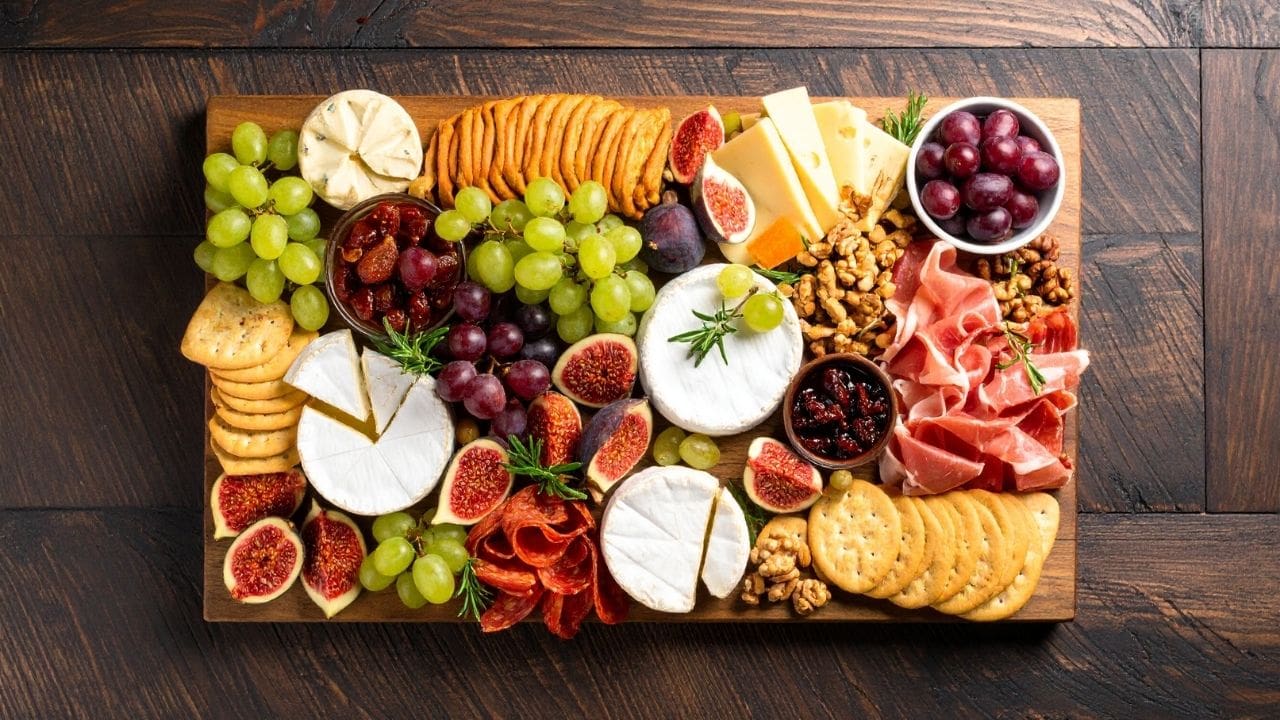
Cheese and Charcuterie Board
This is the ultimate low-effort, high-impact option. A really good cheese board can anchor your entire spread and requires almost no cooking skill.
Choose three or four cheeses with different textures: a hard cheese like mature cheddar or Parmesan, a soft cheese like brie or camembert, a blue cheese if your crowd likes it, and perhaps a goat’s cheese. Add cured meats, good crackers or sourdough, grapes, fig jam, and some olives or cornichons.
The whole thing can be assembled an hour before guests arrive, covered loosely, and left at room temperature. It always looks impressive and caters to most dietary preferences if you include vegetarian options alongside the meat.
Budget about £25 to £35 for a board serving 15 to 20 people. That’s far cheaper than it looks and covers a substantial portion of your spread.
Sausage Rolls (Homemade or Upgraded Shop-Bought)
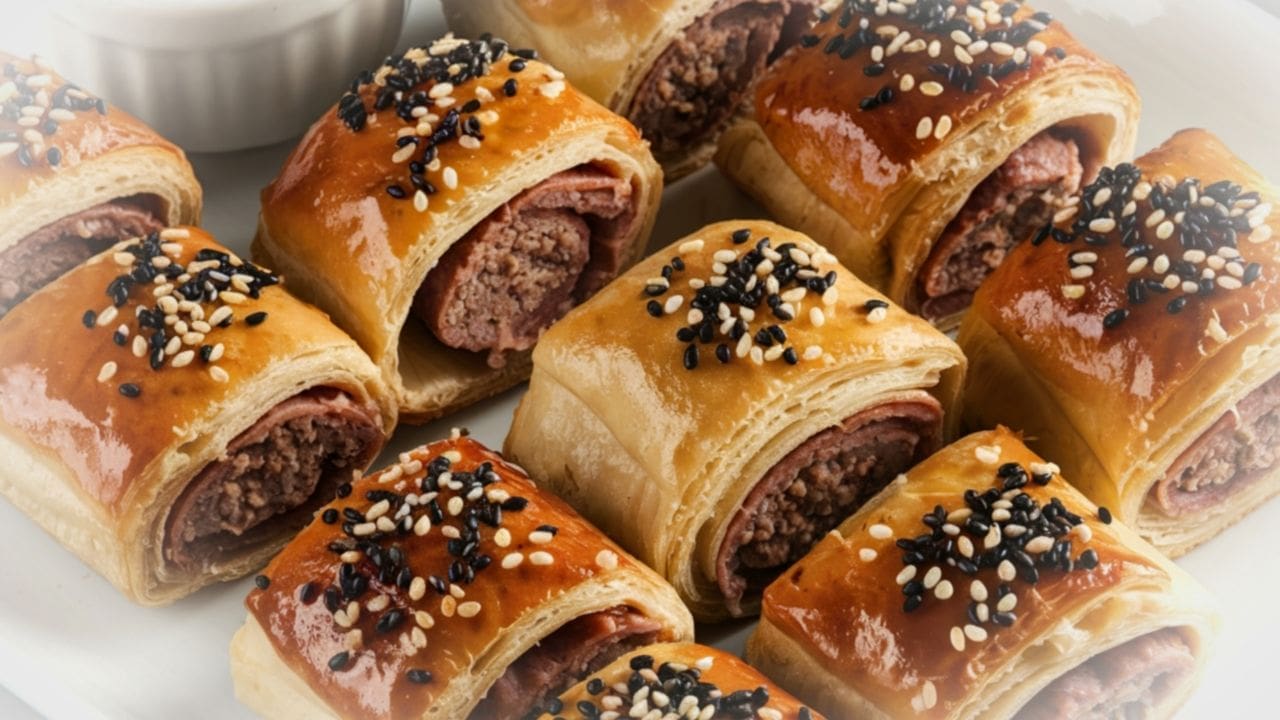
Sausage rolls are non-negotiable at most British gatherings. You can absolutely make them from scratch with puff pastry and good sausage meat, but honestly, upgrading shop-bought ones works brilliantly.
If you’re making them, use all-butter puff pastry, decent sausages with the skins removed, and add finely chopped onion, herbs, or a bit of mustard to the filling. Make them the day before, refrigerate, and bake fresh on the day.
If you’re buying them, choose the best quality you can afford and serve them with good mustard or chutney. Nobody will judge you. I promise.
For a crowd of 20, allow about 40 small sausage rolls. People always eat more than you think, especially if there are children picking at them too.
Hummus, Tzatziki, and Crudités
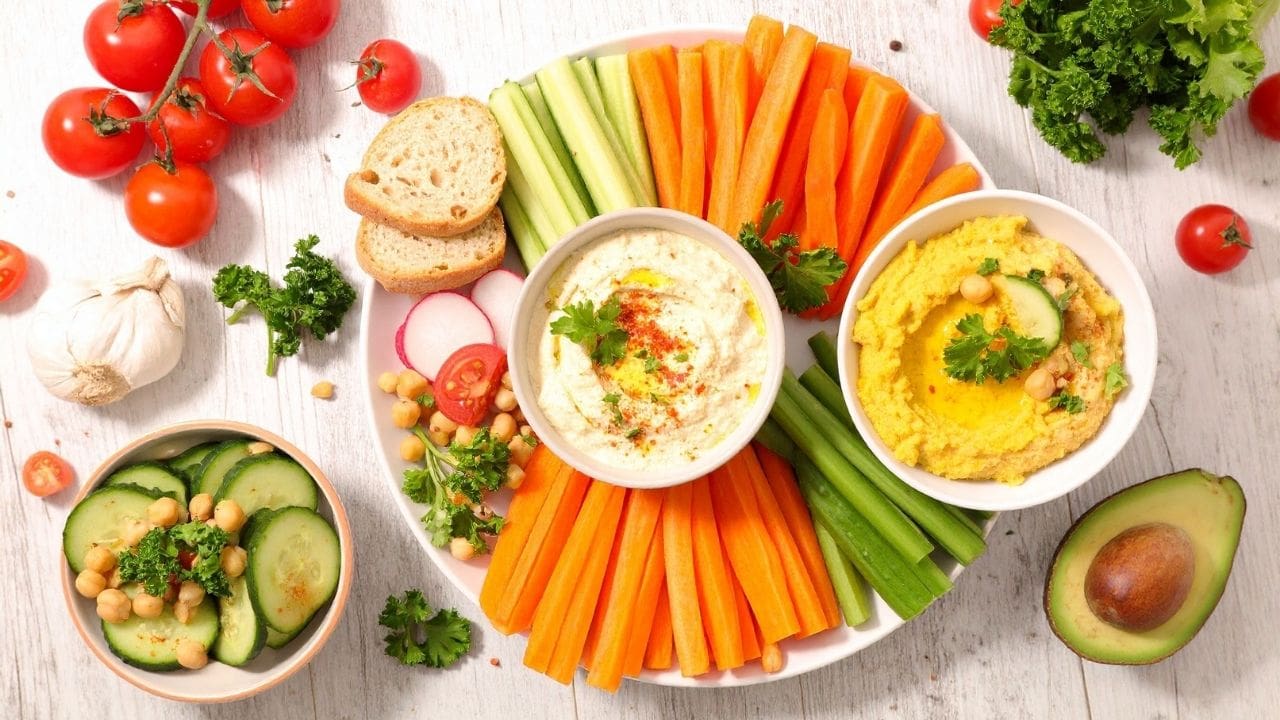
A large platter of dips with vegetable sticks and pitta bread is easy, healthy, and disappears faster than you’d expect.
Make or buy hummus and tzatziki the day before. Cut vegetables (carrots, cucumbers, peppers, celery) into sticks and store them in the fridge in a container with a damp tea towel over the top to keep them crisp.
On the day, arrange everything on a large platter or board. Add shop-bought pitta or flatbread, warmed briefly if you have oven space, or served at room temperature if not.
This is one of the few options that genuinely caters to nearly every dietary requirement without any fuss.
Stuffed Mini Peppers
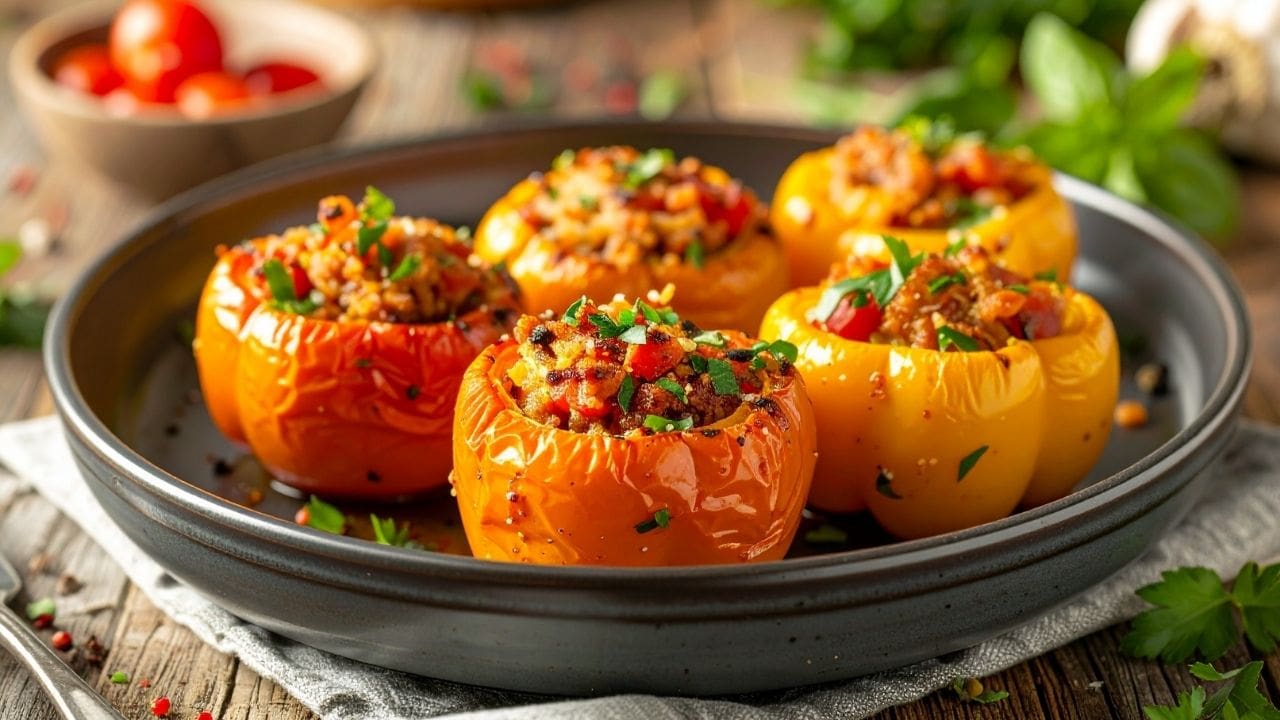
Sweet mini peppers stuffed with cream cheese, herbs, and sometimes a bit of chilli or garlic are ridiculously simple and always popular.
Cut the peppers in half lengthways, remove seeds, and fill with softened cream cheese mixed with chopped fresh herbs, spring onions, or whatever you fancy. Arrange them on a platter and refrigerate until needed.
You can make these a full day ahead. They look colourful, taste fresh, and require no cooking whatsoever.
Salmon or Smoked Mackerel Pâté
A good fish pâté with crackers or toast is sophisticated without being difficult. You can make it two days ahead, which is genuinely helpful when you’re planning multiple party elements.
Blend smoked salmon or mackerel with cream cheese, lemon juice, dill, and a bit of horseradish. Refrigerate in a serving dish. On the day, bring it to room temperature for 20 minutes before serving.
Serve with good crackers, oatcakes, or thinly sliced sourdough. People always appreciate something a bit different from the standard party fare.
Marinated Olives and Antipasti
A bowl of good-quality marinated olives, sun-dried tomatoes, artichoke hearts, and roasted peppers is effortless and adds variety to the table.
Buy these ready-prepared from the deli section or a good supermarket. Arrange them in small bowls around the table. Done.
This is where shop-bought absolutely makes sense. You’re not adding value by making your own marinated olives. Save your energy for things that benefit from being homemade.
Easy Party Food Ideas for Kids (That Adults Will Eat Too)
Children’s party food has a terrible reputation for being beige and boring, but it doesn’t have to be. The key is choosing things kids will actually eat while keeping it simple for you.
Mini Sandwiches or Pinwheels
Small sandwiches or wraps cut into pinwheels are reliable and adaptable. Use different fillings to cover preferences: ham and cheese, cream cheese and cucumber, peanut butter and jam, or hummus with grated carrot.
Make these the morning of the party and store them covered in the fridge. They’ll stay fresh for several hours and you can make dozens very quickly using an assembly-line approach.
For a party of 20 children, I usually make about 60 to 80 small sandwiches or pinwheels. They’re light, so kids eat several.
Pizza Slices (Homemade or Shop-Bought)
Pizza is universally popular and easy to manage in large quantities. You can make simple pizzas on shop-bought bases or flatbreads, or buy frozen pizzas and cut them into smaller slices.
If making them, let kids help with toppings earlier in the day. It keeps them occupied and they’re more likely to eat something they’ve made.
Cook pizzas before the party starts, cut into small squares, and serve at room temperature. They’re fine for a couple of hours and far less stressful than trying to time them perfectly.
Cheese and Pineapple Sticks
Old-fashioned but genuinely effective. Thread cubes of mild cheddar and pineapple chunks onto cocktail sticks. Simple, colourful, and kids like the novelty of food on sticks (or you can make a cheese and pineapple hedgehog, which always goes down well!)
These can be made several hours ahead and refrigerated. They’re particularly good for younger children who find other finger foods too fiddly.
Vegetable Sticks with Mild Dips
Most children are surprisingly open to raw vegetables if they’re presented well. Carrot sticks, cucumber batons, and cherry tomatoes with a mild hummus or cream cheese dip work better than you’d think.
The key is cutting vegetables into proper stick shapes rather than trying to get children to eat whole cherry tomatoes or chunky pieces. Small hands need small, manageable food.
Sausages and Cocktail Sausages
Cooked sausages or cocktail sausages, served warm or at room temperature, are always popular at children’s parties. They’re filling, protein-rich, and easy to eat without cutlery.
Cook them earlier in the day and keep warm in a low oven, or serve at room temperature with ketchup and mild mustard for dipping.
For 20 children, about 60 cocktail sausages is usually right. Have extra ketchup ready.
Fruit Platter or Fruit Skewers
A colourful fruit platter gives children (and parents) a fresh option among heavier party food. Grapes, strawberries, melon chunks, and apple slices work well.
If you have time, thread fruit onto wooden skewers for a more party-feeling presentation. Otherwise, a simple platter works just as well.
Prepare fruit the morning of the party and store covered in the fridge. Don’t cut apples more than an hour or two ahead as they brown quickly. A squeeze of lemon juice helps.
Make-Ahead Party Food Strategies That Save Your Sanity
The single most important thing you can do is prepare as much as possible before party day. Here’s how to actually make that work.
Your Two-Day Party Food Timeline
Two days before the party, make any dips, pâtés, or marinated items. Prepare and freeze anything that freezes well like sausage rolls or pastry-based items. Do your main supermarket shop.
The day before the party, prepare all cold finger foods like stuffed peppers or pinwheels. Make sandwich fillings (but don’t assemble sandwiches yet). Prep all vegetables and store properly. Bake anything that can sit overnight and be served at room temperature.
On party day, assemble sandwiches first thing and refrigerate. Do any final baking or reheating 30 to 60 minutes before guests arrive. Arrange platters and boards. Set out shop-bought items. Put drinks in the fridge.
This timeline means you’re not cooking frantically while people arrive. You’re plating and arranging, which is far calmer and leaves you available if someone arrives early.
The Freezer Is Your Friend
Many party foods freeze brilliantly, which means you can spread the work over several weeks if you prefer.
Sausage rolls, mini quiches, pastry-based items, most baked goods, and even some dips freeze well for up to a month. Make them when you have time, freeze them properly, and defrost them the day before your party.
This is particularly useful if you’re hosting during a busy period or fitting party prep around work and family commitments.
Smart Batch Cooking
When you’re making finger food, you’re rarely making just one batch. The effort to make 20 sausage rolls versus 40 is almost identical.
Double every recipe and freeze half, or make extra for another event if you know you’ve got several gatherings coming up. Your future self will be grateful.
This applies to dips, pâtés, baked items, and anything that stores or freezes well. It’s efficient and reduces waste because you’re using ingredients properly.
Common Party Food Mistakes (and What to Do Instead)
I’ve made most of these mistakes myself, so I’m speaking from genuine experience here.
Mistake: Trying to Make Everything from Scratch
What to do instead: Choose two or three homemade items you genuinely enjoy making, and buy the rest. A mix of homemade and shop-bought is more sustainable and still feels personal.
There’s no prize for exhausting yourself. A cheese board with excellent shop-bought cheese is far better than mediocre homemade cheese straws you resent making.
Mistake: Not Planning for Dietary Requirements
What to do instead: Ask about allergies and strong preferences when people RSVP, and build those options into your core menu rather than treating them as afterthoughts.
It’s much easier to choose naturally vegetarian or gluten-free options from the start than to adapt everything last minute. Hummus, vegetable platters, and fruit are automatically suitable for most diets.
Mistake: Putting All the Food Out at Once
What to do instead: Serve food in stages or keep half back to refresh the table after the first rush.
Everything looks ransacked after 20 people have descended on it for 15 minutes. Holding some items back means you can replenish platters and keep things looking fresh throughout the event.
This also helps with food safety. Things sitting out at room temperature for three hours aren’t ideal. Bringing fresh platters out every 45 minutes to an hour is much better.
Mistake: Underestimating How Much People Eat
What to do instead: Plan for more than you think you’ll need, especially if the party runs over a mealtime or lasts several hours.
I usually calculate about eight to ten pieces of finger food per person for a two-hour party, and more if it’s replacing a meal. It’s better to have leftovers than run out.
Hot sausage rolls, cheese, and anything with bread disappear fastest. Plan accordingly.
Mistake: Ignoring Oven and Fridge Space
What to do instead: Map out what needs reheating and when, and check you actually have the fridge space for all your prepped items.
I’ve definitely made too much only to realise I’ve got nowhere to store it. Be realistic about your available space and adjust your menu if needed.
If oven space is tight, choose more cold or room-temperature options. If fridge space is limited, focus on items that can sit out safely.
Quick Party Food Decision Guide
If you have limited time: Focus on a good cheese and charcuterie board, one homemade dip, shop-bought sausage rolls, vegetable sticks, and a fruit platter. That’s a perfectly respectable spread.
If you’re on a tight budget: Make hummus, baba ganoush, or other dips from scratch (far cheaper than buying), bake your own sausage rolls or pizza, use seasonal fruit and vegetables, and supplement with value-range crackers and breadsticks.
If you’re managing multiple dietary requirements: Build your menu around naturally suitable options like roasted vegetable platters, hummus and flatbread, stuffed peppers, fruit, and olives. Add clearly labelled options for specific needs.
If you want to look impressive without much effort: A beautiful cheese board, marinated olives and antipasti, smoked salmon with crème fraîche and dill, and some elegant fruit like figs or berries with good dark chocolate creates a sophisticated spread from mostly shop-bought elements.
If you’re hosting children and adults together: Provide clear kid-friendly options like mini sandwiches, plain crisps, and fruit alongside more adult choices. Most children ignore fancy food, and most adults appreciate having proper cheese and decent wine.
Practical Tips That Make Party Food Less Stressful
These are the small things that make a genuine difference to how smoothly everything runs.
Label everything clearly, especially if you’re managing allergies or strong preferences. Small cards or labels next to each dish prevent 20 people asking you what’s in things.
Use platters and boards that fit your table comfortably. Oversized serving dishes create crowding and chaos. Smaller, well-arranged platters look better and are easier to refresh.
Keep serving utensils with every dish. Nothing slows down a buffet like people hunting for spoons or tongs. Have extras ready.
Put out plenty of napkins and small plates. Far more than you think necessary. People use several throughout an event, and running out is annoying.
Have a designated spot for rubbish and recycling near the food area. It stops people wandering around with used plates and keeps surfaces clearer.
My Take on Party Food
After hosting numerous parties, I’ve realised that nobody remembers the specific food unless it was either exceptional or terrible. What people remember is whether they had a good time, felt welcome, and weren’t hungry.
That’s genuinely liberating. You don’t need 15 different homemade dishes. You need enough variety that everyone finds something they like, food that’s available when people are hungry, and a host who’s calm enough to actually enjoy their own party.
The best party food is the food that gets made, served, and enjoyed without causing you stress. Sometimes that’s lovingly homemade sausage rolls. Sometimes it’s excellent shop-bought cheese with good crackers. Both are absolutely fine.
Focus on a few things you genuinely enjoy making or presenting, and let go of everything else. Your party will be better for it.
Frequently Asked Questions
How much party food do I need per person?
For a party lasting two to three hours, plan for eight to ten pieces of finger food per adult, or about 200g to 300g of food total per person. Children typically eat about half that amount. If the party replaces a meal or runs longer, increase to 12 to 15 pieces per person. It’s better to slightly over-cater than run out, especially with popular items like sausage rolls or cheese.
Can I make party food the day before?
Most party food can and should be made the day before. Cold items like dips, pâtés, stuffed peppers, and vegetable platters hold brilliantly overnight. Sandwiches and wraps stay fresh if covered properly and refrigerated. Baked items like sausage rolls can be prepared and refrigerated unbaked, then baked fresh on party day, or baked ahead and reheated. The only things best made on the day are fresh fruit platters and items requiring last-minute assembly.
What party food doesn’t need refrigeration?
Crisps, nuts, crackers, breadsticks, sealed biscuits, and chocolate all sit happily at room temperature. Whole fruits like apples, grapes, or bananas are fine for several hours. Hard cheeses can manage at room temperature for two to three hours safely. Bread, cakes, and most baked goods are also fine. Everything else, particularly anything with dairy, meat, or mayonnaise-based fillings, needs refrigeration until shortly before serving.
How do I keep party food fresh during the event?
Serve food in smaller batches rather than putting everything out at once. Keep backup platters in the fridge and bring them out to replace empty or tired-looking dishes. Cover items with clean tea towels or cling film between servings. For buffets lasting more than two hours, don’t leave dairy-based or meat items at room temperature the entire time. Refresh platters every 45 minutes to an hour to maintain food safety and visual appeal.
What’s the cheapest party food that still looks good?
Homemade dips like hummus, baba ganoush, or bean dips cost very little to make and look impressive in nice bowls. Seasonal vegetables as crudités are far cheaper than buying pre-prepared platters. Homemade sausage rolls using shop-bought pastry cost about half the price of buying them ready-made. A large batch of pasta salad or couscous salad feeds many people inexpensively. Supplement with value crackers, breadsticks, and seasonal fruit for a spread that looks generous without excessive cost.
Should party food be hot or cold?
A mix works best for most gatherings. Having one or two hot options like sausage rolls or warm dip alongside mostly cold or room-temperature items gives variety without creating logistical stress. Cold food is far easier to manage because you’re not tied to oven timing or keeping things warm. For casual parties, a mostly cold spread with one warm element is perfectly acceptable and far more practical than trying to serve multiple hot dishes simultaneously.
Your Party Food Shopping List Template
Having a solid shopping list makes party planning far more manageable. Here’s a framework you can adapt based on your specific menu.
For the cheese board: Three to four different cheeses (about 100g per person), selection of crackers and breadsticks, grapes or figs, jar of chutney or fig jam, cured meats if including them.
For dips and vegetables: Chickpeas, tahini, and lemons for hummus (or buy ready-made), cream cheese and herbs for other dips, carrots, peppers, cucumbers, celery for crudités, pitta bread or flatbreads.
For hot items: Puff pastry and sausages if making sausage rolls, or quality shop-bought ones, cocktail sausages for children.
For substantial items: Ingredients for pasta salad or other filling option, bread for sandwiches, sandwich fillings.
Essential extras: Plenty of napkins, small paper or reusable plates, serving utensils for each dish, cocktail sticks for certain foods, tin foil and cling film for covering items.
Drinks: Enough for about two drinks per person for the first hour, then one per hour after that. Include non-alcoholic options, juice boxes or squash for children if relevant.
Making Party Food Work for Your Situation
The right party food for you depends entirely on your specific circumstances. There’s no single correct approach.
If you work full-time and have limited preparation time, leaning heavily on shop-bought items with one or two homemade elements is sensible. If you enjoy cooking and have time to spare, making most things from scratch can be satisfying and cost-effective.
What matters is being realistic about what you’ll actually manage without becoming stressed or exhausted. A relaxed host creates a better party atmosphere than the most elaborate homemade spread served by someone who’s too frazzled to talk to guests.
Start with a simple menu you’re confident about, and build from there as you gain experience. Every party you host teaches you something about what works for your situation, your guests, and your energy levels.
The goal is food that’s ready when you need it, tastes good, and lets you enjoy your own event. Everything else is optional!
See more Food with Purpose plus more party food ideas!
You might also like:
Vegan and Vegetarian Buffet Food Ideas

Becky is the voice behind Life in Velvet, an organised, intentional living blog focused on practical food, calm homes, thoughtful projects, and everyday systems that make real life feel easier. A mum of 3 living in the UK, Becky writes from lived experience, sharing what works, what doesn’t, and the decisions that make family life run more smoothly.
With a background in marketing and content writing, and over a decade of blogging experience, she brings a thoughtful, structured approach to everything from baking and home projects to routines and decision-making. Life in Velvet is where planning meets creativity, with ideas designed for real homes and real life.