
Key Takeaways
- Planning your week reduces mental load, but overplanning creates anxiety and makes your schedule too rigid to survive real life
- Type A people need structure, but building in buffer time and white space is what actually makes a plan work
- The best weekly plan includes three priorities, not seventeen, and leaves room for things to shift
- Your plan should feel calming when you look at it, not overwhelming
- When your plan falls apart (and it will), having a simple recovery system matters more than having every minute scheduled
At a Glance
Best for: Type A people who need structure but keep overplanning and then feeling stressed when real life happens
Not ideal for: People who genuinely thrive on complete spontaneity or those looking for detailed time-blocking systems
Time needed: 20 to 30 minutes for Sunday planning, plus 5 minutes each morning to adjust
Cost range: Free (just needs a calendar or notebook)
Difficulty level: Easy to start, requires practice to resist the urge to overplan
What you need: A calendar (digital or paper), a list of your fixed commitments, and the ability to be realistic about time
Biggest mistake to avoid: Scheduling every single minute of your day with no breathing room between tasks
Quick tip: If looking at your weekly plan makes you feel stressed instead of calm, you’ve overplanned
My honest take: I’m a recovering overplanner and learning to build in white space has genuinely changed how my weeks feel
Why Type A People Struggle with Weekly Planning
If you’re the sort of person who colour codes your spice rack and feels genuine satisfaction from a well-organised kitchen drawer, you probably think weekly planning should be your superpower. And in theory, it is. The problem is that most of us Type A people don’t just plan our weeks. We overplan them.
We sit down on Sunday evening full of good intentions, and two hours later we’ve created a minute by minute schedule that would make a military operation look casual. We’ve assigned time blocks for everything. We’ve accounted for meals, work tasks, exercise, admin, and even the specific time we’ll ring the plumber about the leaky tap. It looks beautiful. It feels organised. And then Monday happens.
The school run takes ten minutes longer because of roadworks. A work meeting overruns. Someone needs you to have a quick chat that turns into thirty minutes. By Tuesday afternoon, your pristine plan is in tatters and you feel like you’ve failed, even though you’ve actually got loads done.
This is the Type A trap. We crave structure, but we create plans so rigid they can’t survive contact with actual life. The solution is not to stop planning. Planning genuinely helps. The solution is to plan differently.

What Overplanning Actually Looks Like
Before we talk about how to plan better, it helps to recognise when you’ve crossed the line from helpful planning into overplanning territory. Here are the signs I’ve learned to watch for in myself.
Your schedule has no breathing room. If you look at your calendar and see tasks scheduled back to back with no gaps, you’re overplanning. Real life includes transition time. You cannot be at the dentist until half past eleven and then immediately in a work meeting at half past eleven. Even if the dentist is on time (which, let’s be honest, they never are), you need time to get home, possibly use the loo, and mentally shift gears.
Looking at your plan makes you feel anxious instead of calm. This is the big one. Your weekly plan should make you feel more organised, not more stressed. If you look at your beautifully crafted schedule and think “there’s absolutely no way I’ll get all this done,” you’ve put too much on your plate.
When one thing runs late, everything falls apart. A healthy plan has enough flexibility that a delayed delivery or an unexpected phone call doesn’t cause a catastrophic domino effect for the rest of your day.
You spend more time planning than actually doing. If your Sunday planning session regularly takes over an hour, or if you find yourself constantly tweaking and adjusting your schedule instead of working on actual tasks, that’s a red flag.
The Three Priorities System
Here’s what actually works for me now, after years of overplanning disasters. Instead of trying to schedule every single task, I focus on three main priorities for the week. Not seventeen. Three.
These are the things that absolutely need to happen this week. Maybe it’s finishing a work project, getting the car MOT sorted, and meal planning for the next fortnight. Or perhaps it’s writing a blog post, sorting through the kitchen cupboards, and booking those dentist appointments you’ve been putting off.
The magic of three priorities is that it’s genuinely doable. You can hold three things in your head. You can make meaningful progress on three things. And when the inevitable chaos of life happens, you can still probably manage to tick off three important things by Friday.
Everything else goes on a separate list. Not on your calendar. Not assigned to specific days. Just on a list of things you’d like to get to if time allows. This is harder than it sounds for Type A people because we want everything to have a specific slot. But this is exactly the mindset shift that stops overplanning.
Building in White Space (Yes, Really)
White space sounds like a luxury. It feels wasteful to have gaps in your calendar when there’s so much to do. But white space is what makes your plan actually work.
I now block out at least 30 minutes of completely unscheduled time in the morning and again in the afternoon. This isn’t time for specific tasks. It’s buffer time for when the morning takes longer than expected, when you need to deal with something urgent, or frankly, when you just need a cup of tea and five minutes to reset.
On paper, this looks like you’re getting less done. In reality, these gaps are what prevent your entire day from derailing when the post arrives late or you get a phone call from school.
The amount of white space you need varies depending on your life stage. If you’ve got young children, you need more buffer time because interruptions are constant. If you work from home, you need less transition time than if you’re commuting between locations. Be realistic about your actual life, not the theoretical perfect version.
What to Actually Put on Your Calendar
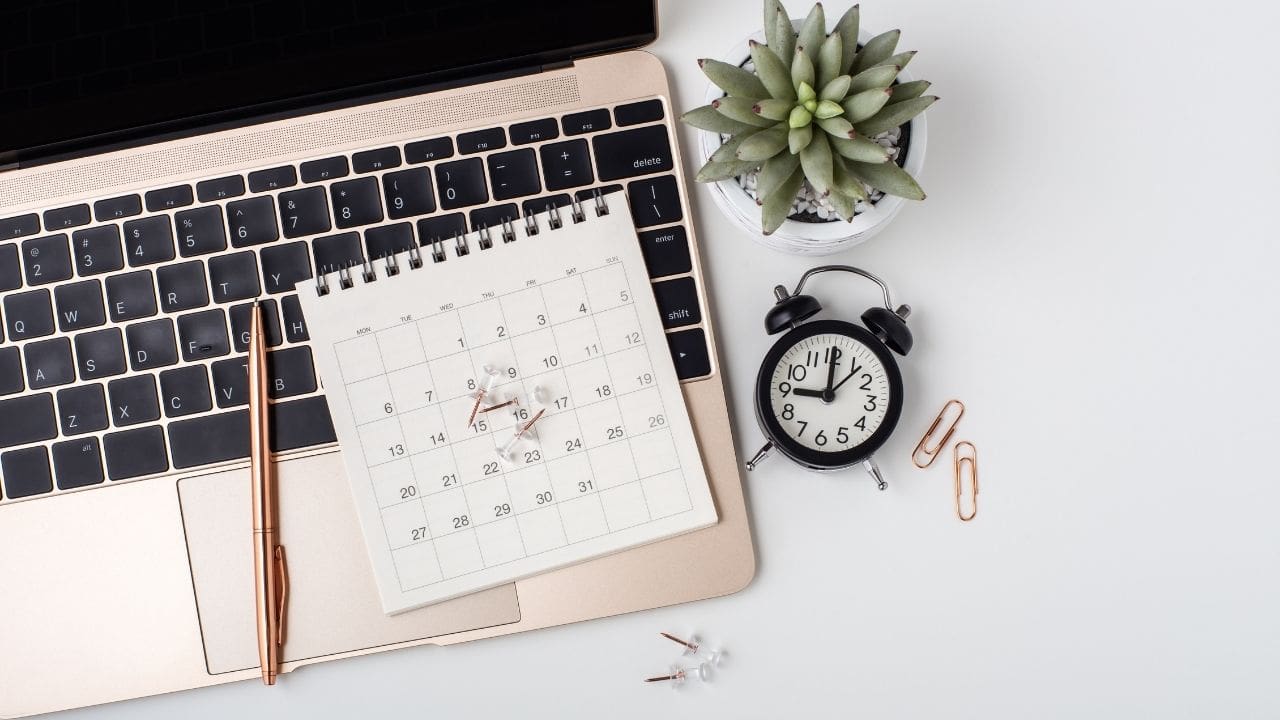
Your calendar should include fixed commitments. These are appointments, meetings, school pickups, anything that happens at a specific time and can’t be moved. Write these in first.
Then add your three main priorities for the week, but don’t assign them to specific time slots unless they genuinely need to happen at particular times. Instead, just note which days you’ll probably work on them. This gives you flexibility to shift things around as needed.
Include the basics that you always forget to account for. Meal times. Getting ready in the morning. Driving time between places. These sound obvious, but Type A planners often skip them because they feel too mundane to schedule. Then we wonder why we never have time for actual tasks.
Add one or two smaller tasks per day if you must, but resist the urge to fill every gap. Your calendar should not look like a game of Tetris.
The Friday Morning Review
Here’s the habit that’s made the biggest difference to how my weeks actually function. Every Friday morning, I spend ten minutes looking at the week that’s just happened and the week ahead.
I ask myself three questions. What did I actually accomplish this week? What got pushed aside and does it still matter? What are my three priorities for next week?
This quick review stops tasks from falling through the gaps and helps me adjust my expectations. If I planned to sort the garage this week but it didn’t happen, I can either move it to next week’s priorities or admit that it’s not actually urgent and put it on the someday list.
The Friday review also helps you spot patterns. If you keep pushing the same task week after week, either it’s not actually important or something else is getting in the way. Either way, acknowledging this is useful.

What to Do When Your Plan Falls Apart
Your plan will fall apart. This is not a failure. This is just Wednesday.
The difference between a helpful plan and an overplanned disaster is what happens next. When you’ve scheduled every minute of your day and something goes wrong, the whole structure collapses and you end up winging the rest of the week.
When you’ve got a more flexible plan with white space and clear priorities, you have room to adjust. The meeting that ran over eats into your buffer time instead of your next task. The unexpected school phone call means you shift your afternoon priority to tomorrow instead of trying to cram it into a now impossible schedule.
Have a simple system for when things don’t go to plan. I keep a running list on my phone of tasks that got bumped. At the end of each day, I glance at it and decide if anything genuinely needs to be rescheduled or if it can wait.
The Daily Five Minute Check-In
Sunday planning sets the framework, but each morning needs a quick check-in. I spend about five minutes over my morning coffee looking at what’s actually on for today.
This is when I account for how I’m actually feeling, what the weather’s doing (because yes, heavy rain does affect whether I’m likely to run errands), and any changes that came up yesterday evening.
Some days you wake up and your carefully planned morning just isn’t going to happen. Maybe you slept badly, maybe one of the kids is home ill, maybe you’re just having an off day. The five minute check-in lets you adjust before you start the day feeling defeated.
Choosing Your Planning Tools
You do not need fancy tools for this. I’ve tried all the apps. I’ve bought beautiful planners. What actually works is whatever you’ll actually use consistently.
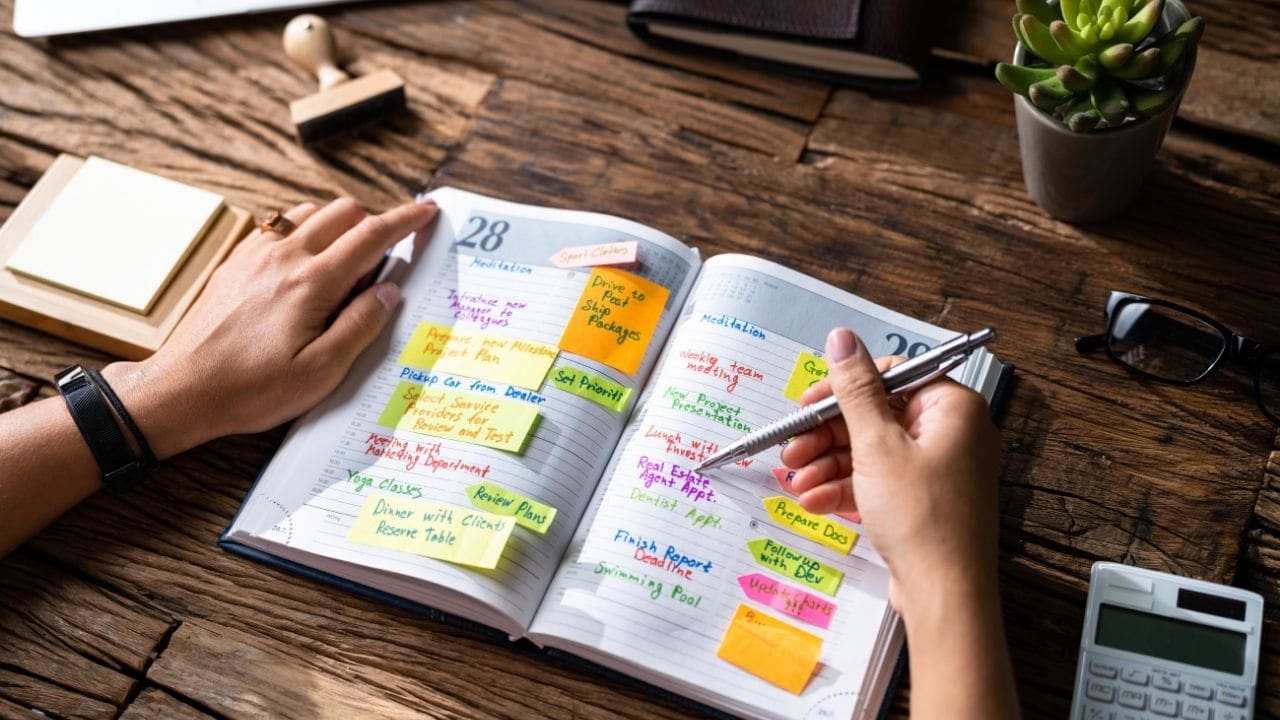
For me, that’s a simple Google Calendar for fixed appointments and a notebook for my three weekly priorities and daily notes. Some weeks I’m very digital. Other weeks I barely open my laptop and my notebook is what keeps me sane.
The tool matters far less than the principle of keeping your plan simple enough to survive real life. If elaborate planning systems make you happy, brilliant. But if they’re just another thing to maintain, stick with something basic.
Common Overplanning Mistakes to Avoid
Trying to plan every single task into specific time slots rarely works unless you have an extremely predictable routine. Most of us don’t. Leave room for things to shift around.
Underestimating how long things actually take is the Type A person’s constant battle. We think we can get ready, drive across town, and arrive at an appointment in 20 minutes. We cannot. Add time for transitions.
Planning the same amount for every day ignores reality. Mondays after a weekend need more settling in time. Fridays when you’re tired need less packed schedules. Pay attention to your actual patterns.
Not building in any personal time is a recipe for burnout. Yes, even Type A people need time to just sit and read or watch something mindless on telly. Schedule it in or it won’t happen.

The Sweet Spot Between Structure and Flexibility
The goal is not perfect planning. The goal is having enough structure that you feel organised and enough flexibility that you don’t feel stressed when life happens.
You want to look at your week and feel like you know what’s coming. You want to have a sense of the important things you’re working towards. But you also want to have breathing room for the unexpected, the spontaneous, and the times when you just need to do absolutely nothing for an hour.
This balance looks different for everyone. Some people need more structure. Others need more white space. Pay attention to how your weeks actually feel, not how they look on paper.
If you finish most weeks feeling accomplished and relatively calm, your planning is probably about right. If you finish most weeks feeling stressed and behind, you’re likely overplanning.
When to Ignore Your Plan
Sometimes the best thing you can do is completely ignore your plan for the day. If a friend needs help, if a family member is unwell, if you’re genuinely exhausted, or if a gorgeous sunny day appears in the middle of a grey February, it’s okay to bin your plan and deal with what’s actually happening.
The point of planning is to make your life feel more manageable, not to create a rigid system you serve. Your plan works for you, not the other way around.
I’ve had weeks where I stuck religiously to my plan and got everything done but felt miserable. And I’ve had weeks where I ignored most of my plan but felt happy and connected to the people around me. Both are valid. The planning is just a tool.
Making It Work Long Term
The weekly planning habit that actually sticks is the one that feels helpful rather than burdensome. If Sunday evening planning fills you with dread, try Friday afternoon instead. If 30 minutes feels too long, do 15 minutes. If you hate digital tools, use paper.
What matters is that you have some kind of regular moment to look ahead, identify your priorities, and make sure nothing critical is falling through the gaps. How you do that is entirely up to you.
I’ve been doing some version of weekly planning for years now, and it’s genuinely changed how my weeks feel. But the version that works is nothing like the complicated systems I tried at first. It’s simpler, more flexible, and much less perfect looking. It also actually functions in real life, which the perfect plans never did.
FAQs
How long should weekly planning actually take?
Somewhere between 15 and 30 minutes is about right for most people. If you’re regularly spending over an hour on weekly planning, you’re probably overplanning. The goal is a quick framework for your week, not a detailed minute by minute schedule.
What if I have too many priorities to choose just three?
If everything feels urgent, you probably need to be more honest about what’s actually critical this week versus what could wait another week. Trying to do seventeen priorities means nothing gets proper attention. Three focused priorities will actually move things forward.
Should I plan the same way every single week?
Not necessarily. Some weeks are busier and need more structure. Others are quieter and need less planning. School holidays require different planning than term time. Pay attention to the rhythm of your actual life rather than forcing the same system all year round.
What about daily planning on top of weekly planning?
A quick five minute check-in each morning is useful, but full daily planning sessions on top of weekly planning is usually overkill. Your morning check-in should just be adjusting your weekly plan for today’s reality, not creating an entirely new plan.
How do I stop myself from overplanning when I sit down to plan?
Set a timer for 20 minutes. When it goes off, you’re done planning. This forces you to focus on what actually matters rather than getting lost in detailed scheduling. If it doesn’t fit in 20 minutes of planning time, it probably doesn’t fit in your actual week either.
Is it normal for my plan to fall apart most weeks?
Yes, completely normal. The goal is not a plan that never changes. The goal is a plan that’s flexible enough to adjust when life happens while still giving you direction and keeping important things on your radar.
See more Type A Life Systems, including Routines and more posts on Organised Mindsets
You might also like:
How to Have a Type A Morning Routine That Actually Works (50 Practical Ideas)

Becky is the voice behind Life in Velvet, an organised, intentional living blog focused on practical food, calm homes, thoughtful projects, and everyday systems that make real life feel easier. A mum of 3 living in the UK, Becky writes from lived experience, sharing what works, what doesn’t, and the decisions that make family life run more smoothly.
With a background in marketing and content writing, and over a decade of blogging experience, she brings a thoughtful, structured approach to everything from baking and home projects to routines and decision-making. Life in Velvet is where planning meets creativity, with ideas designed for real homes and real life.