
Key Takeaways
- Type A mums thrive on systems, preparation, and knowing exactly where the passports are at all times
- What looks like over-planning to others often prevents chaos and reduces mental load for the whole family
- Many Type A habits save genuine time and stress, even if they seem excessive at first glance
- The need for control and organisation isn’t about perfection, it’s about creating calm in a naturally chaotic environment
- If you recognize yourself in most of these, you’re probably doing a better job than you give yourself credit for
At a Glance
Best for: Anyone who genuinely enjoys a good spreadsheet and feels physical relief when things are labelled
Not ideal for: People who thrive on spontaneity or find rigid systems stressful
Time investment: Ongoing, but front-loaded effort saves daily stress
Biggest benefit: Significantly reduced mental load and fewer “where is it?” moments
Most common misconception: That it’s about being controlling rather than creating calm
Hardest part: Accepting that not everyone in your household will share your enthusiasm for systems
My honest take: Some of these genuinely make life easier. Some are absolutely bonkers. Most are both.
Quick reality check: If your family thinks you’re “a bit much” but also can’t find anything without you, you’re doing it right
Who This Post Is For (And Who Should Probably Look Elsewhere)
If you’ve ever labelled your label maker, this post is for you!
This is for the mums who can’t relax until the school bags are packed for tomorrow. The ones who know that “winging it” isn’t actually a viable strategy when you’re responsible for keeping four humans alive and roughly on schedule. The planners. The list-makers. The people who genuinely enjoy organising the Tupperware cupboard.
If you’re reading this thinking “but doesn’t everyone do these things?”, congratulations. You’re one of us!
This post exists because being a Type A mum is simultaneously brilliant and exhausting. You prevent disasters daily that no one else even knows were about to happen. You know where everything is. You’ve thought twelve steps ahead. And sometimes you wonder if maybe, possibly, you’ve taken it a tiny bit too far.
Spoiler: you probably have. But you’ve also made life genuinely easier for everyone around you, even if they don’t fully appreciate the laminated emergency contact list you keep in the car.
This isn’t about being perfect. It’s about recognising the very specific brand of organised chaos that Type A mums create, and maybe feeling a bit less alone in it.
If you’re more of a “we’ll figure it out when we get there” type, this post might make you feel tired just reading it. That’s completely fine. Different approaches work for different families. This one just happens to involve an extraordinary number of labelled containers.

The Complete List: 50 Things a Type A Mum Actually Does
Here’s the full list. Possibly slightly tongue in cheek… but see how many you recognise in yourself!
- Has a colour-coded family calendar (digital and printed, obviously)
- Packs snacks in labelled containers for each child by day
- Knows everyone’s shoe size, coat size, and future size
- Books dentist appointments six months in advance
- Has a spreadsheet for birthdays (including wrapping paper themes)
- Refills the nappy bag the moment they get home
- Pre-writes thank-you cards
- Meal plans down to side dishes
- Keeps a running grocery list organised by aisle
- Schedules “buffer time” in case of delays
- Has backup outfits in the car. For everyone
- Laminates chore charts
- Times the school run to the minute
- Labels lunchboxes, water bottles, jumpers, and jumpers’ jumpers
- Starts Christmas shopping in September
- Has a go-bag for spontaneous outings
- Tracks screen time like a project manager
- Knows exactly how long it takes the oven to preheat
- Keeps an emergency gift stash for last-minute parties
- Writes to-do lists and then rewrites them neatly
- Has a first-aid kit that rivals a small clinic
- Schedules playdates weeks ahead
- Has a “rainy day activities” box ready to go
- Uses folders. So many folders
- Sends calendar invites for family events
- Cleans as they cook
- Plans outfits the night before (including socks)
- Keeps school emails in labelled inbox folders
- Has a system for recycling
- Knows bin day without checking
- Pre-loads the car the night before trips
- Keeps receipts “just in case”
- Has contingency plans for contingency plans
- Buys spares of favourite items “before they discontinue them”
- Packs holiday suitcases with packing lists
- Has an opinion on the most efficient dishwasher layout
- Organises photos into albums by year
- Keeps a notes app full of reminders
- Has a routine for everything (including weekends)
- Makes lists for fun
- Has a family WhatsApp group with pinned messages
- Pre-fills school forms as soon as they arrive
- Has a preferred brand for everything
- Keeps the medicine cupboard alphabetised
- Schedules downtime (ironically)
- Plans routes before leaving the house
- Has labelled storage bins in every room
- Knows where the passports are at all times
- Sets reminders to set reminders
- Goes to bed thinking about tomorrow’s to-do list
If you’ve mentally ticked off more than 30 of these, you’re firmly in Type A territory. If you got to 40 or above, you’re in the advanced category. And if you’re sitting there thinking “only 50?”, well. You’re definitely one of us.
The Planning and Scheduling Category
The Calendar Situation
A Type A mum has a colour-coded family calendar. Not just one calendar, mind you. There’s the digital version that everyone can theoretically access, and the printed version on the wall that you actually use because you can see it whilst making breakfast. Each person has their own colour. Events are categorised. School holidays are blocked out months in advance.
Is it excessive? Perhaps. Does it prevent the “but I didn’t know about that!” argument at 7am on a Tuesday? Absolutely.
Here’s what actually happens: you book dentist appointments six months in advance, not because you’re a dental enthusiast, but because if you don’t, the next available appointment will be during the school play or someone’s birthday party. You’ve learnt this the hard way.
You schedule playdates weeks ahead because coordinating with other families requires the diplomatic skills of a UN negotiator and the organisational abilities of a military campaign. Spontaneous playdates sound lovely in theory. In practice, someone always has swimming lessons.
You send calendar invites for family events. Your partner thinks this is hilarious. You think it’s essential. The difference is that you remember everyone’s cousin’s wedding, and they don’t.

The Buffer Time Philosophy
Type A mums schedule buffer time in case of delays. This is not paranoia. This is experience speaking. Someone will need a last-minute wee. Someone will have lost their other shoe. The cat will have been sick somewhere strategic.
You time the school run to the minute because you’ve done it approximately six hundred times and you know that leaving at 8:14 works but leaving at 8:17 means you’re stuck behind the bin lorry.
You plan routes before leaving the house. Your family thinks you’re being overly cautious. You’re actually avoiding the roadworks on the high street that you spotted three days ago and have been factoring into travel plans ever since.
The Organisation and Systems Category
The Labelling Obsession
You label lunchboxes, water bottles, jumpers, and yes, sometimes jumpers’ jumpers. Not because you think other parents are trying to steal your child’s clearly very specific school cardigan, but because six navy cardigans look identical in lost property and you’re not doing that detective work every week.
Everything has a home. You have labelled storage bins in every room. The medicine cupboard is alphabetised, which your partner discovered when they couldn’t find the plasters because they were looking under “P” instead of “B” for bandages.
You use folders. So many folders. Physical folders for paperwork. Digital folders for emails. Folders within folders. It’s folders all the way down.
School emails live in labelled inbox folders by category: uniform, payments, trips, general admin, and “things to print and somehow never lose”. This system is the only thing standing between you and complete email chaos.

The List-Making Compulsion
You write to-do lists and then rewrite them neatly. This is not procrastination. This is processing. The act of rewriting helps you think through the actual order of tasks. Also, the first list always has crossing out and additions and it’s just not satisfying to look at.
You make lists for fun. Sometimes you make lists of lists you need to make. Your Notes app is full of reminders that say things like “remember to add this to the proper list later.”
You keep a running grocery list organised by aisle. Your family adds “milk” to the bottom. You spend five minutes reorganising it into the proper order because doing the weekly shop backwards through the supermarket is absolute madness.
You have a spreadsheet for birthdays. It includes wrapping paper themes, preferred gift types, and a note about that one aunt who’s impossible to buy for. Every January you update it. Every December you’re grateful it exists.
The Preparation and Contingency Category
The Backup Everything Approach
You have backup outfits in the car. For everyone. Because someone will spill something, sit in something, or have a trouser-related emergency, and you refuse to be caught unprepared.
The nappy bag gets refilled the moment you get home. Future You is always grateful to Past You for this one. Nothing worse than discovering at the park that you’ve got one nappy and no wipes.
You keep an emergency gift stash for last-minute parties. Birthday party invitations have a habit of appearing with 48 hours notice from children who “forgot to mention it.” You have wrapping paper, generic but decent presents sorted by age range, and cards. You’re ready.
You have a go-bag for spontaneous outings. The entire point of spontaneity is not having to spend 40 minutes finding everyone’s shoes and packing snacks, isn’t it?
The Contingency Plans
You have contingency plans for contingency plans. What if the car doesn’t start? What if someone’s ill on the day of the thing? What if the backup childminder can’t make it? You’ve thought through scenarios that haven’t even occurred to other people yet.
You pre-load the car the night before trips. Bags in the boot. Snacks in the footwell. Entertainment sorted. Because morning-of-departure chaos is a choice, and you choose not to participate.
You buy spares of favourite items before they discontinue them. That specific brand of pasta sauce your child will actually eat? You’ve got six jars in the cupboard because you learnt your lesson when they changed the recipe of the yoghurt pouches.
Quick Reality Check: When Type A Helps vs When It’s Just Extra
Genuinely useful:
- Knowing where everyone’s shoes are saves 20 minutes daily
- Meal planning actually reduces stress and food waste
- Pre-packed snacks prevent meltdowns and expensive service station stops
- The first-aid kit has genuinely come in handy
Possibly excessive:
- Laminating the chore chart (though it does last longer)
- Alphabetising the medicine cupboard (but you find things faster)
- Scheduling downtime (the irony isn’t lost on you)
- Having an opinion on dishwasher loading efficiency (but you’re right)
Completely bonkers but you do it anyway:
- Going to bed thinking about tomorrow’s to-do list
- Setting reminders to set reminders
- Pre-writing thank-you cards (efficiency!)
- Keeping receipts for everything “just in case”
The truth? Most Type A behaviours exist on a spectrum between genuinely helpful and slightly unhinged, and where each one falls depends entirely on your family situation.
The Food and Meal Management Category
The Snack Situation
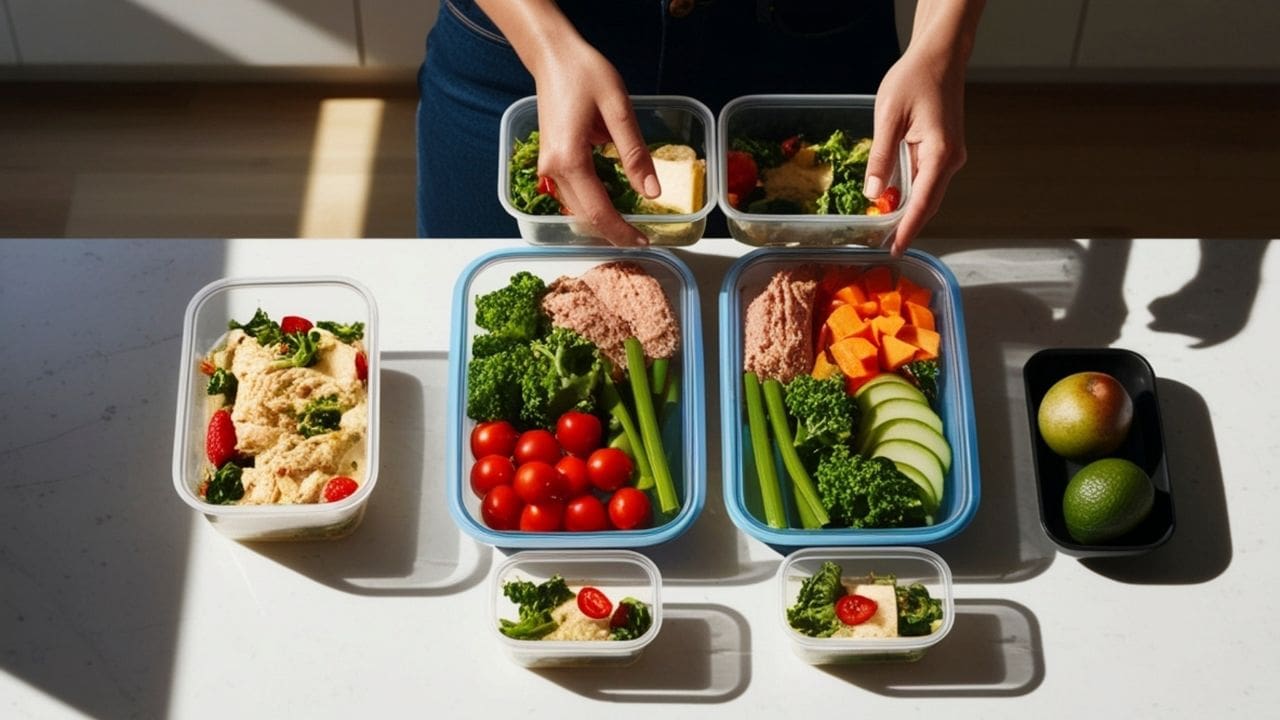
You pack snacks in labelled containers for each child by day. Monday snacks are different from Wednesday snacks. Thursday is treat day. You know this because you’ve planned it, and also because Thursday afternoon activities run late and everyone needs a biscuit-based morale boost.
Meal planning isn’t just main courses. It’s side dishes, vegetables, which night you’re using the slow cooker, and which meals can be doubled for freezer portions. Sunday night is pasta because no one can cope with complicated cooking after the weekend chaos.
You clean as you cook because dealing with a destroyed kitchen after dinner whilst also managing bath time is a recipe for madness. One pan washed whilst the pasta boils is ten fewer things to face later.
The Kitchen Systems
You have a running grocery list organised by aisle because doubling back through Tesco for the one thing you forgot is time you’ll never get back. The list lives on the fridge. Everyone can add to it. You reorganise it before you shop.
You have a preferred brand for everything. This is not snobbery. This is efficiency. You know which brand of fish fingers your children will eat, which baked beans have the acceptable sauce-to-bean ratio, and which bread actually makes decent toast. Decision fatigue is real, and you eliminated it from the weekly shop years ago.
You know exactly how long it takes the oven to preheat because you’ve timed it and factored it into your dinner schedule. Waiting around for an oven is time you could spend making tomorrow’s packed lunches.
The Clothing and Preparation Category
You know everyone’s shoe size, coat size, and future size. You know when the next size up will be needed. You’ve already bought it in the sale. It’s in the labelled storage bin under the stairs with the season it’s intended for written on the lid.
You plan outfits the night before, including socks. This is non-negotiable. Morning chaos is vastly reduced when you’re not trying to locate clean matching socks whilst also making porridge and signing a permission slip.
You start Christmas shopping in September. Not because you’re disgustingly organised (though you are), but because December is already rammed with school plays, parties, and trying to remember who the teacher is for the end of term gift. Adding last-minute shopping panic serves absolutely no one.
The Admin and Documentation Category
You pre-fill school forms as soon as they arrive. Not because you enjoy paperwork, but because if you don’t do it immediately it will live in the bottom of the school bag until the night before it’s due, at which point you’ve lost the pen that works and everyone’s blood pressure is elevated.
You keep school emails in labelled inbox folders because otherwise how would you find that one email about the specific thing from three weeks ago that turns out to be relevant now?
You have a system for recycling. Everyone else in the house has “a bin” approach. You have categories. You know which plastics are actually recyclable. You rinse things properly. The recycling collection people probably think you’re either wonderful or completely mad.
You know bin day without checking because it’s been the same day for the past however many years and also you’ve accidentally internalised the entire household schedule including when the bins need to go out.

The Digital and Tech Organisation Category
You have a family WhatsApp group with pinned messages. Important information lives at the top where everyone can find it. You update the pinned message when plans change. You’re the only one who actually checks it.
You track screen time like a project manager. There’s a spreadsheet. There are time limits. There’s a system for earning extra time. Your children think you’re unreasonable. You think you’re preventing them from becoming teenagers who communicate exclusively in grunts.
You organise photos into albums by year. Actually, by year and event. The Christmas 2023 album is separate from the Summer Holiday 2023 album. Future You will appreciate this when you’re looking for that specific photo of the specific thing that happened that specific time.
You have a rainy day activities box ready to go. It’s organised by age appropriateness and activity type. When someone whines “I’m bored” on a wet Sunday, you’re ready. You’ve been ready since last Tuesday when you restocked it.
Common Misconceptions About Type A Mums
Myth: Type A mums are controlling perfectionists who can’t relax
Reality: We’ve just learnt that a bit of front-loaded effort prevents last-minute chaos that makes everyone miserable
Myth: All this organisation is about impressing other people
Reality: It’s about reducing our own mental load and not losing our minds in the daily logistics
Myth: Type A mums think everyone should do things their way
Reality: We’re fully aware our systems are a bit much. We’re doing them anyway because they work for us.
Myth: This level of organisation takes hours every day
Reality: Most of it runs on autopilot once systems are set up. The initial investment saves time long-term.
Myth: Type A mums never feel overwhelmed
Reality: We absolutely do. We just have really detailed lists about it.
When Type A Goes Too Far (A Gentle Self-Assessment)
Here’s the thing: there’s a difference between helpful systems and creating unnecessary stress for yourself.
You might have crossed a line if:
- Your family is afraid to put things away because they won’t do it “right”
- You’re spending more time organising than actually doing things
- The system has become more important than the purpose it was meant to serve
- You’re creating elaborate solutions for problems that don’t actually exist
- Your need for control is making everyone else anxious
The goal of Type A organisation is to make life easier and calmer, not to create a different kind of chaos where everyone’s walking on eggshells around your systems.
If you find yourself getting genuinely upset about things that don’t actually matter (the “wrong” way someone loaded the dishwasher, the precise order of the lunchbox contents), it might be worth stepping back and asking: is this system serving me, or am I serving the system?
The Mental Load Reality
Here’s what often gets missed in conversations about Type A mums: this isn’t about being naturally more organised or having some special gift for admin. It’s usually about being the person who’s holding all the mental load for the household.
You remember everyone’s shoe sizes because you’re the one who notices when shoes are getting tight. You know where the passports are because you’re the one who thinks about holidays enough in advance to check they’re not expired. You have a colour-coded calendar because you’re tracking everyone’s schedules, appointments, and commitments.
The folders, lists, and systems aren’t excessive. They’re essential when you’re mentally juggling this much information.
That running grocery list organised by aisle? That’s not being fussy. That’s being the person who’s responsible for keeping everyone fed, knowing what’s in the cupboards, planning meals around everyone’s preferences and restrictions, and doing it all efficiently enough to not spend your entire life in the supermarket.
The truth is, a lot of Type A behaviour is just visible mental load management. The alternative isn’t being more relaxed. The alternative is forgetting the packed lunch, missing dentist appointments, and buying pasta three times whilst running out of toilet roll.

Teaching Your Family to Work With Your Systems
Your systems only work if your family actually uses them. Here’s what helps:
Make it visual. The colour-coded calendar on the wall gets more engagement than the digital one. The labelled bins make it obvious where things go. The chore chart with boxes to tick gives everyone a clear finish line.
Keep it simple enough for tired people. Your beautiful system that requires five steps won’t get used on a Wednesday evening when everyone’s exhausted. The easier you make it, the more likely it is that someone other than you will actually do it.
Explain the why, not just the what. “Put it in the blue bin” gets less buy-in than “We sort recycling so the collection people don’t reject it and we don’t end up with a bin full of rubbish for two weeks.”
Accept approximation. Your partner might not load the dishwasher the optimal way. Your children might not organise their folders with quite your level of precision. This is fine. Perfect is the enemy of done, and done-by-someone-else gives you time to do literally anything else.
Celebrate when it works. When someone actually uses the system correctly, acknowledge it. Positive reinforcement works on adults too.
Frequently Asked Questions
Is being a Type A mum the same as having OCD?
No. Type A personality traits involve being organised, ambitious, and detail-oriented. OCD is a mental health condition involving intrusive thoughts and compulsive behaviours that cause significant distress. Being particular about your calendar system is very different from having clinical OCD. If your organisational needs are causing you genuine anxiety or impacting your quality of life, it’s worth speaking to your GP.
Can you be Type A about some things and completely disorganised about others?
Absolutely. You might have an immaculate meal planning system and a car that looks like a jumble sale exploded in it. Many people are highly organised in areas they care about or that reduce their stress, whilst being perfectly happy with chaos in areas that don’t matter to them. There’s no rule that says you have to be uniformly organised about everything.
How do I get my partner to appreciate my organisational efforts?
Unfortunately, people who don’t naturally think several steps ahead often don’t notice the disasters that didn’t happen because you prevented them. Try framing it in terms of specific outcomes: “Because I meal plan, we spend less on takeaways and waste less food” is more concrete than “I work really hard on meal planning.” Also, occasionally let a system lapse (non-critically) so they experience the difference. Nothing illustrates the value of the snack containers quite like a hungry car journey with no snacks.
Is it worth trying to convert my family to my Type A ways?
You can’t change other people’s fundamental approach, but you can make systems easy enough that they’ll use them. Focus on systems that make everyone’s life easier rather than trying to convert people to your way of thinking. Your 10-year-old probably isn’t going to start colour-coding their homework folder, but they can learn to put their PE kit in the designated place if the designated place is obvious and convenient.
Do Type A habits actually reduce stress or just create different stress?
When done well, they genuinely reduce stress by eliminating last-minute chaos, preventing forgotten items, and reducing decision fatigue. The key is making sure the system isn’t more stressful than the problem it’s solving. If maintaining your organisational system is causing more stress than the disorganisation it prevents, the system needs simplifying.
Will my children grow up to be Type A too?
Some will naturally lean that way regardless. Others will rebel spectacularly against every organised system you’ve ever shown them. Most will absorb some useful habits (like knowing where their stuff is) whilst developing their own approach to organisation. The goal is to teach them useful life skills, not to clone your exact systems.
The Hidden Benefits No One Mentions
Beyond the obvious perks of knowing where everything is and preventing last-minute chaos, there are some unexpected advantages to being a Type A mum:
You’re genuinely helpful in a crisis. When something goes wrong, you’ve usually already thought through several possible solutions. Your friend’s child needs a plaster at the park? You’ve got a mini first-aid kit. School trip permission slip due tomorrow? You filed yours a week ago and can help them find the link.
You’re teaching your children that being organised isn’t about being uptight. It’s about making life easier. They might not appreciate it now, but when they’re at university and they’re the flatmate who actually knows when bin day is, they’ll get it.
You save money. Knowing what’s in the cupboards means less food waste. Buying ahead in sales means less panic-buying at full price. Having systems means fewer “emergency” purchases of things you already own but can’t find.
You have more actual free time than it seems. Yes, you spend time planning and organising. But you don’t spend time looking for lost things, dealing with avoidable disasters, or making last-minute emergency runs to shops. The time investment is front-loaded, but it pays off.
You’re modelling that it’s okay to have systems that work for you, even if other people think they’re a bit much. Teaching your children that it’s fine to organise your life in a way that makes sense to you is actually quite a valuable lesson.
Embracing Your Type A Self
If you’ve recognised yourself in most of these 50 things, welcome. You’re among friends. Friends who know exactly where their friends are at all times and have probably made a list of other friends to make.
Being a Type A mum isn’t about being perfect. It’s about creating systems that make the daily chaos of family life feel slightly more manageable. It’s about reducing mental load, preventing disasters, and occasionally having the satisfaction of finding something immediately because you actually know where it is.
Yes, some of your habits are probably a bit over the top. The laminated chore chart might be excessive. The alphabetised medicine cupboard might be overkill. But you know what? They work for you. They make your life easier. And in a world where you’re juggling approximately seventy-three things at any given moment, anything that makes life even slightly easier is worth doing.
Your family might think you’re a bit much sometimes. They’re probably right. They also can’t find anything without you, they never miss appointments, and they always have snacks when they need them. You’re doing fine.
Keep your lists. Maintain your systems. Know where the passports are. And maybe, occasionally, schedule some time to actually relax instead of just planning to relax.
Though obviously you’ll need to add that to your calendar first.
See more Type A Life Systems, and more posts on Organised Mindsets
You might also enjoy:
50 Things a Type A Person Does to Run Their Household
50 Things Every Type A Marketing Business Owner Actually Does

Becky is the voice behind Life in Velvet, an organised, intentional living blog focused on practical food, calm homes, thoughtful projects, and everyday systems that make real life feel easier. A mum of 3 living in the UK, Becky writes from lived experience, sharing what works, what doesn’t, and the decisions that make family life run more smoothly.
With a background in marketing and content writing, and over a decade of blogging experience, she brings a thoughtful, structured approach to everything from baking and home projects to routines and decision-making. Life in Velvet is where planning meets creativity, with ideas designed for real homes and real life.