
There’s something a bit ridiculous about checking into a hotel, walking into your room, and immediately wanting to photograph the bed. You haven’t even sat on it yet. But there it is – perfectly smooth, impossibly white, layered just so – and you think: why does mine never look like that?
The good news is it actually can, and the technique isn’t as complicated as it looks. The difference between a hotel bed and yours usually comes down to three things: the right layering order, a slightly larger duvet than you think you need, and a few minutes of actual effort rather than just chucking the duvet back in the rough direction of the pillows. (No judgement. I do this too.)
I’ve been slightly obsessed with this for a few years now, partly because I genuinely love the way a well-made bed makes a whole room feel calmer, and partly because with three kids and a house that is basically in a constant state of cheerful low-level chaos, my bedroom is often the only space that’s reliably tidy. A properly made bed does a lot of heavy lifting.
Why hotel beds actually look different to yours
Before we get into the how, it’s worth understanding the why – because once you know what hotels are actually doing, it’s much easier to replicate at home.
It’s not magic, and it’s not necessarily the most expensive bedding in the world. Hotels focus on a few specific things: a very smooth, taut base layer, a duvet or comforter that’s bigger than the bed it’s on, crisp pillow arrangement, and no clutter. That’s genuinely most of it.
What hotels don’t have that you do: pets who sleep on the bed, children who use it as a trampoline, a husband who pulls everything to one side, and the general reality of being inhabited by actual humans. So we’re working with slightly different conditions, but the techniques still apply.
The other big factor is that hotel housekeepers make beds every single day. They get fast and they get precise. You can absolutely get there too – it just takes a bit of practice until the muscle memory kicks in.
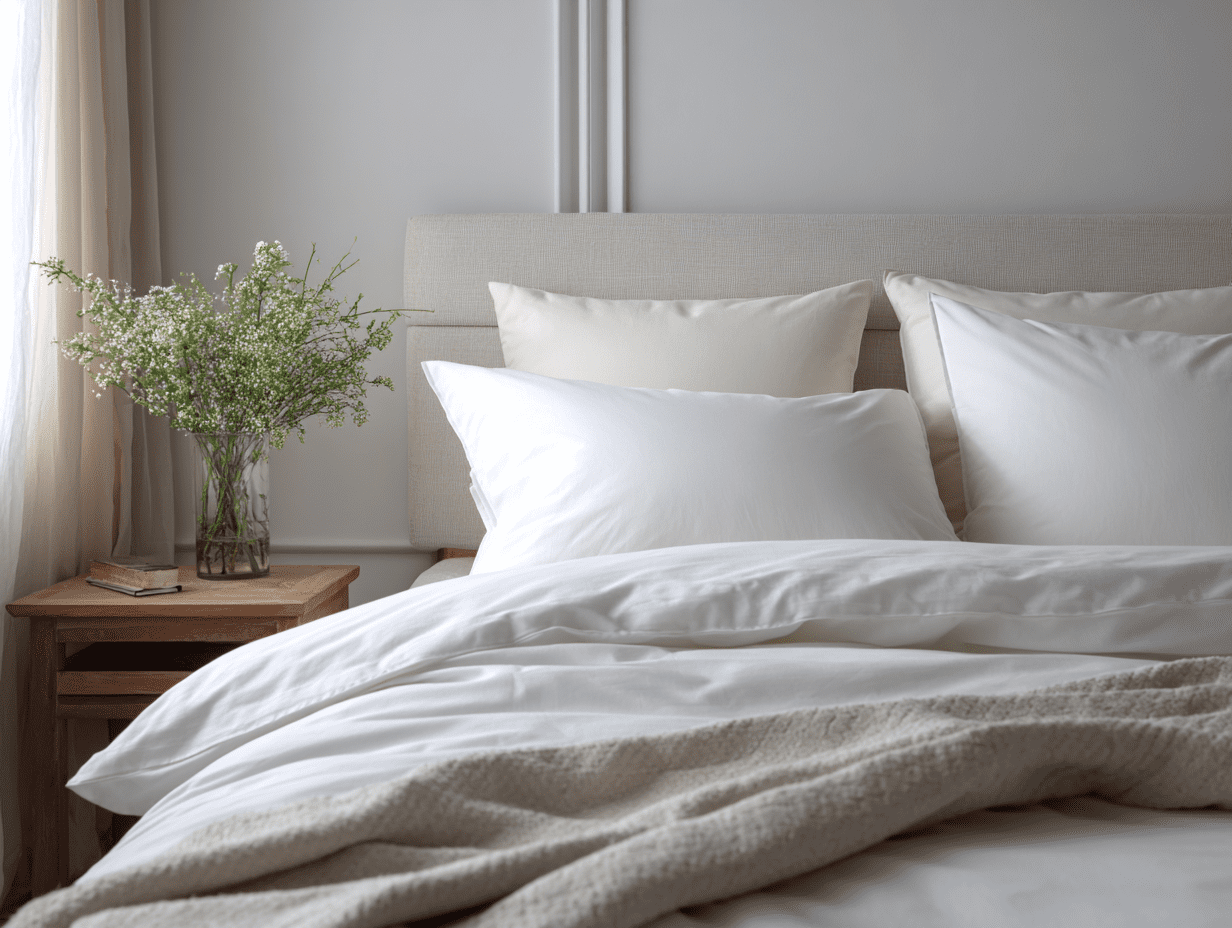
Let’s talk about the flat sheet situation
This is the thing that almost no one mentions in these guides, probably because most of them are written by Americans. In the US, a flat sheet (or “top sheet”) between you and your duvet is completely standard. In the UK, most of us just… don’t use one. We have a fitted sheet, we get in, we pull the duvet over us, done.
Hotel beds – especially in higher-end properties – often use a flat sheet. This is partly hygiene (the duvet stays cleaner for longer), partly that crisp fold-back look at the top of the bed, and partly the layered effect. If you’ve ever wondered why a hotel bed looks particularly polished at the top, it’s usually that fold of sheet over the duvet.
You don’t have to use a flat sheet if you don’t want to. I don’t sleep with one because I find it uncomfortable and I’m forever kicking it loose. But for the look of a made bed during the day, laying a flat sheet as a middle layer and folding it down over the duvet is one of the fastest ways to get that crisp, hotel-style top edge. Worth knowing about even if you don’t sleep with it in.

Start with the foundation: mattress protector and fitted sheet
Hotels care deeply about their mattress protectors. Not for the look of it – you never see it – but because a smooth, well-fitted base layer means everything on top sits better. If your mattress protector is thin, bunchy, or sliding around, your sheets will never lie flat.
Get a decent quilted protector that fits your mattress snugly. It doesn’t have to be expensive – the IKEA Skydda Djup is perfectly good, M&S do a reliable one, and John Lewis have a few solid options at various price points. What you want is one that stays put and adds a tiny bit of softness without creating lumps.
Once your protector is on, get your fitted sheet on as tightly as possible. Pull it properly over each corner, make sure the elastic is sitting right under the mattress edge, and smooth it from the centre outwards. Wrinkles at this stage will show through everything else, so it’s worth taking thirty seconds to actually do it properly rather than just hoping for the best.
The duvet secret nobody tells you
This is genuinely the single biggest upgrade most people can make, and it costs nothing if you already own the right size.
Go one size up.

Hotels routinely put a king-size duvet on a double bed. The extra fabric falls over the sides and the foot of the bed, creating that full, generous, almost cloud-like look. If you’re using a double duvet on a double bed, you’re getting just enough coverage and that’s it. It’ll look flat. It’ll slide. It won’t have that luxurious drape.
If you’ve only got the one duvet and it’s the right size for your bed, you can still improve things. Make sure it’s well-fluffed before you put it on – give it a good shake, hang it on the line for an hour on a dry day if you can, or stick it in the tumble dryer with a couple of tennis balls if you have one. A flat, deflated duvet is the enemy of the hotel bed aesthetic.
For tog rating, a mid-season 10.5 tog is what most hotels use year-round. Some people switch between a lighter summer duvet and a heavier winter one, and that’s perfectly sensible for actual sleeping comfort. For the look of the bed during the day, the tog matters less than the fluffiness.
How to actually make the bed
Right, here’s the method. This is the proper version – I’ll give you the quick version further down for normal mornings.
Start with your fitted sheet already on and smoothed flat. If you’re using a flat sheet, lay it out now with the decorative side facing down (so when you fold it back, the nice side shows). Let it hang evenly over all four sides.
Now put your duvet on. Centre it carefully – you want roughly equal overhang on both sides and at the foot. Smooth it from the centre out. Give the corners a good shake to distribute the filling.
If you’re doing the full hotel fold, take the top edge of the flat sheet (if you’re using one) and fold it back about 30cm over the top of the duvet. This creates that clean horizontal line at the top of the bed. Smooth everything down firmly from top to bottom.
Hospital corners at the foot are the next bit, and they’re genuinely satisfying once you get them right. Lift the side of the sheet and duvet at one of the bottom corners. Fold the overhanging fabric diagonally up onto the bed, tuck the lower bit firmly under the mattress, then bring the folded part down and tuck that under too. It creates a neat diagonal fold at the corner. Do both sides.
If you’re skipping the flat sheet entirely, just make sure your duvet is centred, corners are even, and the top edge is straight. Smooth it firmly with your hands working outward, and tuck the sides under slightly if you want that really tailored look.
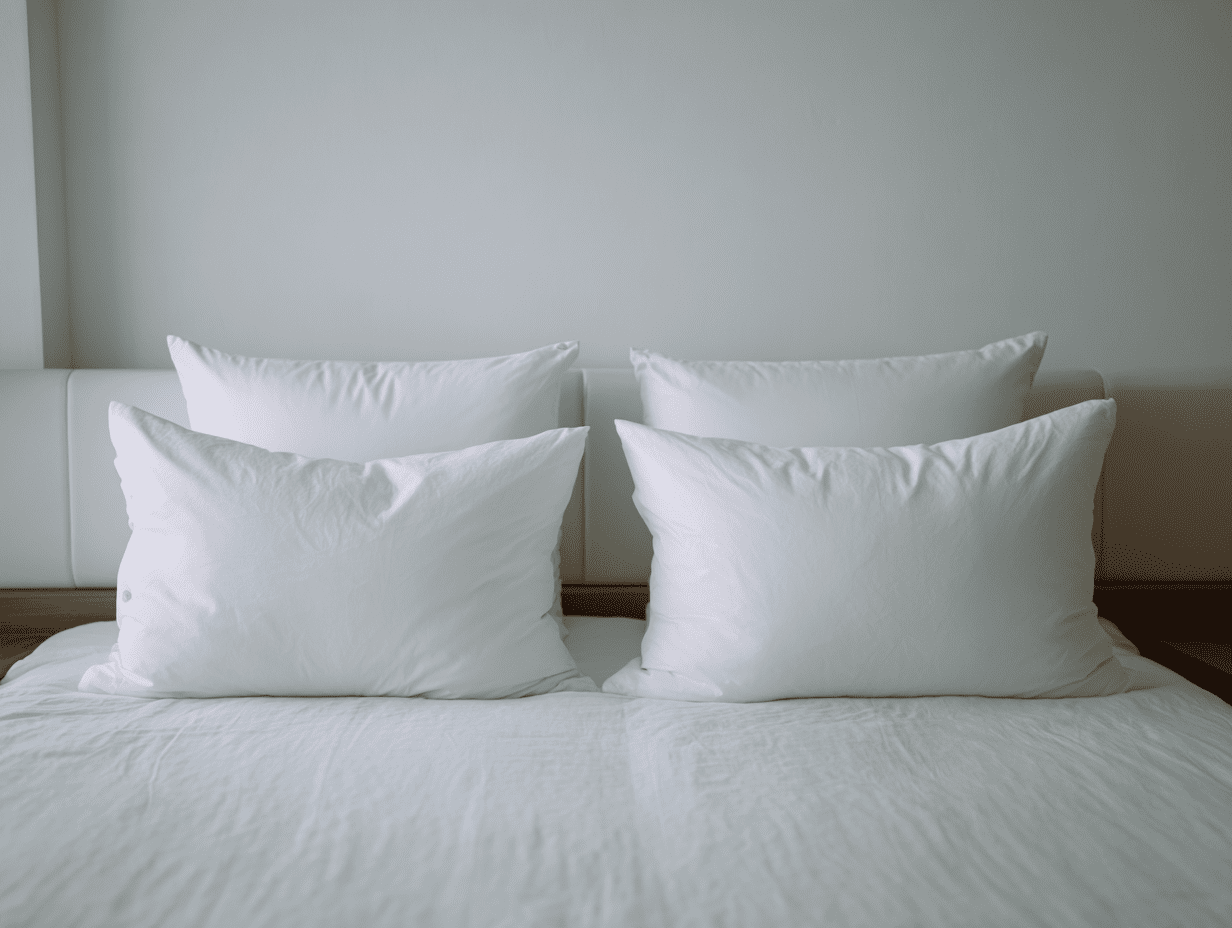
Pillows: less is more (mostly)
Hotel beds look put-together because the pillows are arranged with a bit of intention. They’re not just stacked in a heap.
The classic hotel setup, for a double or king bed, is two sleeping pillows laid flat against the headboard, and then two pillow shams or decorative pillows standing upright in front of them. That’s it. Clean, symmetrical, deliberate.
Pillow shams are basically just pillowcases with a more decorative edge – often a flange (a flat fabric border) rather than a plain hem. They make pillows look intentional rather than just functional. A simple pair from John Lewis, H&M Home, or even a supermarket homeware range can make a noticeable difference.
If you sleep with a lot of pillows, you can absolutely keep them – just store them elsewhere during the day (on a chair, in a basket, in the wardrobe) so the bed itself looks cleaner.
One thing I’d say: an overly decorative bed with twelve cushions of varying sizes tends to look quite dated now and definitely isn’t what you see in modern hotels. A couple of well-chosen pillows goes a lot further.
The throw at the end of the bed
Hotels often fold a blanket or throw across the foot of the bed. This serves a practical purpose (guests can grab it without disturbing the main bedding) but it also looks really good – it adds a layer of texture and colour, and it breaks up the expanse of white.
You don’t need to buy anything new for this. A folded blanket, a neatly folded spare duvet, or even a large linen throw draped loosely across the bottom third of the bed all work. The key word is “intentional” – it should look like you put it there on purpose, not like it ended up there.

The quick version for actual mornings
Because let’s be honest, if you’ve got to be out of the house by half eight and someone needs a packed lunch and the dog’s doing laps of the kitchen, you are not doing hospital corners.
Here’s what makes the biggest difference in under three minutes:
- Shake the duvet out properly and lay it centred on the bed
- Pull the top edge into a straight horizontal line
- Smooth from the centre down with both hands in long, firm strokes
- Flick the pillows flat and lay them symmetrically
- Pull the duvet up over the pillows if you’re doing a full tuck, or arrange them in front if not
That’s genuinely it for a result that looks a hundred times better than just leaving it. The folding and tucking is for when you have time and want the full effect – but the basics above take almost no time and make a real difference to how the room feels.
Worth buying vs not worth buying
A few things people often recommend that I think are genuinely useful, and a few that I think are overhyped.
Worth it: a good mattress protector that fits properly, one extra set of high-quality sheets (so you always have a clean set ready), pillow shams or decorative pillowcases, and a simple throw.
Probably fine without: an ironing board dedicated to sheets (a steamer or just pulling sheets taut when damp from the line does the same job), a bed runner (these can look a bit hotel-conference-room depending on your style), and any specialised pillow-plumping product – you can plump a pillow perfectly well with your hands.
On thread count: anything in the 200-400 range in a percale weave will give you that crisp hotel feel. You really don’t need to spend a lot – Next, Dunelm, Marks & Spencer and IKEA all do good sheets in this range. Egyptian cotton is lovely but not essential if the budget doesn’t stretch.
FAQs
What thread count do hotels use for their sheets?
Most hotels use sheets with a thread count somewhere between 250 and 400, usually in a percale weave. Percale gives that crisp, cool, slightly papery feel that’s so satisfying on a freshly made bed. Higher thread count doesn’t automatically mean better – a 600 thread count sateen sheet will feel smooth and silky but won’t give you that same crisp hotel finish.
Do hotels use a flat sheet and a duvet, or just a duvet?
Many hotels, particularly four and five-star properties, use a flat sheet as the middle layer between you and the duvet. This is called triple sheeting and it means only the sheets need laundering between every guest rather than the duvet cover. For everyday home use, you don’t need to bother – but the flat sheet fold-back at the top of the bed is a nice technique if you want that polished look during the day.
Why does my duvet never look as full and puffy as a hotel duvet?
Usually because it needs a good shake and some air. Duvets compress when stored and lose their loft over time. Hang yours outside on a dry day, or stick it in the tumble dryer on low with a couple of tennis balls if you have one. Also check whether you might benefit from sizing up – a king duvet on a double bed is a common hotel trick that makes a big difference to the look.
How do you do hospital corners on a bed?
At the foot of the bed, lift the hanging edge of your sheet or duvet. Fold the fabric diagonally up onto the bed, creating a 45-degree angle. Tuck the lower section firmly under the mattress. Bring the angled fold down and tuck that under too. It creates a neat mitre at the corner that stays in place much better than a straight tuck.
Is it worth making your bed every day?
From a purely practical standpoint, it takes two to four minutes and makes the room look significantly more together for the entire rest of the day. Research does actually suggest it has a mild positive effect on mood and productivity – something about starting the day with one completed task. Personally, I find it much easier to relax in a tidy bedroom, and when the rest of the house is in its natural state of lived-in chaos, having one room that looks intentional is worth a lot.
There you go – the actual method, without the aspirational lifestyle faff. It’s not complicated, it just takes a bit of practice until it becomes automatic. Once you’ve done it a few times, making your bed properly takes barely longer than doing it badly, and the result is so much more satisfying. Worth it.
See more bedroom organisation posts here!

Becky is the voice behind Life in Velvet, an organised, intentional living blog focused on practical food, calm homes, thoughtful projects, and everyday systems that make real life feel easier. A mum of 3 living in the UK, Becky writes from lived experience, sharing what works, what doesn’t, and the decisions that make family life run more smoothly.
With a background in marketing and content writing, and over a decade of blogging experience, she brings a thoughtful, structured approach to everything from baking and home projects to routines and decision-making. Life in Velvet is where planning meets creativity, with ideas designed for real homes and real life.