
Key Takeaways
- You don’t need a perfect filing system to declutter paperwork effectively – you just need clear decisions about what to keep and where to put it
- Most households only need to keep about 20% of the paper that comes through the door
- The biggest obstacle isn’t creating a system, it’s making quick decisions about each piece of paper as it arrives
- UK law requires keeping certain documents for specific time periods – knowing these rules makes decluttering much easier
- A simple maintenance routine of 10 minutes a week prevents the chaos from building up again
At a Glance
Best for: Anyone drowning in paperwork who wants a straightforward system without buying fancy filing equipment
Not ideal for: People who need complex document management for business purposes
Time needed: 2-4 hours for initial declutter, 10 minutes weekly for maintenance
Cost range: Free to £20 if you buy basic folders
Difficulty level: Easy once you know what to keep
What you need: A recycling bin, shredder (or scissors), and 3-5 folders or boxes
Biggest mistake to avoid: Keeping everything “just in case” instead of following actual retention guidelines
Quick tip: Deal with post the day it arrives – it takes 30 seconds now or 30 minutes later
My honest take: Most of us keep far too much paper because we’re scared of throwing away something important, but the rules are clearer than you think
Why Paperwork Gets Out of Control (And Why That’s Normal)
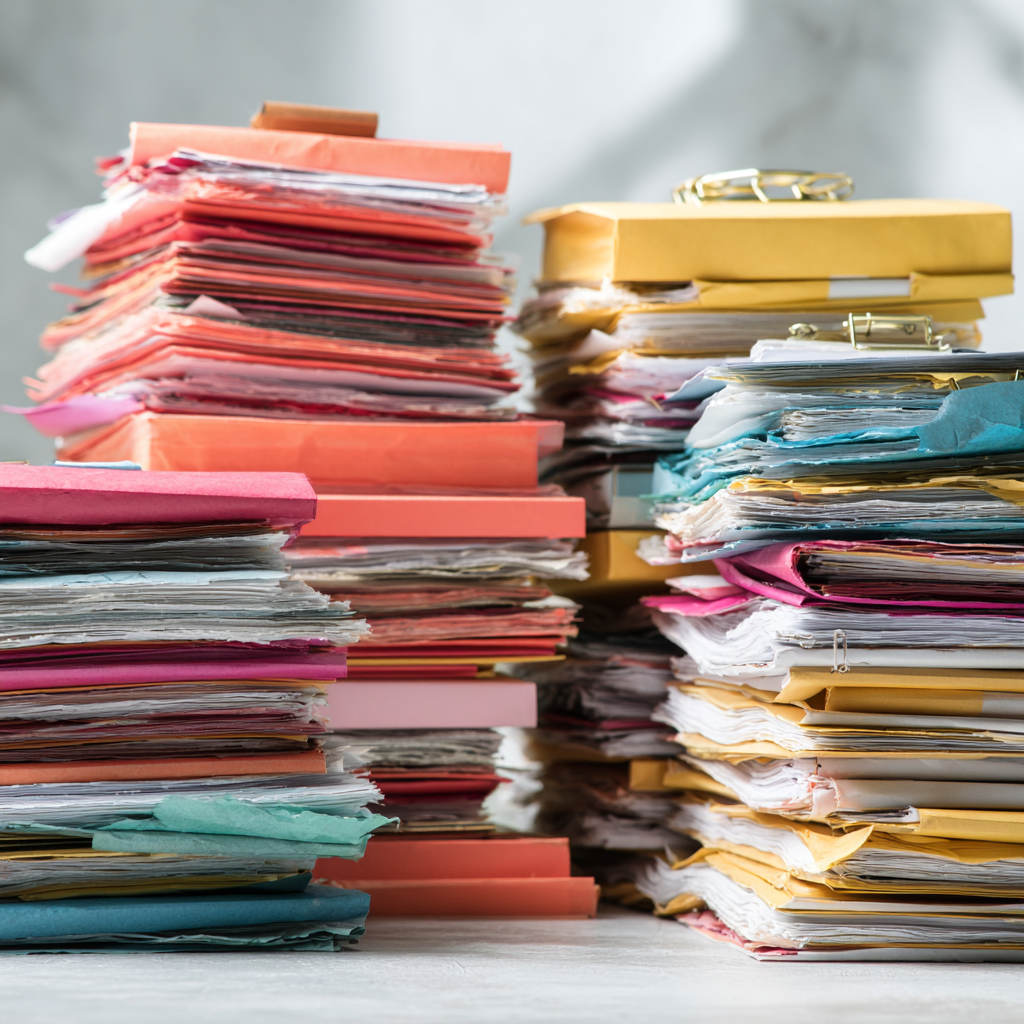
If you’ve got a kitchen drawer stuffed with random papers, a pile on the stairs that’s been there for three months, or school letters mixed in with old bank statements, you’re not alone. Paperwork chaos is one of those things that creeps up slowly and then suddenly feels overwhelming!
The problem isn’t that you’re disorganised. The problem is that paper arrives constantly, decisions about it feel risky, and most of us were never actually taught what to keep or how long to keep it.
This guide is for anyone who wants to sort through the mess, create a simple system, and stop feeling anxious every time they need to find an important document. It’s not about creating an Instagram-worthy filing cabinet. It’s about knowing what matters, what doesn’t, and having a plan that works even when life gets busy.
Who this post is for: People with general household paperwork who want a realistic, low-maintenance system
Who it’s not for: Self-employed people or landlords who need more complex record-keeping (though some of this will still help)
What makes this different: I’m focusing on actual UK retention requirements and practical systems that survive real family life, not aspirational filing fluff
What You Actually Need to Keep (And for How Long)
This is where most people get stuck. We keep everything because we’re not sure what’s important. But there are actual rules, and they’re simpler than you think.
HMRC and Tax Documents
If you’re employed and don’t do a self-assessment tax return, you don’t need to keep much. But here’s what HMRC says you should keep:
Keep for at least 22 months after the end of the tax year:
- P60s (end of year tax certificate)
- P45s (when you leave a job)
- Records of any untaxed income
Keep for six years if you do self-assessment:
- All business receipts and invoices
- Bank statements showing business transactions
- Records of business expenses
Most people massively over-keep here. You don’t need every payslip from 2015. You don’t need to keep utility bills from three years ago unless you’re claiming them as a business expense.
Financial and Legal Documents
Keep permanently:
- Birth, marriage, and death certificates
- Divorce papers
- Adoption papers
- Citizenship documents
- Property deeds (though your solicitor usually keeps the originals)
- Wills
Keep for six years:
- Council tax bills
- Insurance policy documents (current and previous)
- Loan agreements
- Credit card and bank statements
Keep for one year:
- Utility bills (unless needed for proof of address)
- Phone bills
- Receipts for large purchases still under warranty
Medical and School Documents
Keep permanently:
- Vaccination records (especially for children)
- Records of serious medical conditions or treatments
- Any legal documents related to special educational needs
Keep current versions only:
- NHS appointment letters
- Prescription records
- School reports (keep the most recent, bin the rest unless they’re meaningful to you)
The “Maybe” Category
Here’s where it gets personal. Sentimental papers like children’s artwork, old birthday cards, or meaningful letters aren’t governed by rules. Keep what brings you joy, but be honest about whether you’ll ever look at it again.
I keep one small box per child for special drawings and cards. When it’s full, I take photos of anything that doesn’t quite make the cut and then recycle the originals. Not perfect, but it works.

Common Mistakes (And What to Do Instead)
Mistake: Keeping every single bank statement because “you might need it”
Better approach: Keep the last 12 months easily accessible, archive the previous five years, bin anything older unless it relates to a specific dispute or tax matter
Mistake: Holding onto instruction manuals for things you no longer own
Better approach: Check if you still have the item. If not, bin it. If you do, most manuals are available online now anyway
Mistake: Saving every receipt “just in case”
Better approach: Only keep receipts for items still under warranty, large purchases, or things you might return
Mistake: Creating a complex filing system you’ll never maintain
Better approach: Keep it simple with broad categories like “current”, “tax”, “medical”, “house”, and “archive”
The Four-Step Decluttering Process
Right. Let’s actually sort this mess out.
Step 1: Gather Everything
Collect all the paper from around your house. Every drawer, every pile, every random envelope shoved in a coat pocket. Put it all in one place. This feels chaotic, but you need to see the full picture.
Time needed: 20-30 minutes
Step 2: Sort into Broad Categories
Don’t try to file perfectly at this stage. Just create rough piles:
- Definitely keep (legal, financial, current)
- Probably bin (obvious junk, old flyers)
- Need to check (anything you’re unsure about)
- Shred (anything with personal details you’re throwing away)
- Action needed (bills to pay, forms to return)
Work quickly. If you pick up something and immediately think “why do I still have this?”, it goes in the bin pile.
Time needed: 1-2 hours depending on your backlog
Step 3: Make the Hard Decisions
Now go through your “need to check” pile. Use the retention guidelines above. If something doesn’t fit a clear category and you can’t think of a specific reason you’d need it, bin it.
Ask yourself:
- Is this legally required?
- Would I actually be in trouble without this?
- Can I get a copy if I really need it later?
- Have I looked at this in the last two years?
Most things that cause anxiety actually have digital copies available or can be easily replaced.
Time needed: 30-60 minutes
Step 4: Set Up Your Simple System
You don’t need a fancy filing cabinet. You need clarity about where things go.
Minimum viable system:
- One folder or box for “current and active” (bills to pay, forms in progress, things you’ll need this month)
- One folder for “this year’s important stuff” (tax documents, insurance, medical)
- One folder or box for “archive” (things you legally need to keep but won’t look at unless something goes wrong)
- One box for “sentimental” if you’re keeping that sort of thing
Label them clearly. Put them somewhere accessible but not in your way.
Time needed: 15-20 minutes

Creating a System That Survives Real Life
A system only works if you can maintain it when you’re tired, busy, or have had a terrible day. Here’s what actually works.
The Daily Habit: Deal with Post Immediately
When the post arrives, stand by the recycling bin. Open everything. Make immediate decisions:
- Junk and flyers? Bin.
- Bills or action needed? Into your “current” folder.
- Something to file? Put it in the right folder now, not “later”.
This takes 30 seconds. Putting it in a pile to “deal with later” means it takes 30 minutes next month when you finally face it.
The Weekly Check: Ten Minutes on Friday
Every Friday (or whatever day works), spend ten minutes:
- Pay or file anything in your “current” folder
- Bin anything that’s been dealt with
- Move completed documents to the right archive folder if needed
This stops the avalanche from building up again.
The Annual Purge: January Clear-Out
Once a year, go through your archive folders and bin anything that’s passed its retention date. I do this in early January when I’m sorting out tax paperwork anyway.
It takes about 30 minutes and feels brilliant.
What If You’re Really Stuck?
Some situations make paperwork harder. Here’s how to handle them.
If You’re Dealing with Someone Else’s Paperwork
When you’re sorting through a deceased relative’s papers or helping an elderly parent, it’s harder to know what’s safe to throw away. In this case:
- Keep everything legal and financial for at least a year
- Contact their bank, pension provider, and HMRC for specific guidance
- Keep all documents related to property, investments, or ongoing claims
- When in doubt, keep it until probate or estate matters are fully settled
If You Have ADHD or Executive Function Challenges
Traditional filing systems often don’t work if you have ADHD. Try:
- Clear plastic wallets so you can see what’s inside
- Colour coding by urgency, not category (red for “deal with now”, green for “filed and done”)
- One big “action needed” tray that you go through with someone weekly
- Taking photos of important documents and storing digitally as backup
The key is visible systems that don’t rely on remembering invisible steps.
If You’re Drowning in School Papers
School sends home an obscene amount of paper. Here’s what I actually do:
- Bin all flyers and fundraising letters immediately unless I’m genuinely interested
- Keep only the current term’s calendar and key dates
- Take photos of children’s best work, then recycle most of it
- File medical forms, SEN paperwork, and anything official in their individual folders
Most school letters are also available digitally now. Check the school website or app before you assume you need the paper copy.
Quick Decision Guide
If the document is:
Tax-related and you’re employed → Keep 22 months
Tax-related and self-employed → Keep 6 years
A legal certificate (birth, marriage, etc.) → Keep forever
A utility bill and you need proof of address → Keep current plus one year
A receipt for something you still own and might return → Keep until return window closes
A receipt for something under warranty → Keep until warranty expires
A letter from school about a non-urgent event → Bin or photograph
Medical and relates to ongoing treatment → Keep in current file
Medical and historical → Photograph and bin unless serious condition
Sentimental but you haven’t looked at it in five years → Photograph and recycle
Storage Solutions That Work (No Expensive Systems Required)
You don’t need to spend a fortune. Here’s what actually helps:
Accordion folders (£5-£10): Good for keeping current papers organised by month or category. Easy to grab if you need to find something quickly.
Magazine files (£3-£5 each): Perfect for storing archive papers upright. You can label them by year or category.
Clear plastic wallets (£2 for a pack): Brilliant for keeping related documents together (all house purchase papers, all car documents, etc.)
Simple cardboard archive boxes (£5-£8): Great for long-term storage of things you legally need to keep but never look at.
A shredder (£20-£40): Worth it for peace of mind. Anything with your address, bank details, or National Insurance number should be shredded, not just binned.
Don’t buy anything until you’ve decluttered. You might find you don’t need as much storage as you think.
Pros and Cons: Physical vs Digital
| Physical Storage | Digital Storage |
|---|---|
| Easy to access without tech | Searchable and takes no physical space |
| Legally acceptable for most documents | Requires backup system |
| No risk of file corruption | Can be lost if not backed up properly |
| Can feel overwhelming if volume is high | Requires scanning time upfront |
| Clear when retention period has passed | Easy to forget to delete old files |
My honest take: A hybrid approach works best for most households. Keep physical copies of legal documents and current papers, but scan and digitally store things like receipts, warranties, and old statements. That way you have the security of physical copies for anything truly important, but you’re not drowning in paper.
Frequently Asked Questions
How long should I keep old payslips?
Keep your most recent payslip and your P60 at the end of each tax year. You can bin older payslips unless you’re disputing something specific with your employer or HMRC. The P60 is your official record.
Do I need to keep paper copies of bank statements?
Not if you have online access and can download them as PDFs. Most banks keep six years of statements available online, which matches the legal requirement. Save a digital copy of your December statement each year if you’re worried.
What should I do with old insurance documents?
Keep your current policy documents somewhere accessible. When you renew or switch, keep the previous year’s policy for reference, then bin anything older. If you’ve made a claim that’s still ongoing, keep all related paperwork until it’s fully settled.
Can I throw away receipts after I’ve entered them in a spreadsheet?
If you’re self-employed, HMRC prefers original receipts, but digital copies are generally acceptable. For personal purchases, once the return period and warranty have passed, you can bin the receipt. For large items like appliances or electronics, photograph the receipt and keep the digital copy.
How do I safely dispose of documents with personal information?
Shred anything with your full name and address together, bank details, National Insurance number, or signatures. Cross-cut shredders are more secure than strip-cut. If you don’t have a shredder, cut through key details with scissors before recycling, or check if your local council offers a shredding service.
Should I keep children’s school reports?
This is personal choice rather than legal requirement. I keep the most recent year’s report for each child and bin older ones unless there’s something significant documented (like a diagnosis or achievement worth remembering). Some parents keep them all for sentimental reasons, which is fine if you have space.
Where to Get More Help
If you’re sorting through paperwork related to specific life events, these resources might help:
- HMRC guidance on record keeping: keep records for self-assessment (even if you’re not self-employed, this explains retention rules clearly)
- Citizens Advice: For guidance on dealing with debt-related paperwork or legal documents you don’t understand
- Age UK: Helpful if you’re managing paperwork for elderly relatives
- MoneyHelper: Free, impartial guidance on financial paperwork and document retention
My Thoughts
Decluttering paperwork isn’t about achieving perfection. It’s about making quick decisions based on clear rules, creating a simple system you’ll actually use, and building habits that stop the chaos from building up again.
Most of us are keeping far more than we need because we’re worried about throwing away something important. But once you know the actual retention guidelines, those decisions become much easier.
Start with the obvious rubbish. Deal with post the day it arrives. Spend ten minutes a week staying on top of it. That’s genuinely all it takes to stop paperwork from taking over your life.
The initial sort-through might take a few hours, but the ongoing maintenance? It’s barely noticeable once you’ve got the system in place. And the mental relief of knowing where things are when you need them is worth every minute!
See more Type A Life Systems, and more posts on Business & Work Organisation and Home Organisation.

Becky is the voice behind Life in Velvet, an organised, intentional living blog focused on practical food, calm homes, thoughtful projects, and everyday systems that make real life feel easier. A mum of 3 living in the UK, Becky writes from lived experience, sharing what works, what doesn’t, and the decisions that make family life run more smoothly.
With a background in marketing and content writing, and over a decade of blogging experience, she brings a thoughtful, structured approach to everything from baking and home projects to routines and decision-making. Life in Velvet is where planning meets creativity, with ideas designed for real homes and real life.