
There’s something frustrating about walking into a bathroom that just feels wrong. Everything might be clean and functional, but the space still looks stuck in another decade. The fixtures work fine, the layout makes sense, but somehow the whole room screams “this needs updating.” Most people assume it’s going to cost a fortune to fix, or they start planning this massive renovation that never happens.
But here’s the thing—outdated bathrooms usually aren’t outdated because of broken plumbing or terrible layouts. They’re outdated because of a handful of specific visual elements that are way easier to change than most people think.
The Surface Problem Nobody Talks About
Walk into any bathroom that feels old, and there’s a good chance the walls and floors are doing most of the damage. Those almond-colored tiles from the 90s, the blue fixtures from the 80s, or those tiny white squares that scream “builder grade”—these surface choices age a bathroom faster than anything else. The problem is that people live with these surfaces so long they stop seeing them. They notice the grout is discolored or there’s a crack, but they don’t realize the actual tile itself is what’s making everything look tired.
Replacing these surfaces makes a bigger difference than almost any other single change. New bathroom tiles can completely shift how a space feels without touching the plumbing, moving walls, or doing anything structural. It’s not cheap, but it’s also not the $30,000 gut job that people imagine when they think about bathroom renovations. The right surface choice brings a bathroom into the current decade in a way that new towels and a fresh coat of paint just can’t match.
When Fixtures Tell the Wrong Story
The second culprit is usually the fixtures, but not in the way most people think. It’s not that the faucet or showerhead is broken—it’s that they’re shiny brass when everything else is trying to be modern, or they’re chrome from 2005 with that particular style that just doesn’t hold up. Fixture finishes go through trends harder than almost anything else in home design, and when they’re off, they’re really off.
Changing out fixtures sounds intimidating, but it’s actually one of the more straightforward updates. Swapping a dated faucet for something current, replacing that old showerhead, or updating cabinet hardware doesn’t require a contractor in most cases. The visual payoff is massive compared to the effort. Matte black, brushed nickel, or even just updated chrome in a current style can make the whole bathroom feel pulled together instead of cobbled from different eras.
The Lighting Situation
Bad lighting makes everything worse, and bathrooms get this wrong more often than any other room. Those Hollywood-style vertical bulbs around the mirror, the single dome light in the center of the ceiling, or the fluorescent strip that makes everyone look vaguely unwell—these aren’t just ugly, they’re making the entire space feel stuck in time. Good lighting should come from multiple sources, hit the face evenly, and actually make the space feel welcoming instead of clinical or dingy.
This is where people get stuck because electrical work sounds expensive and complicated. Sometimes it is, but often it’s not. Replacing an old light fixture with something better doesn’t always require rewiring. Adding a dimmer switch costs almost nothing but changes how the space functions. Even just swapping out old bulbs for better ones in existing fixtures can shift the whole vibe. The goal isn’t to light up every corner—it’s to create lighting that makes the bathroom feel intentional instead of accidental.
The Color Trap
Bathrooms that feel outdated often have a color problem, and it usually shows up in places people don’t expect. It’s not just about beige tiles or peach walls (though those don’t help). It’s about the grout that’s gone from white to gray-brown, the caulk that’s yellowed, or the painted surfaces that have taken on that worn look where the finish is just tired. These small color shifts accumulate over time, and together they make everything feel old even when nothing is technically wrong.
Fresh grout and caulk do more for a bathroom than most people realize. It’s tedious work and not glamorous, but clean grout lines and bright white caulk make existing tiles look completely different. Repainting with current colors instead of whatever seemed safe ten years ago brings walls back to life. These aren’t exciting fixes, but they work because they address the visual decay that happens slowly enough that it’s easy to miss until suddenly the whole bathroom just looks dingy.
What Actually Makes the Difference
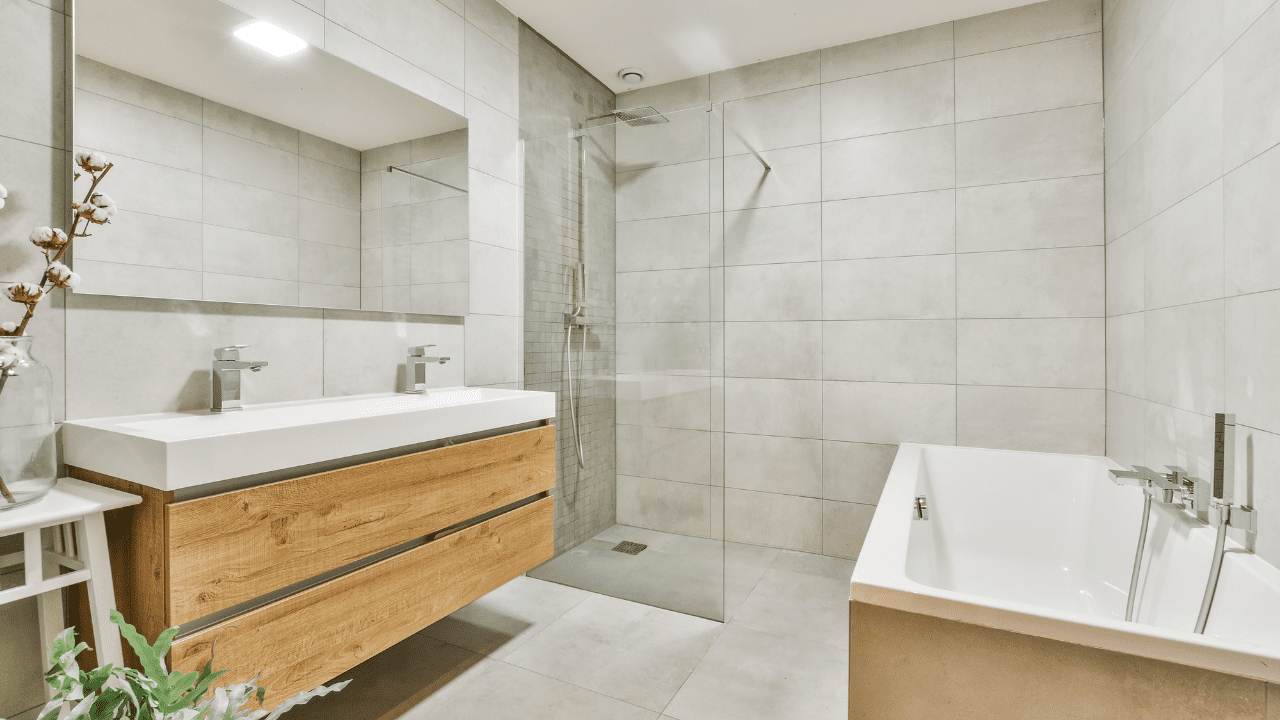
The bathrooms that feel current aren’t using wildly expensive materials or complicated designs. They’re using surfaces that work together, fixtures that match each other, and lighting that actually functions. They don’t have weird color situations happening with aged grout or mystery stains that won’t come out. Everything feels deliberate instead of random.
Most outdated bathrooms can be fixed without tearing everything out and starting over. The surfaces usually need updating—that’s the big one. The fixtures probably need to match whatever style the space is trying to be. The lighting needs to work properly instead of just existing. And all the small color issues need addressing before they accumulate into that vague sense of “this bathroom is old.”
The expensive part is usually the surfaces, particularly if walls and floors both need work. But that’s still way less than a full renovation, and it’s the change that actually transforms how the space looks. Everything else—the fixtures, the lighting, the detail work – these are smaller lifts that multiply the effect of good surfaces. Get the big things right, clean up the details, and suddenly that outdated bathroom isn’t outdated anymore. It’s just a bathroom that works and looks current, which is really all most people want in the first place.
See more home-related posts here

Becky is the voice behind Life in Velvet, an organised, intentional living blog focused on practical food, calm homes, thoughtful projects, and everyday systems that make real life feel easier. A mum of 3 living in the UK, Becky writes from lived experience, sharing what works, what doesn’t, and the decisions that make family life run more smoothly.
With a background in marketing and content writing, and over a decade of blogging experience, she brings a thoughtful, structured approach to everything from baking and home projects to routines and decision-making. Life in Velvet is where planning meets creativity, with ideas designed for real homes and real life.