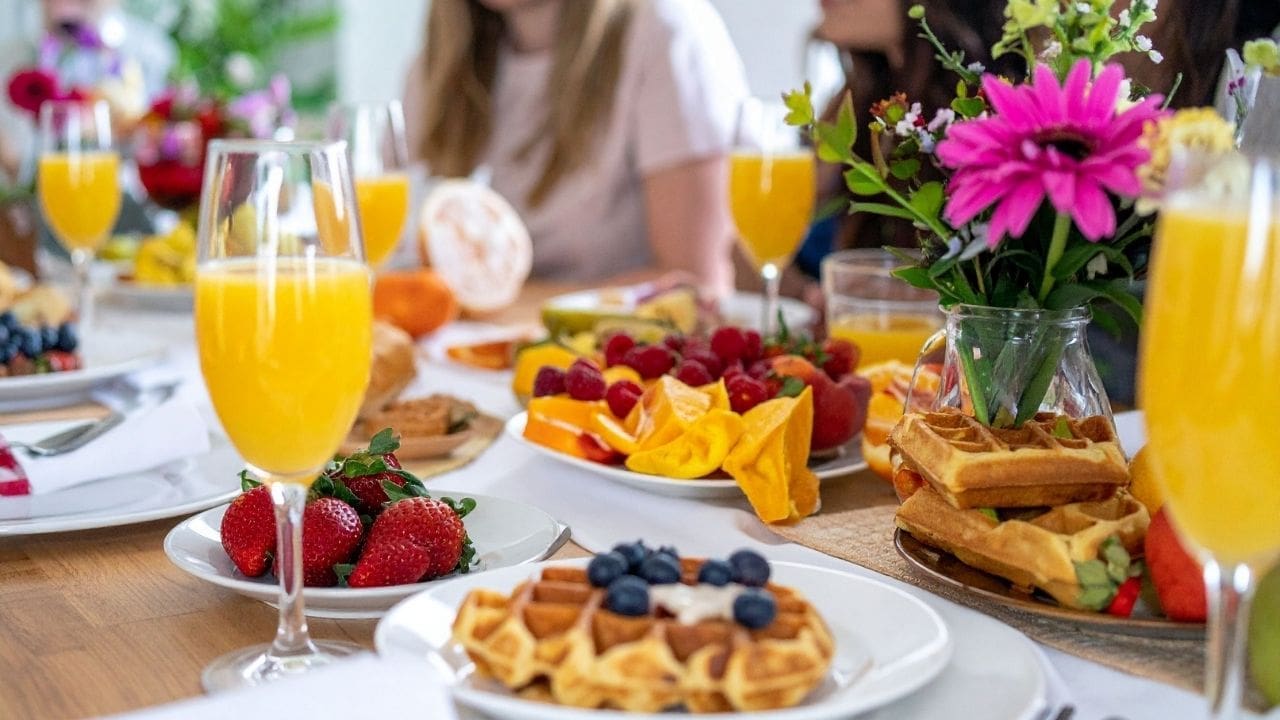
Planning a group brunch is a simple task, that is, until you have to track down twelve people’s dietary requirements at 11pm the night before. The thing that separates a good concept from a successful execution is nearly always the logistics, not the actual cooking.
Match the venue to the occasion first
Before you look at menus or check availability, get clear on what this event actually needs to feel right. A birthday brunch for someone who wants a DJ and disco lighting is a completely different booking to a catch-up with close friends who want to hear each other talk.
Most venues have settled into one of two modes: the party brunch with live entertainment and high volume, and the relaxed brunch where conversation is the point. Neither is better. But booking the wrong one guarantees that half the group is uncomfortable.
Ask the venue directly: what’s the music level on a typical Saturday?
Book further ahead than feels necessary
Group brunches are in high demand during long weekends and public holidays. Establishments that excel at this – offering a better cocktail menu, more menu options, proper table settings for larger groups – are fully booked several weeks before a bank holiday. If you’re thinking of a bottomless brunch london bank holiday, four to six weeks in advance is the rule, not a recommendation.
Brunch, in general, has transformed from a default meal to a scheduled social engagement, and the statistics prove it. Interest in bottomless brunches is up 21% from last year, as consumers seek out fixed-cost group socializing that feels like an event. Bank holidays simply squeeze all that demand into 5-7 weekends a year.
If you locate a restaurant you like, book it as soon as you have a ballpark count. You can fine-tune the final numbers later. You can’t conjure availability 48 hours beforehand.Do you have entertainment running through service? If the answers don’t match your group, keep looking.
Build your RSVP process around the venue’s requirements
Large group bookings often require dealing with additional rules such as a fixed menu or pre-payment. Deposits can also be used to secure a reservation. However, these are not necessarily disadvantages. They can help manage bookings with ease if you use them the right way.
For instance, send one message that includes both a payment link and a simple form to gather any dietary requirements while you’re at it. This way, you’re not sending five follow-up messages per person. Google Forms or any event RSVP platform can help you do this in less than ten minutes.
Just explain to the group why you need the deposit, ensure they know it gets deducted from the final bill, and make the deadline clear. When it’s real money, people will let you know if they’re in or out. Both are extremely helpful.
Finally, service charges are always a good heads-up. A 12-15% auto-gratuity can come as a nasty little surprise when the bill drops. Let the group chat know early and it won’t be an issue.
Plan your timing around the bottomless clock
Unlimited drink packages are usually available for 90 to 120 minutes, and that time generally starts from the first pour – and not the last person’s arrival. If your ten-strong group are arriving in five different Ubers over a 20-minute window, some people are drinking at a serious disadvantage.
Simply reschedule the meeting time 15 minutes earlier than it needs to be, and relay to the group that the venue’s strict rule is that everybody is seated before drinks begin to flow (which is likely true). Suddenly, this whole complaint becomes a non-issue. It’s exactly the perfect amount of time.
The same goes for food. If the place has already set a menu for large groups, try your best to get that order locked in before the day, because waiting for eleven people to read a menu and decide what to eat adds 20 minutes you don’t have.
Make the menu do more work than breakfast
One of the most likely ways a group brunch is going to be disappointing is that the food is basically a light breakfast but there’s more of it.
If this is supposed to be a celebration event, the menu should be the sort of heavyweight that makes you want to put your head on a pillow on your desk. After all, you’re going to be here for two, two-and-a-half hours – this is the main thing you’re doing today.
You also don’t want a menu designed for the hungriest person who sits down to a meal today, or the third. People fasted the night before, or had toast half an hour ago. A lightweight brunch menu particularly lets down vegetarians, as the food rarely keeps as well. Everything should be at least as good as, and preferably better than, it is when you just finish eating out of politeness.
Non-alcoholic in the drinks package matters here too. Not everyone drinks, and a single juice option isn’t much of a package. Places that give serious thought to zero-alcohol alternatives have usually thought harder about the overall experience.
The host should actually enjoy this
Group gatherings usually lead the organizer to be busy dealing with arrangements and not participating. The more of these stressors you take off the table in advance – payments, allergies, start-times, ordering – the more you can relax and enjoy your guests when the time comes. Sort it out ahead of time, and then loosen up.
See more posts about Intentional Decisions here

Becky is the voice behind Life in Velvet, an organised, intentional living blog focused on practical food, calm homes, thoughtful projects, and everyday systems that make real life feel easier. A mum of 3 living in the UK, Becky writes from lived experience, sharing what works, what doesn’t, and the decisions that make family life run more smoothly.
With a background in marketing and content writing, and over a decade of blogging experience, she brings a thoughtful, structured approach to everything from baking and home projects to routines and decision-making. Life in Velvet is where planning meets creativity, with ideas designed for real homes and real life.